

Professional rescuers share when and how to call search and rescue.
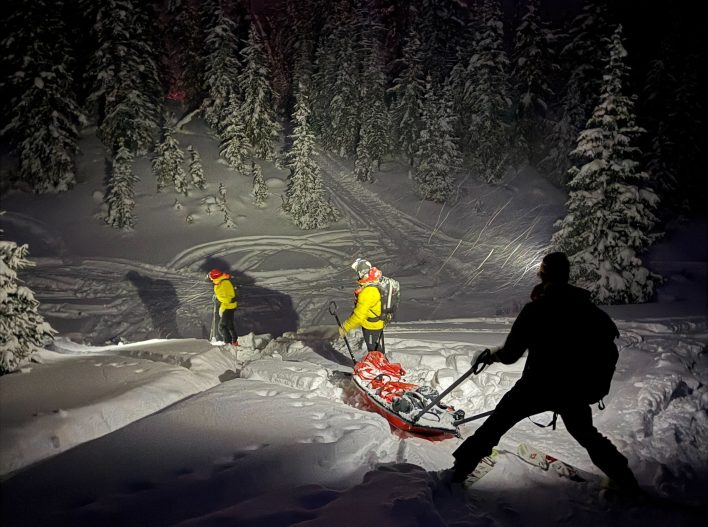
A thin layer of early-season snow painted Washington’s Snoqualmie Pass in opalescent white when the call came in: A solo skier had dropped into the basin behind the pass’s ruggedly iconic Chair Peak and broken their leg. Luckily, 15 members of King County’s Ski Patrol and Rescue Team (SPART) were just 10 minutes into their preseason rescue training at the ski resort and were in the best position possible to initiate a rescue.
The injured skier had enjoyed over a thousand feet of pre-season powder before he fell, heard a snap and felt a searing pain. He hit the SOS button on his satellite device immediately. Brad Hefta-Gaub, now the President of King County SPART, was the search and rescue (SAR) hasty team lead at the time. His crew was at the trailhead and hiking out before the sheriff’s deputy had even arrived. It still took SAR over three hours to get to him.
After 10 hours of grueling work and with the help of 58 total responders, the skier made it to an ambulance. “His hitting the SOS button immediately, that was definitely a lifesaver in his case,” reflects Hefta-Gaub.
On that day in the Cascades, solo and immobile, the skier only had one option: call SAR. Fast. But backcountry injuries span the gamut, from broken legs and ribs to dislocated shoulders. While being prepared will always be step one, two and three, the reality is that accidents happen. When they do, SAR teams can be an invaluable resource. If a ski day does go ass over teakettle, differentiating between a self-rescue and a call for help, and knowing what to communicate, is crucial for a successful winter.
Know your ABCs
When someone gets injured, take a moment to assess the situation.
“The first thing on that list is scene safety,” says Skyler Herbert, the Commander of Sawtooth Search and Rescue. It’s the same principle as avalanche rescue—make sure you’re not in a place where there is risk of additional injury. Get to a safe place, out of any avalanche hazard, and focus on the ABCs: airway, breathing and circulation. Then, get your patient stable and comfortable.
Once the scene is safe, it’s time to think about the long haul. Any rescue operation in the backcountry will take hours and staying warm and dry is paramount. Hypothermia can easily set in within a few hours of being out in the cold. Hefta-Gaub emphasizes that you need to make the call to hunker down or self-rescue quickly. If you choose to hunker down, a Therm-a-Rest pad and the skills and tools to build a shelter go a long way.
“Getting somebody warm, having those extra layers, even in the springtime, is really key,” Herbert stresses. A tarp or rescue sled can keep people off the snow, which will sap critical heat from a patient. Snow is also insulating, so digging down into the snow and protecting yourself from the environment can be helpful for a long wait.
Call for Help Early
“You could argue that if you can get a call out first, that’s the thing to do,” explains Herbert. “If your scene is safe and you can give it 10 minutes, place a call to 911. You want to get help coming as quick as possible.”
Which step comes first—getting warm and dry or a call for help— is ultimately down to the specific scenario. If two people are uninjured, both steps can happen simultaneously.
Don’t be scared to call for minor injuries either. If you’re uncertain that you’ll need a rescue, it’s better to err on the side of caution. If you end up self-rescuing, that’s a win. If you end up needing help, the team is already on the way. Even the most experienced travelers need help on occasion, and delaying the call, for whatever reason, doesn’t help anyone involved. When you do make the call, take a deep breath and be sure to communicate as clearly as possible.
“The first communication that goes out is some of the most important,” Herbert says. “One of the things we see is people not conveying to the dispatch center where you are, what your situation is.”
Being clear that you are in the backcountry and need an over-snow rescue is critical so the right personnel can prepare. GPS coordinates are generally the most accurate way to describe your location. If you don’t have GPS available, describe your location with as much detail as possible. The name of the trailhead, how far up you are, any local points of interest or obvious mountains and lakes, and even the colloquial names of backcountry runs are helpful.
“As the reporting party, get an initial call out, get situated, get your patients stable and then call back and they’re gonna have some follow-up questions for you,” explains Herbert. In that follow-up call, you’ll know more about the type of rescue needed and can provide better information about whether you can self-rescue or need assistance.
What Kind of Rescue?
The nature of a rescue depends on three key factors: timing, injury severity and your human resources. While those may seem simple, all three factors are easy to overestimate.
“Mobility is the first thing. Are your injuries functional?” asks Hefta-Gaub. A broken leg, like that of the solo skier who dropped into the basin behind Chair Peak, means calling for rescue. A full team of trained professionals took over nine hours of packaging the patient, rigging pulley systems and eventually pulling a rigid plastic sled like you see on ski resorts, to get the injured skier to the trailhead. Upper body injuries, on the other hand, could mean a painful, slow-but-possible self-rescue. “If you dislocated your shoulder, it’s going to suck to self-rescue, but you’re going to be able to travel,” Hefta-Gaub explains. You’ll move slower and need frequent stops, but you can still ski out.
Time is also a critical consideration. Rescue sleds are great, but they require a full team to pull effectively, especially in any sort of undulating terrain or deep snow. The longer you delay getting to definitive care, the higher the chances your injury becomes worse or hypothermia sets in.
If you do have the capability to move, communicating with the SAR team is critical. “Whether you’re going to start moving towards us and helping us out, or if you’re going to stay put, should really depend on what your communications are,” says Herbert. If you have reliable
communication—the ability to update in real time through good cell service or a steady satellite connection—and are capable of moving out, that’s great, just make sure to update the SAR team as you go.
If you don’t have reliable communication, or if you’re lost or simply unfamiliar with an area, stay put. “A very common mistake is people who genuinely are lost don’t know where they are and keep traveling in the direction they thought was the right direction,” warns Hefta- Gaub. He recalls a mission where two first-time backcountry skiers got lost at dusk in deteriorating weather. They could see lights in all directions, but some of those lights would have led them straight off cliffs. Moving off course when lost can drastically increase rescue time and put you in far greater danger.
For severe injuries, some backcountry rescue teams can call in heli- copters, but the ability and reliability of a heli rescue varies greatly by location and weather. Specialized operations can fly in storms, have hoist abilities and thermal imaging for night rescues, but those aren’t often nearby. General medical helicopters are usually more readily available but operate under stricter regulations and don’t have the same training. They most often need to be able to land and can’t fly in severe weather.
“Being able to get your rescue sled out and just moving your patient off the hill or into that meadow or onto that frozen lakebed gives your rescuers a lot more options,” says Herbert.
As a rule of thumb, most helicopters want to land on a slope of less than 12 degrees. If you can’t move a patient to a flat area, you can create a landing zone by kicking snow downhill and stomping it with your skis to make a flat surface. Life Flight recommends a 75-square-foot area.
Prepare, Prepare, Prepare
Even with resources available for rescue, it’s important not to be complacent. SAR teams are an invaluable resource, but bringing rescue gear, having a plan and skiing conservatively is always in your best interest. Route planning should include contingency plans from the start and ideally, tell someone else your plan before you head out for the day. Not only does being prepared lower your risk of injury, but it also alleviates stress on SAR teams.
“Most search and rescue members are volunteers. They all have day jobs,” Hefta-Gaub reminds. “They do it because they really, genuinely love the mountains, and they want to provide access to everybody. But remember that when you hit that emergency button, they’re stopping their day, they’re traveling to come get you, and then they’re coming to get you from the trailhead.”
The best way to support them? Make sure that you’re prepared to not need help. But when you do, having the knowledge, wherewithal and confidence to call for help early can make all the difference. Even a perfect rescue can take hours, which should inform every decision you make in the backcountry, from your gear choices to your terrain selection to how quickly you call for help. ❆
This article was originally published in Issue 165, The Photo Annual. To read, grab a copy, or subscribe to read our stories when they’re first published.

Related posts: