

Chapter 1: Modes of Transportation
Mind Surfing
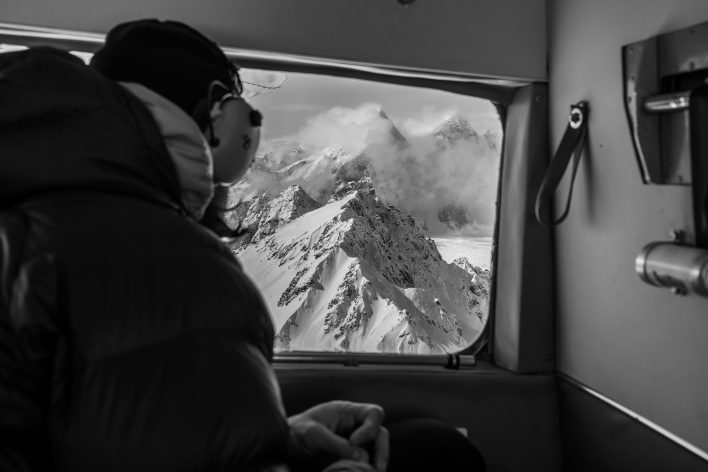
Glacier flights don’t deliver you to the adventure. They are the adventure. Moving low through the range, mind surfing spines and shadowed faces. You drop cliffs and make imaginary turns down steep couloirs you’ll probably never ride.
Then you land.
After days of weather holds, we were just grateful to fly in. Our trip to Glacier One would happen, even just that felt like a blessing. Everything before and after that… well, that’s what this diary is about.
What’s the Plan Fran?
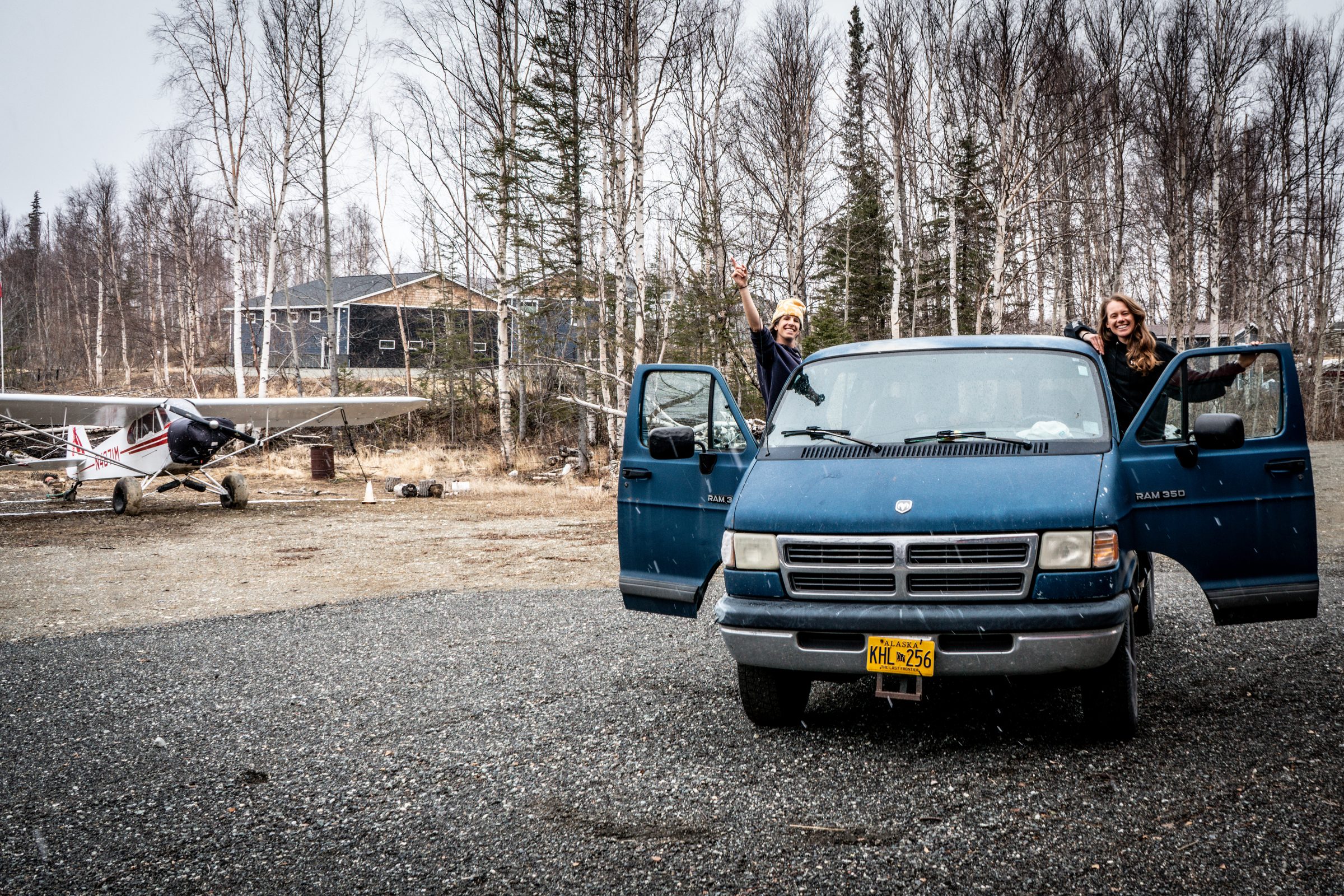
Hospitality might be the best part of traveling in Alaska. Helen’s friend Jamie not only welcomed us in, she handed over the keys to her beloved 1994 Dodge Ram 350 named Fran. Duct tape included.
When we learned you had to hold the lever to keep the lights on and that only the brights worked, we said, “Well, maybe, we just don’t drive at night….”
During the initial fluid change, I had a moment of pure overwhelm. I looked at Helen and said, “I don’t do cars.” I fled into the gas station, bought a bag of chips for stress eating and did my mindfulness practice in the bathroom while Helen held it down adding coolant, oil and other fluids, FaceTiming her dad.
Somewhere along the drive north, Fran became less of a vehicle and more of a team member. By the time we registered our trip with the National Park Service, our permit name had already been decided: Team Fran.
Ode to Skis
Spoiler alert: it snowed. A lot. More on that to come.
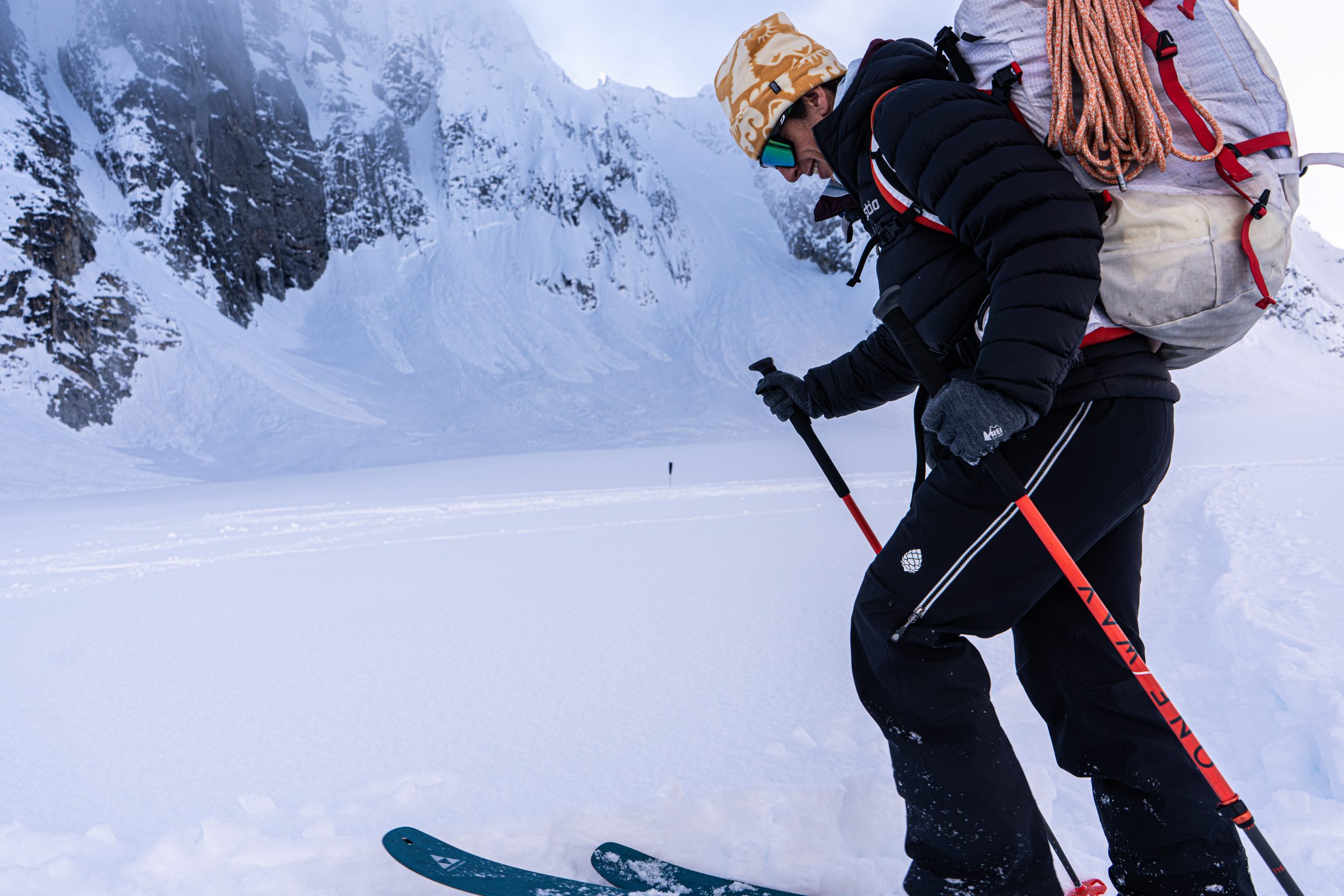
Postholing through 6 feet of snow around camp is a good reminder that skis might be the greatest transportation tool ever invented. They turn slow, exhausting wallowing into an easy glide across the surface.
On many of my trips, skis are what connect camp to camp to camp. I’ve done a lot of traversing adventures. This was my first base-camp trip. I was pretty excited to just ski straight from camp and use my skis for their more fun purpose: going down. Little did I know there’d be very little skiing, as those feet of snow created wildly dangerous avalanche conditions. But even just getting around base camp, I found myself opting for frozen ski boots. Knowing the effort of clicking in was still better than sinking to my waist again.
The Piggyback Solution
On my way to Alaska, I flew with most of my gear in a checked bag. I did not fly with an extra pair of shoes. Just ski boots and down booties. Every time I’ve gone to Alaska, five trips in total now, I think about buying proper boots for the mud. Every time, I somehow convince myself it won’t be that bad. Every time, I’m wrong.
The CFS was a mesh running shoe made by Stio and completely, wildly inappropriate for Alaska’s spring thaw, known as “break-up” by the locals.
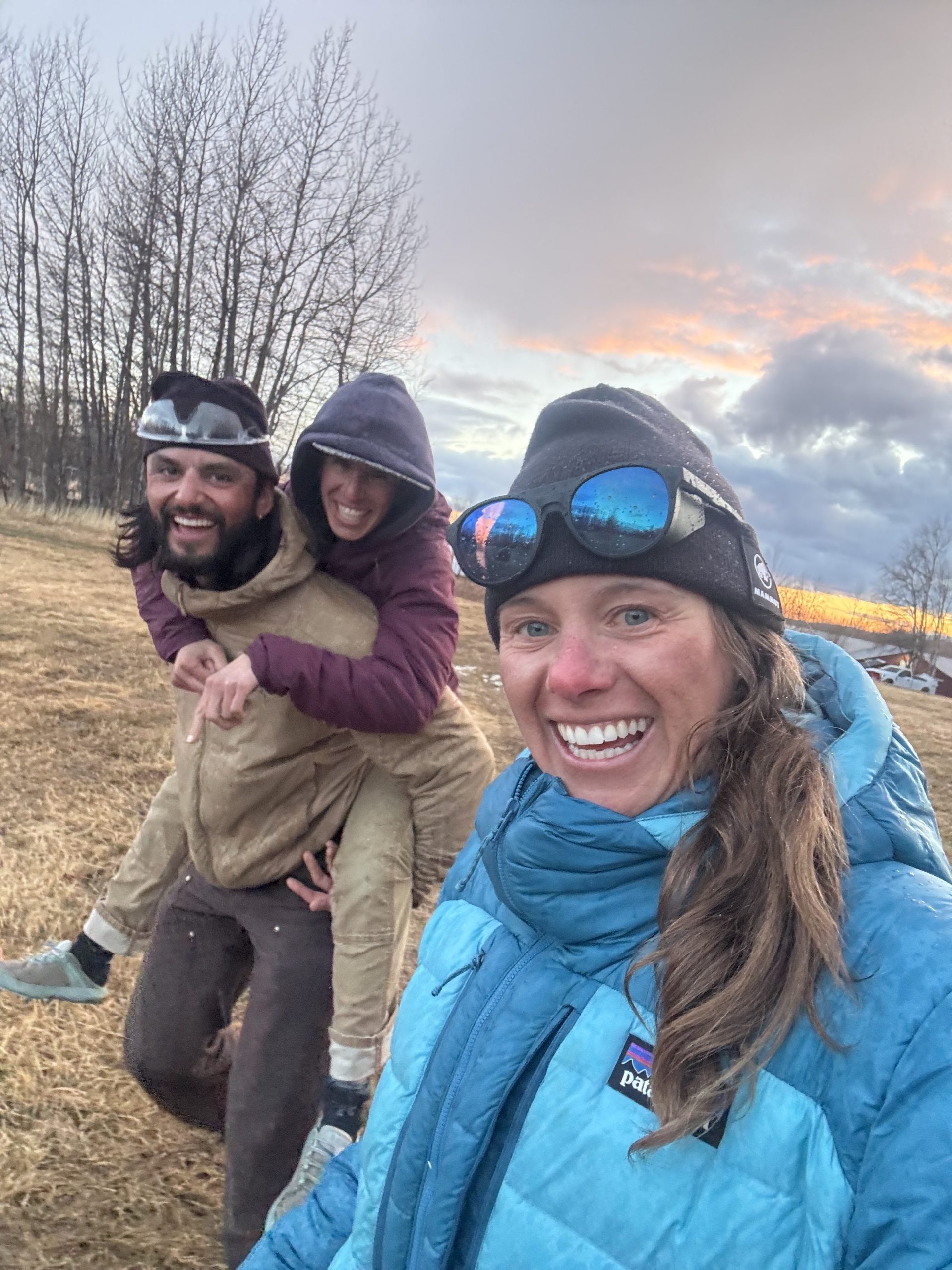
Enter the piggyback. When you need to cross a muddy field and your footwear is a distant memory of better decisions, your friends become your transportation. Iván didn’t hesitate. Neither did Helen. Which is how I ended up here: being carried across the mud grass field, grinning like a fool. Best part? This was the last day of the trip, and they still liked me after being trapped in a tent for 8 days. Thank goodness.
Chapter 2: Tent Clearing Techniques
We landed on the glacier under clear skies, soaking in the beautiful surroundings. Then the storms came. Over eight days, we got hammered by two major systems, each dropping more than 3 feet of snow. Tent clearing went from a nice way to move your body to absolutely necessary work. Collapse was not an option.
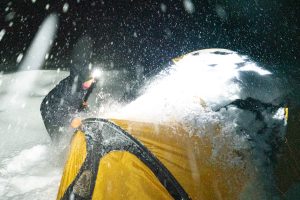
The Tent Shake
Grab the pole, brace your feet and give’r a good shake. Best done with conviction, but not so strong that you rip the tent. Yes, you will absolutely wake up your tent mates at two in the morning. But they’re grateful you took this shift.
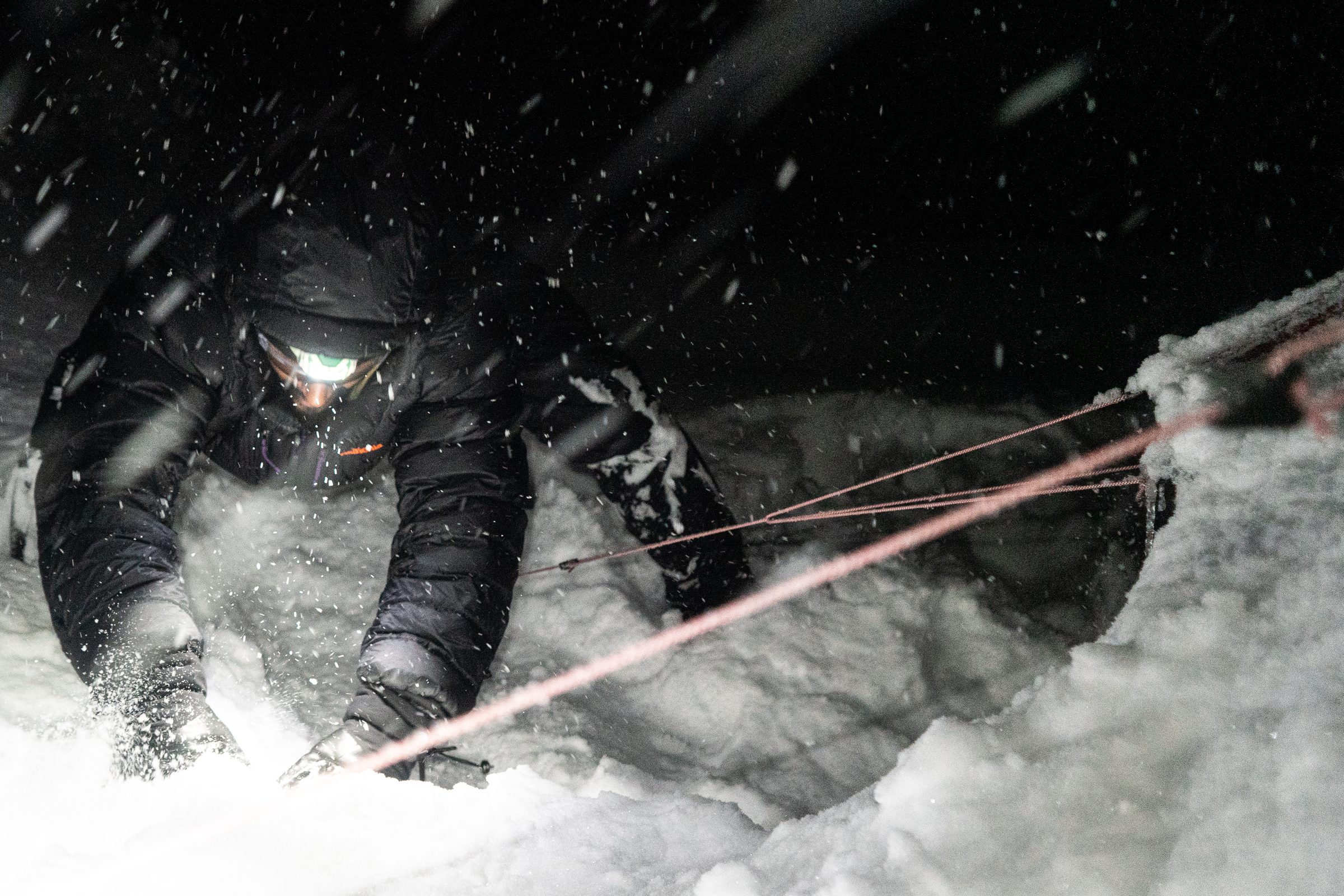
The Puppy Dog
No shovels near the tent. That’s a firm rule because sharp edges can nick or cut both the tent wall and the guy lines. Get low, get humble, crawl around the perimeter pulling guy lines and batting snow off the sides. You will look ridiculous. The tent will thank you.
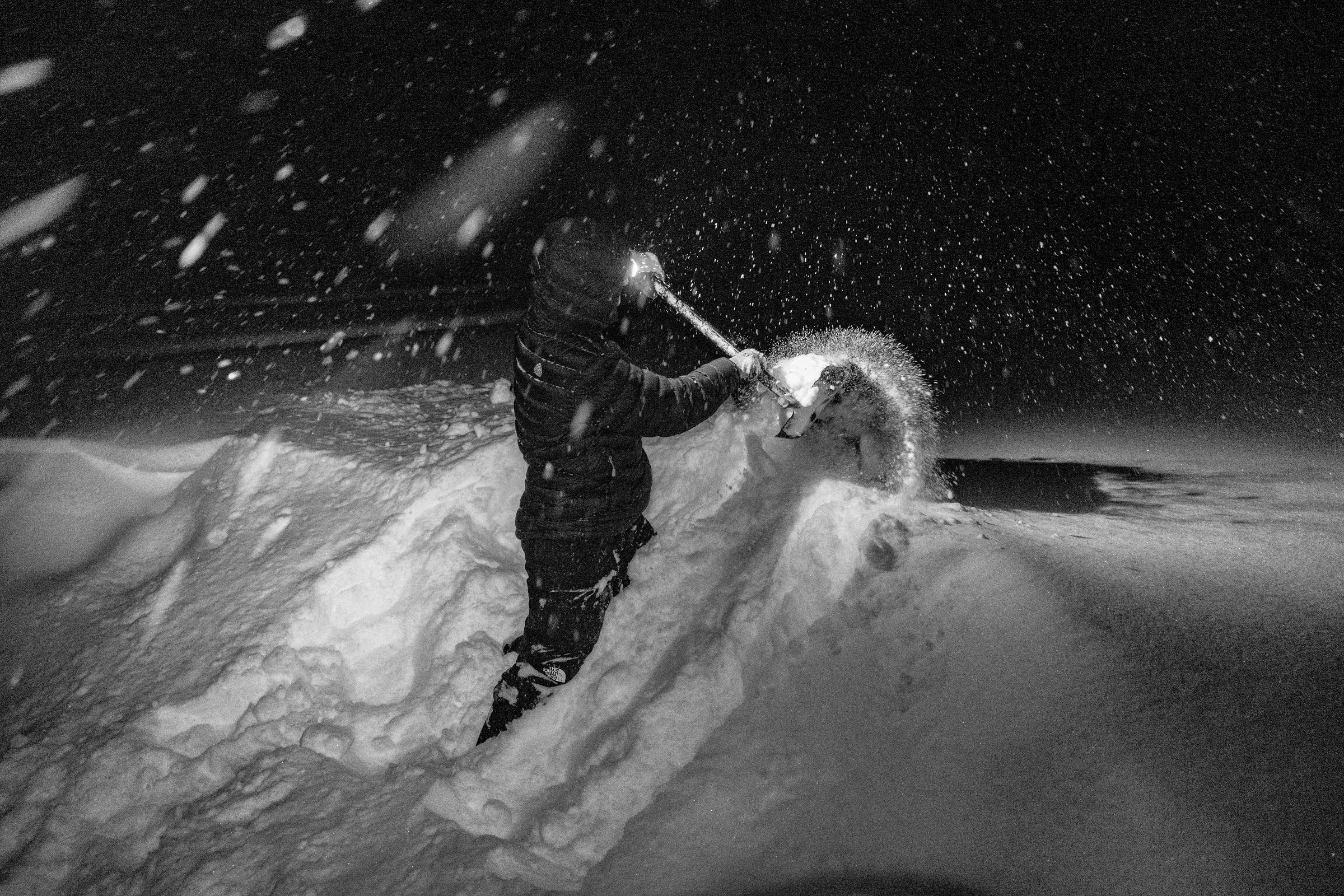
The Perimeter
This is where you switch from simply clearing snow off the tent to creating space for all the snow that’s falling off it. This will save you on your next round. More and more snow falls. The walls around the tent start to creep taller than your head. This ain’t just a few snowflakes.
“Maintain the perimeter!”
Yes, coach.
Chapter 3: Moments Of Awe
Low Angle and Overcoming Low Spirits
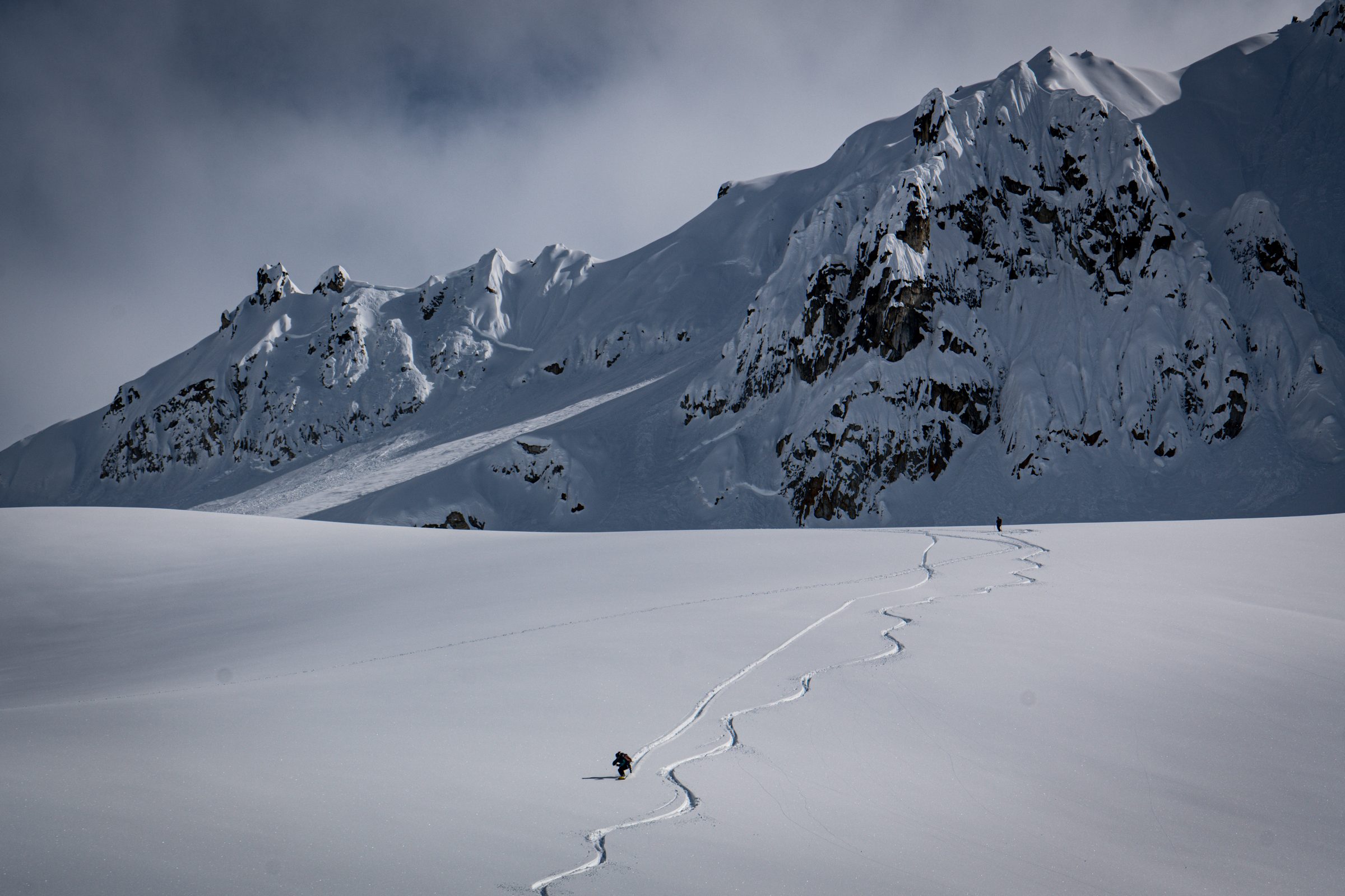
Iván Jiménez straight lines to maintain speed, proving the low angle of the slope. Note the avalanche crown and debris in the background. Photo by Sophia Schwartz
We probably skied fewer than 50 turns on this trip. For our snowboarder friend, Iván, even less. On our one clear day between storms, the avalanche hazard was astronomical; a persistent weak layer from March lived under all that new snow. We listened to avalanches rumble down during the storm, and once the sun came out, we counted roughly one per minute as the mountains shed. They were not small.
So we went for a flat walkabout instead, and just watched.
There’s something clarifying about being that small in a place that large. The objectives we came to ski were right there—gorgeous, loaded, completely off limits.
Coffee Glacier
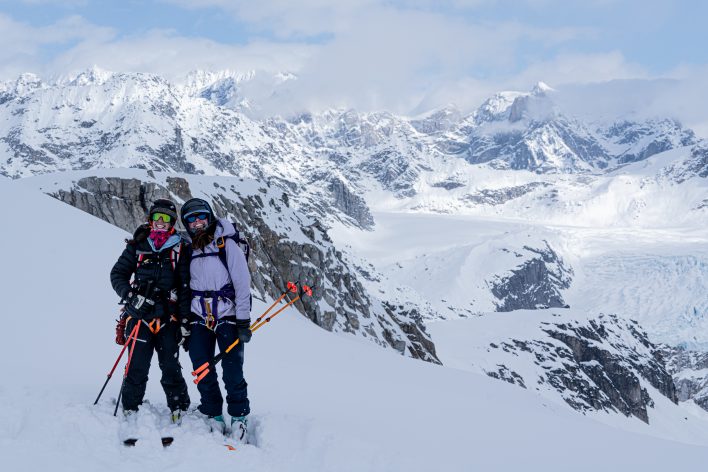
We had dreamed about skiing down to explore Coffee Glacier, traversing over and poking around beyond base camp. On day one, we hiked up to look over the edge, watching it break apart and tumble over the cliff below. It was stunning. With overhead hazards and unstable conditions, that walk never happened. So we soaked in the view from where we safely could.
Looking out over a glacier is a reminder of time itself. These massive bodies of ice move imperceptibly, shift constantly and change in ways you can’t see day to day, but are always happening. Helen and I first became friends while preparing for separate trips to Alaska. Over the last few years, our friendship has grown and we formed this trip together. It’s cool to see our own forward progress and our own growth in our mountain skills. And sometimes you get to come back and look at what’s shifted.
A New and Same Old Me
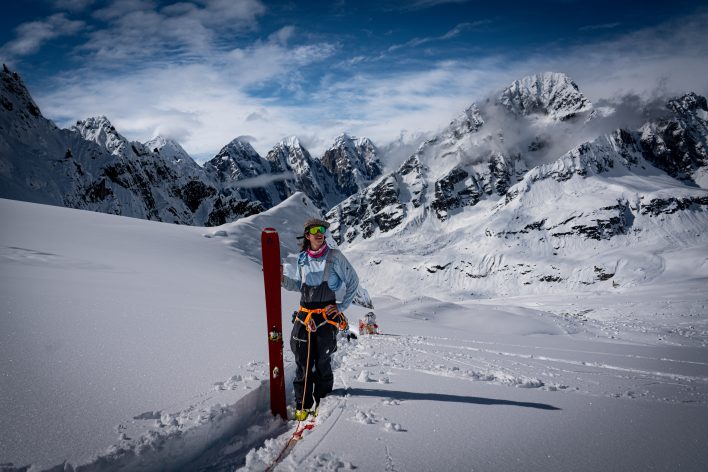
Each time I come to Alaska, I’ve been both the same and a different person. This time, I came back with a different identity: working professional. Time off feels different now that I’m not skiing as my main career. The PTO feels more precious. The need to actually rest might supersede the need to send it.
On the storm days, I slept 13 hours. I stayed in my sleeping bag until noon. I didn’t know how much I needed it, but I came back shocked to see fewer bags under my eyes.
Alaska has a way of giving you exactly what you need, even when it’s not what you planned. We came for the skiing, of course. We got the rest, the friendship, and the range in all its uncontrollable, humbling beauty. Iván gained his first glacier living experience. Helen got to introduce friends across different aspects of her life. And I got to come back again, which for me is always the goal.
The lines will be there when the mountains are ready, and I guess we’ll just need to keep showing up.
Related posts: