

Feature produced in association with DPS
A decade into DPS’s relationship with the American military and NATO allies, making skis has never carried more weight for the ski brand. Leading up the operation is Mike Cannon, who gets a point of view into a world which few civilians ever see when he travels to mountainous and arctic regions around the globe. The experiences have given him a unique understanding of what soldiers demand from their skis and how DPS can meet those demands through innovation, design and in-house manufacturing.
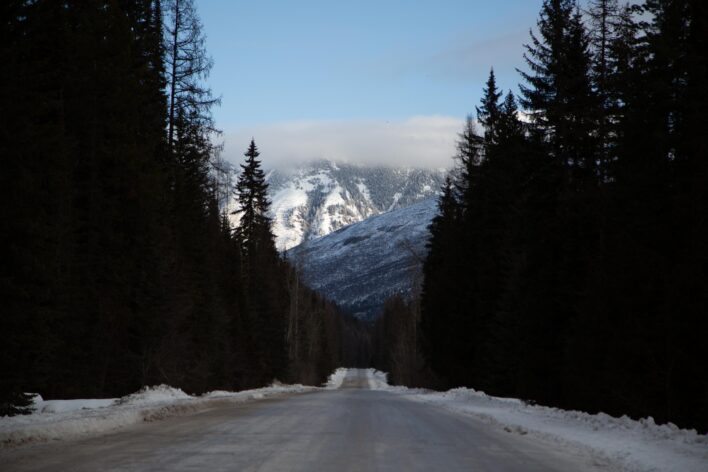
In the deep, dark recesses of January winter in the northwest-Montana backcountry, Mike Cannon, Senior Vice President at DPS Skis, drives his stellar-blue Audi to an undisclosed destination on an arctic road befitting an episode of “Ice Road Truckers.” Slate-colored ice glaciates the road from bank to bank, and where the mountains end and sky begins is impossible to tell. Cannon tests the grip of his new snow tires, rally driving like the surface is tacky as pavement. I peer out the passenger window. In between breaks in the clouds, the steep relief of the Northern Rockies can be seen.
We turn a corner and the scale and remoteness, far above and beyond the valley floor upon which we are traveling, comes into perspective for the first time. In the foreground, skeletal remains of long-dead snags litter the river’s floodplain. Uphill slopes are charred by wildfire. It’s a sharp contrast to the caricature-like mountains—impossibly white and full of wonder amidst the darkness—that fill out the back of the frame and are still dozens of miles away.
Nearly 700 miles south of our undisclosed location, DPS has been designing and manufacturing skis for the Army’s 10th Special Forces Group and 11th Airborne Division, the Swedish Armed Forces and other NATO allies out of their Salt Lake City factory. Cannon now leads this Defense Solutions side of the business after starting with the company in 2002. Over the past five decades, his passion for mountains, snow and the cold has taken him around the world, but it all started in Pennsylvania’s Poconos when he was 10 years old.
“I got to the top of the lift and just skied off; I didn’t stop at all,” he says, laughing about his first ski run. “The instructor tried to chase me down, but I kept on skiing and never looked back. I knew right then that I wanted to do it for the rest of my life.”
Now 63, Cannon has worked as a guide, patroller, instructor and ski model, hunting for unique lines and deep powder from Vermont to Utah and beyond. And with this DPS Defense project, he’s taken those decades of experience and used it to develop innovative products and provide consulting and training services that support soldiers operating in winter and arctic climates around the world.
The Special Forces have trained in Montana since 1942, when the First Special Service Force was formed at Fort Harrison, located just outside of Helena. They were drilled in unconventional mountain warfare and cold weather survival in support of important, high-threat missions during World War II. The First Special Service Force became the foundation upon which the modern special forces were built. Montana continues to be 10th Group’s preferred destination for training, as its climate is more consistent with what might be faced in the European areas of operation (where the 10th Special Forces Group operates).
These troops need to not just survive but to thrive while operating in all conditions, from the jungle to the desert to the mountains and the arctic. Winter has its own playbook, and their tactics change dramatically in a snowy environment. Like when it’s best to move, say, in a blizzard, because you don’t leave any visible tracks, infrared or otherwise. How to stay hydrated and take in enough calories to compensate for being consumed by the cold. Or how to survive if you fall through the ice on a remote, frozen lake.
I’m feeling a little gripped, and not just because of the perilous driving conditions or the thought of doing the aforementioned “Lone Wolf” polar plunge. This is unfamiliar territory in more ways than one. Cannon and I are heading deep into the Montana backcountry with the 10th Special Forces Group (SFG), an elite group of Green Berets based in Fort Carson, Colorado, who came here to conduct nine-week Cold Weather Training (CWT) courses.
We’ll be shadowing instructors and students as they teach and learn essential skills, including the basics like traveling on skis. Some of these soldiers have never skied a turn in their life, never mind traveling in the backcountry and through avalanche terrain with weighty packs and pulks. They also undergo avalanche training, learn rope hauling and rescue techniques, get proficient in snowmobiling and practice general winter warfare and cold-weather survival skills.
Dark, impenetrable fir and pine forest wall in the road and further obscure any views of the mountains and terrain that lie beyond. Cell service is long gone, and GPS is giving us nothing. Are we lost? Have we gone too far or not far enough? Eventually Cannon finds a familiar landmark, slows down, turns into a driveway on the left and parks in front of a rustic log cabin with a couple of newer dually trucks parked out front. This is where the 10th Special Forces CWT instructors stay when they’re not out at the backcountry camp, which lies some 25 miles from here via snowmobile. That camp’s where we’re headed tomorrow. Today, we’re meeting the team we’ll be embedded with over the upcoming days and learning more about the CWT program and how they train to thrive in winter environments.
I do my best to fade into the darkly lit background. A dusty buffalo pelt is pinned to the back wall, and a rifle hangs over the front door. Everything is made of wood, from the rough-hewn structural timbers to the wide-planked floor, bookcases and most of the other furniture. An antique wall phone calls to yesterday just outside the kitchen. While sitting around a massive woodstove, we talk about the history of the 10th SFG in Montana, CWT techniques and unique challenges presented by the cold and winter environments, as well as more personal stories about how these soldiers came to enlist and why they felt called to serve.
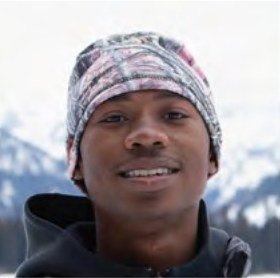
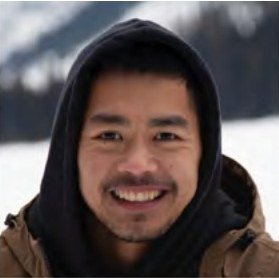
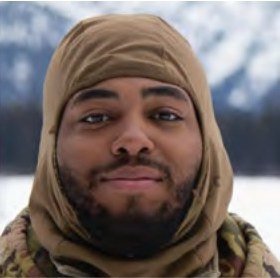
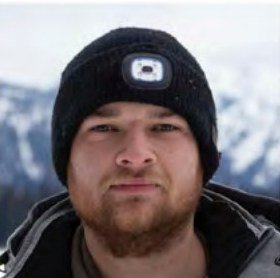
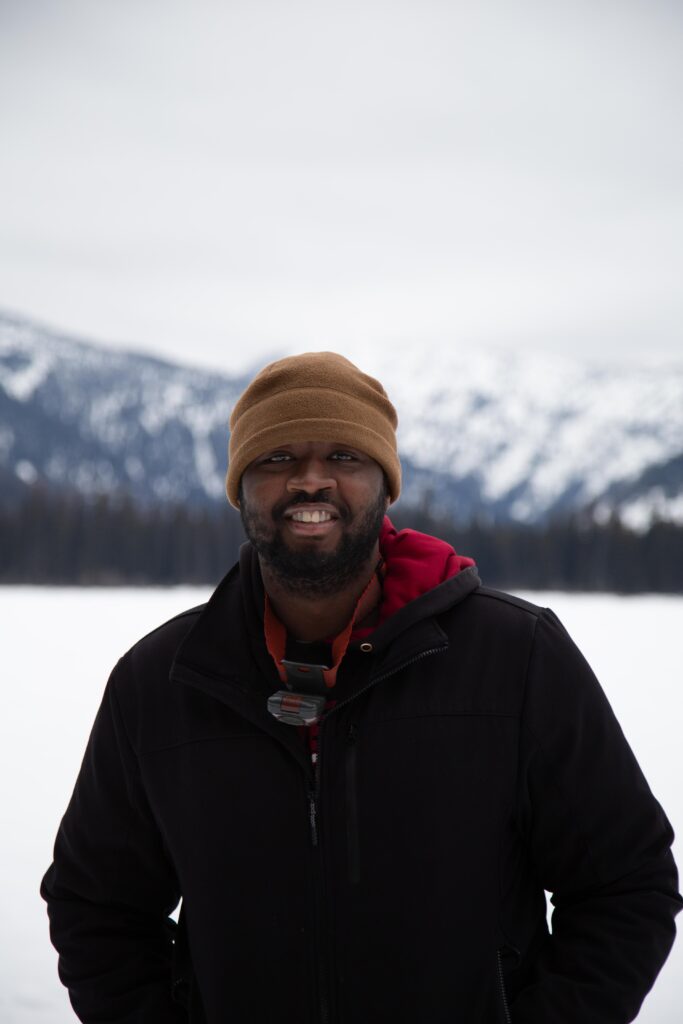
The LogPack Team, including Specialist Rodriguez (top right), keeps the backcountry camp running while soldiers train. Mike Horn
“Journalist” is a dirty word in some circles these days, and I’m unsure if they’ll feel comfortable talking with me. Since they’re often crossing back and forth over enemy lines—the most dangerous battlefield role, known as “in the deep”—Green Berets’ identities can’t be disclosed through attributions or photos that reveal their facial profile. Instead, the conversations flow freely, and I leave several hours later thinking about service and sacrifice and how, in this case, they go hand in hand. Every one of these guys has layers of depth to them, a knowing look in their eyes and a cautiousness that comes with balancing a high-risk job with a high-value civilian life.
Instructor N, around 6 feet tall with an athletic build, dark complexion and even darker, serious eyes, enlisted when he was 17 years old. “I didn’t know what I wanted to do with my life. But the things I’ve gotten to do, see, places I’ve traveled … I’ve been all over the world. It never gets stagnant. There’s always something new,” he says. After 20 years, he’s considering retirement from the military, eyeing a job at a friend’s construction company. But whatever he does next, he says, “It needs to be flexible. I just want to be a dad. I care about spending time with my family way more than how much money I make.”
Cannon doesn’t come from a military background, but I can see now why he is drawn to these people and this work, maybe even more so than the outdoor industry he’s been part of for so long. There is a higher sense of purpose here. Loyalty that runs deeper than business relationships and the occasional ski date. During our time together, he speaks often of his newfound military “family” that has stood by him through challenging times and become some of the more important people in his life.
“It’s not just about making skis for rich people,” he says, talking about how, when DPS is working on a project like making skis for the 10th, the energy around the factory is tangible. There’s a renewed sense of pride and urgency. The design and development process is very collaborative, and DPS is provided with a near-constant stream of feedback on product design, performance and durability.
Sergeant Major Fred Flink of the Swedish Armed Forces is one of Cannon’s key partners and friends overseas, and a renowned expert on winter warfare and cold-weather survival. The 10th Group has also trained with and alongside Flink here in the States and abroad.
“If you’re going to be efficient, you need to train where you’re going to fight,” says Flink on a call from the Swedish Subarctic Warfare Center in the northern part of the country. “You need special equipment to operate in this environment. Our terrain looks like what you’d find in Michigan. Skis will always be a personal preference, but we need to be objective when we’re providing feedback. DPS is all about gathering feedback, trying new things and testing them. They’re one of the few companies that is open to feedback and doesn’t get butt-hurt when we provide critiques. And sometimes we need a reality check. Mike [Cannon] wants to learn, and he’s very humble about it.”
Currently, DPS builds seven combat-specific skis for soldiers worldwide. The same way recreational skis are designed for different environments and conditions, these DPS designs have the same—and additional—considerations. A ski that’s optimized for maneuverability, say for patrols in the woods covering short distances, will be quite different from a ski that’s designed for traveling long distances in a mountainous environment. Likewise, a ski designed for travel in arctic regions needs to be specifically suited to the terrain and snow conditions.
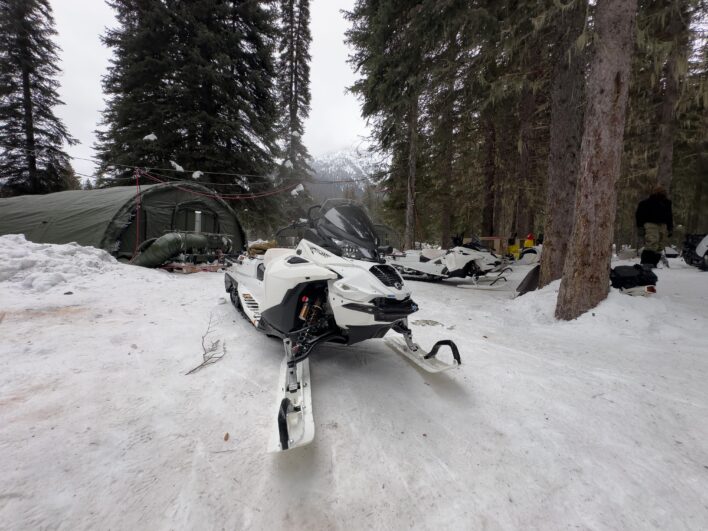
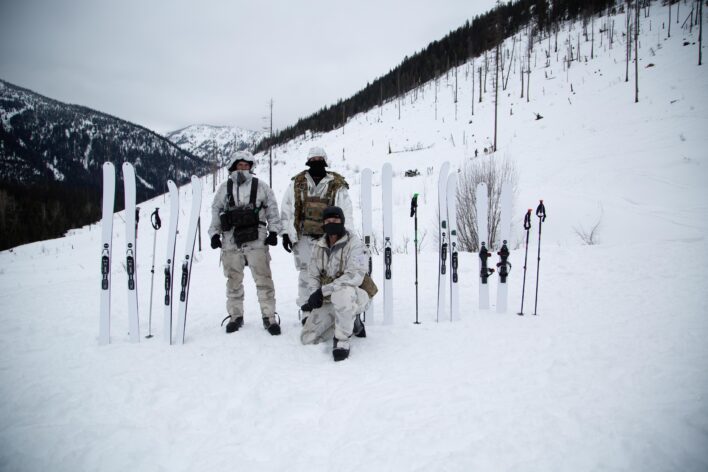
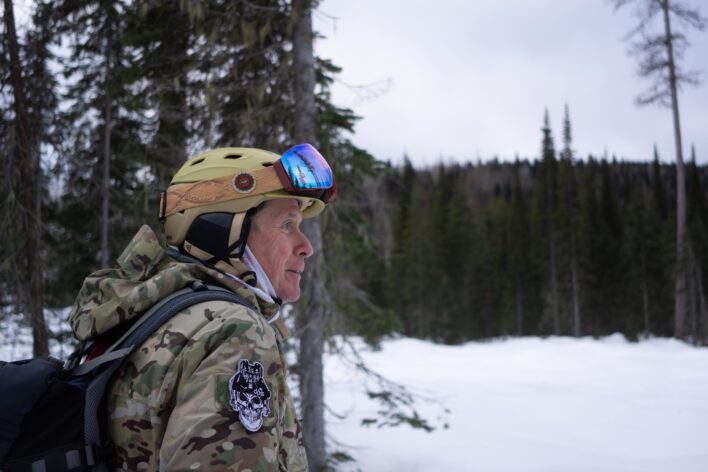
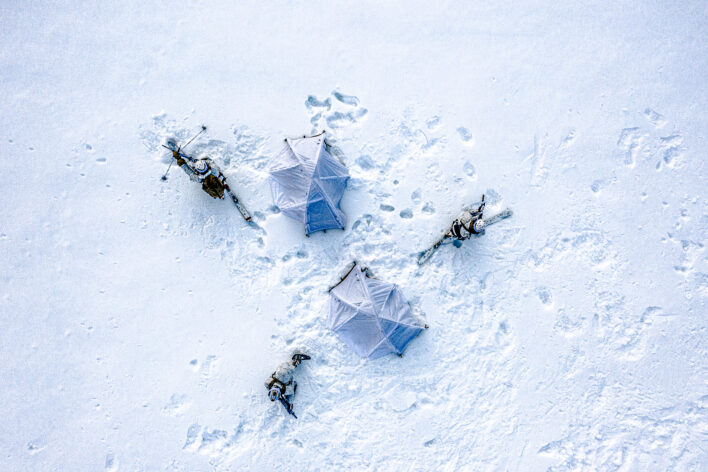
[Top] Camp Bjorn sits camouflaged under an evergreen tree canopy. [Left] Green Berets learn the ways of winter while blending into the snow. [Right] After dedicating his life to skiing, Cannon is now using that knowledge to head up the DPS Defense project. Mike Horn
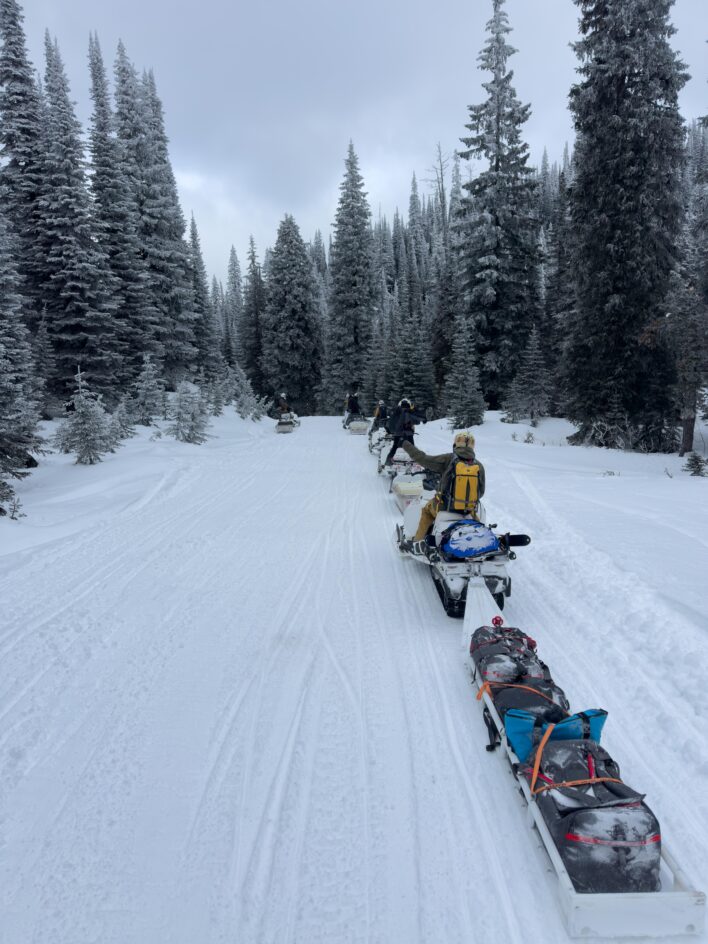
It’s roughly a 25-mile sled ride into camp, and everything we bring in needs to fit on our backs, the sled or in a pulk. Two instructors are waiting for us when we pull up to the cache, and we load up white-out, military-issue sleds for the journey to what the 10th SFG calls Camp Bjorn.
Camp Bjorn is named in honor of 10th Group Master Sergeant Evan Bjorn, a fallen 10th Group soldier. Our route mostly contours along a groomed path that’s warped by wave-like whoops and the occasional fallen tree; they run a snowcat out here periodically to make the riding conditions a little more tolerable, but, like most of the west, it’s been a low-snow year and unseasonably warm. LogPack, the supply and logistics team, travels in and out nearly every day, often towing heavy loads of fuel and equipment. It’s a serious pull on a sled and hammers the access road.
As we approach a sidehill that undercuts a steep slope above, the lead rider stops and advises that we’ll be crossing this one at a time. He informs us that it slides at least once a winter and covers the road more than 10 feet deep in debris. Judging by the diameter of the mangled tree trunks and debris piles already littering the slope, he’s not exaggerating. Cannon crosses first, pulk bouncing and sliding behind him, and, once he’s out of sight, I thumb the throttle, and we carry on toward camp.
The group slows as we cross a bridge over a frozen lake. Dense stands of Douglas fir spun with wispy witch’s-hair lichen flank the ice. We ride past the lake, into the forest on a narrow track and arrive at a camp abuzz with activity. Heaters and other equipment are being wrenched, snow gathered to melt for water, generators refueled and wood restocked.
This is the role of the LogPack Team—they run logistics and support for the camp. Most of them are between 18 and 22 years old, although a few are a little older. Some, like Specialist Jorge Luis Rodriguez Jr., stay at camp for weeks at a time. Others go in and out daily. Cannon and Specialist Rodriguez met last year and greet each other like old friends.
“We do what we do so that they can train better and have more time to focus on the task at hand,” Rodriguez tells me of his role supporting the 10th Group instructors and students. “Only in this unit are you going to see this type of training and use everything you’ve learned to adapt to the environment. There’s no handholding. They encourage us to use our heads to solve problems.”
Like all of these soldiers, Rodriguez spends extended time away from home. “It’s hard. It’s definitely hard,” he says. “I have a 3-year-old daughter and a wife. The good thing is everyone is going through it, so you always have someone to talk to.”
“They sacrifice so much, so we can smoke weed and ski powder,” Cannon says after Specialist Rodriguez leaves us and goes back to wrangling the LogPack Team. “It’s so hard on them, on their families.”
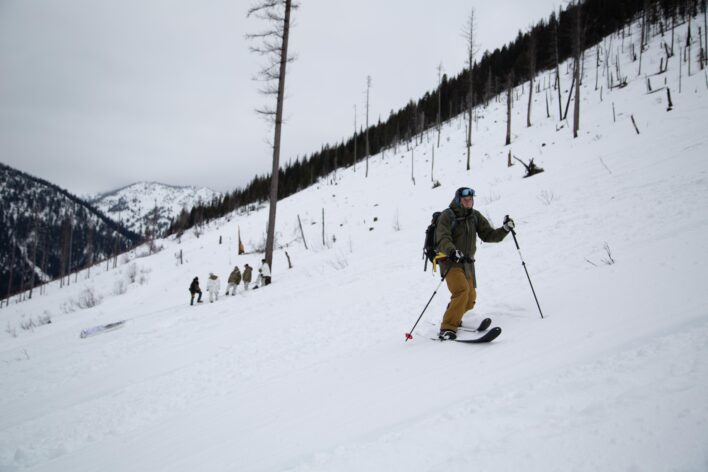
There is a higher sense of purpose here. Loyalty that runs deeper than business relationships and the occasional ski date.
Cannon and I unstrap our bags and skis from the pulk and drop the gear off in one of the green half-dome-shaped tents that house the instructors, students and support personnel. It’s mostly empty other than a couple dozen cases of MREs and some scattered spare equipment. Then we head out to meet a group of students and instructors on patrol. Dressed mainly in white camouflage, the students are hunkered down in excavated tree wells with their skis plush-down on scavenged boughs to keep the snow from sticking.
As Instructor C explains, “When you’re just out backcountry skiing, you can stand your skis up vertically to keep the skins out of the snow.” When your mission is to go undetected, the skis have to stay flat on the ground.
Touring on the same skis as the soldiers, I shuffle along their tracks and catch up with the group as they exit the woods and spread out across the open valley floor before beginning their ascent of a nearby knoll. They take turns hauling heavy pulks, skinning and switchbacking on slick, milled facets and barely breakable crust. Some of them have little to no skiing—let alone touring—experience at all.
When it comes to skiing downhill, loaded pulks and all, Instructor L says, “At a certain point, whether you know how to ski or not, you just have to be an athlete. Don’t overthink it.”
So, send it more or less. And that’s what they do, barreling downhill one by one in snow conditions that would be perilous on an alpine setup, never mind this light-touring-oriented gear. They thrash and crash and keep pushing on; they still have to trek all the way back to camp.
Dusk is approaching as Cannon and I ski to the sleds, load up and let our headlights guide the way back to camp. We fill thermoses with water from the melt station and rehydrate MREs for dinner before joining the instructors gathered at the far end of their tent. They live in close quarters, not more than a few feet in between cots, and piles of gear and goods fill every corner and hang haphazardly from the tent’s wooden frame.
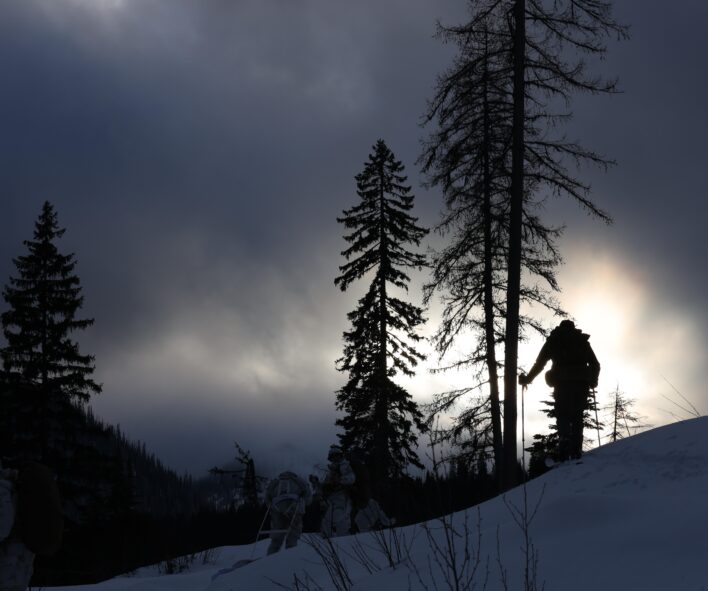
The 10th SFG have a reputation for being the warrior scholars. In the back corner, two instructors play chess while listening to the Kingdom of Ice audiobook. Another strums AC/DC’s “Back in Black” on electric guitar and shows me how his night vision NODs work. As I take a close-up photo of him strumming along, I’m reminded—not that I need a reminder—not to fuck around with these guys.
“You know you need to get that photo cleared by the PAO [Public Affairs Officer], right?” he says, looking me straight in the eyes.
“One-hundred percent,” I reply. I’ll tangle with the Five Families before crossing this dude.
We sit back and settle into their world for a while, sharing mountain stories and seeing the life of Green Berets play out in real time. Starlight spills through the fog like milky headlights as we head back to our quarters and hunker down for a restless night of sleep on army-issue cots.
Tired but stoked for the day, Cannon and I spend the first phase of the next morning hammering down multiple cups of coffee before rolling out on our sleds to join the training session. The students and instructors are already a few miles from camp doing rope work and learning team rescue techniques for hauling and lowering heavy loads.
They’re broken up into two teams; both practice using trees as anchors and hauling and lowering a heavy pulk that sometimes has an instructor in it to add more weight. Every once in a while, an instructor jumps in the pulk and takes a joyride downhill, bailing right at the roadcut. That was one of the eye-opening things about this trip. One might expect these guys to be cold-blooded machines, robots, but at the end of the day they are people, too, who want to laugh, have fun and bust each other’s chops, just like any other group of friends goofing off in the skintrack.
The Special Forces motto, “De Oppresso Liber,” translates to, “From oppression we will liberate them.”
On our way out of camp, I can’t drop the feeling that I just had a once-in-a-lifetime experience, something money can’t buy. I feel humbled. Liberated from some of my preconceived notions of who these people would be, how they might think or act. I’ve spent much of my career penning fluffy destination stories and profiles about the pursuit of wild experiences, fresh tracks and that perfect turn. Things largely focused on fulfilling the self. This embedding felt more powerful, perspective changing and real than all of that.
I’m left inspired, but also contemplative. What interests have I served other than my own? What have I given up compared to what I’ve been given? I think to myself. I know Cannon contemplates these same questions. Why would a ski bum and a company of ski bums have it any other way? This is why he’s here and why DPS has been serving the armed forces for the last decade. It’s more than just the turn. Cannon has made this his life’s work, the pinnacle chapter in a life spent in the deep.
“If you think what you do is good, keep doing it,” Specialist Rodriguez said to Cannon and I just before we left Camp Bjorn. “If you believe in something, keep believing.” ❆
Editor’s Note: The U.S. Army’s utilization of the specified brand of skis by the 10th Special Forces Group does not constitute or imply an endorsement of the brand or its products by the U.S. Army.
This article was originally published in Issue 167, The Hidden Issue. To read, grab a copy, or subscribe to read our stories when they’re first published.
Related posts: