


With ever-expanding options for education facilitated by increased connectivity, skyrocketing participation in backcountry skiing and the COVID-era move to online education, an important question remains: can online options stand up to tried-and-true education in the wicked learning environment of backcountry travel?
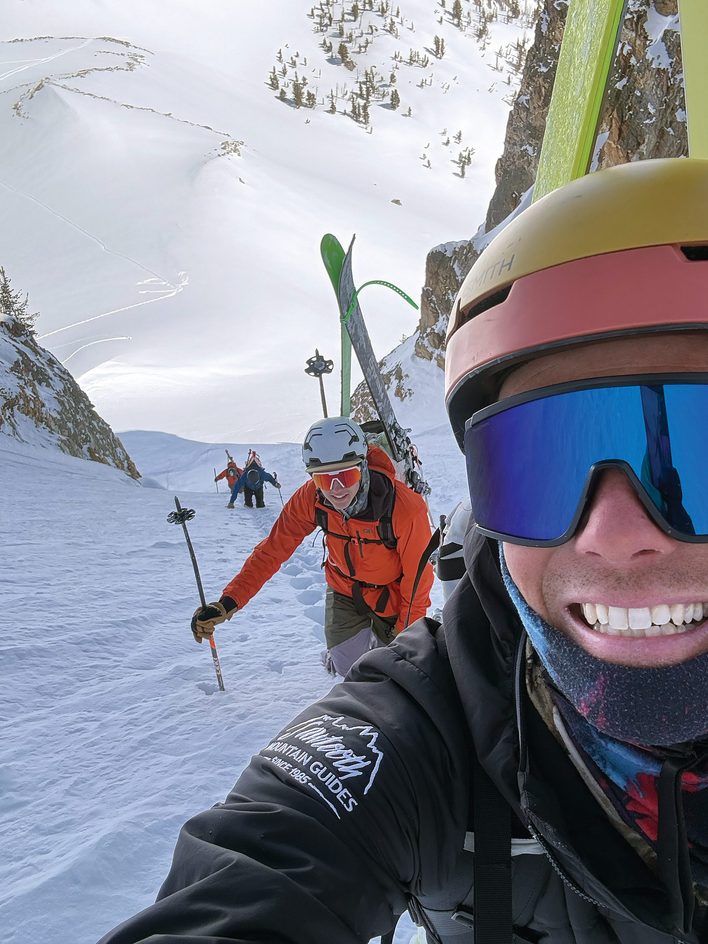
“How do you decide which side of the couloir to boot up? Also, do you think this little crust is wind or old sluff that set up?”
I’m peppering Sawtooth Mountain Guides co-owner Niels Meyer with questions as we slowly set a bootpack up a classic, north-facing Sawtooth couloir as part of an intro to ski mountaineering course. He allows me to take the lead and reminds me to look up as I kick steps into knee-deep April powder. Carefully, he answers each question, mostly with an “it depends” followed by an analysis of this particular moment.
Just a few weeks ago, I sat in my living room watching a recorded version of internationally certified guide Mark Smiley explain a similar head-up bootpacking technique as part of his Mountain Sense course on my computer screen.
But, other than wading through a couple hundred feet of rotten snow along a ridgeline the other week, this is the first time I’ve put my online skills to the test.
Through jotting diagrams in my notebook and attempting knots in my living room, the practice up to this point has felt like just that: practice. At the class in the Sawtooth’s, nothing’s been new, per se, but in-person mentorship has allowed me to dive into the inevitable intricacies and nuances of operating in a winter environment.
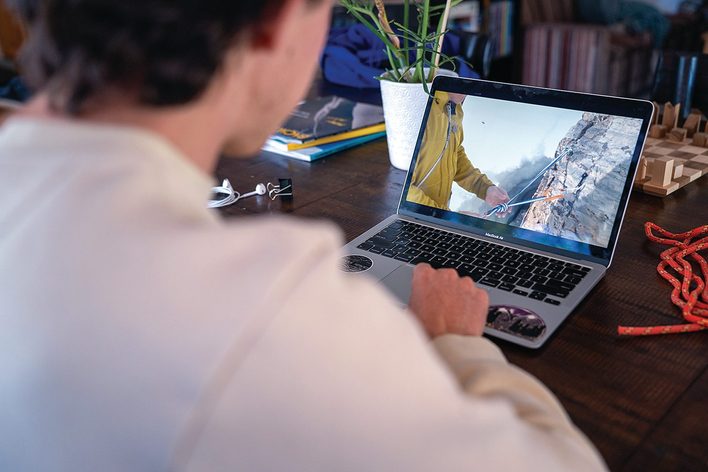
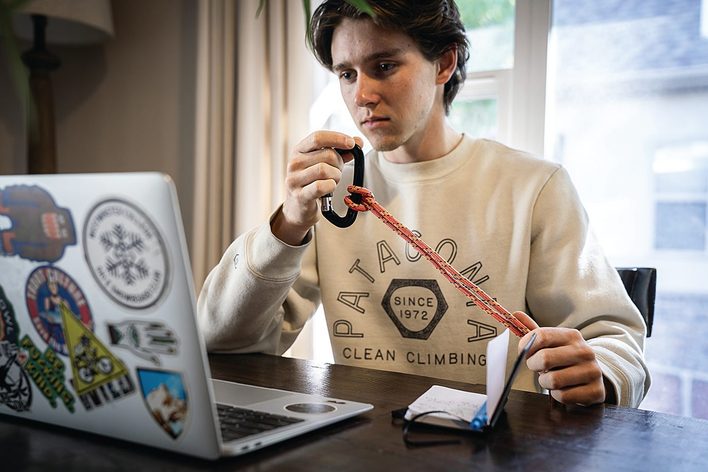
Since the pandemic, the world has shifted online. In the midst of Zoom accounts and home offices, backcountry skiing boomed. Demands on avalanche education soared alongside interest in the sport. Social distancing protocols, however, required traditional classroom-based teaching to be done online.
“That’s when I thought, oh geez, how are we going to teach this without interacting face to face in a classroom?” says Meyer when I ask him about the COVID shift in a later interview. “Trying to explain something like snowpack layers or terrain traps over Zoom? It just doesn’t land the same.”
In 2020, standardized avalanche courses switched to a hybrid approach, with pre-course online learning followed by traditional field days.
“I think the hybrid model has been a really good change overall,” says Meyer. “Students just get preloaded with a lot of information, and then we can go more in depth when we meet in person. Before, we used to go through so much information in such a short amount of time. And now we get to spend a lot more time in the field.”
While the shift online may have been a pandemic necessity, the prevalence of the internet as a new frontier of backcountry mentorship is due to more than pure timing.
Stepping into the world of avalanches, human factors, hop turns and sharps can feel like downing a firehose of information. I know this firsthand. A traditional education, through classes and mentorship, generally adds a huge commitment of time and money, is widely limited by where you live and can feel hard to break into at best. And even for those with access to the mountains, the wise mentor is an increasingly mythological figure.
“In terms of pure mentorship, I think it’s a dated approach,” says Smiley. “The best pro of online is that you can rewatch it on your time, in your space.” He also points to online learning removing negative factors such as cold weather, group dynamics and, importantly, a high financial burden, which can all be part of traditional fieldwork.
The catalyst for Smiley’s Mountain Sense course was actually time spent in the field. As we talk, he tells me about a time he was mentoring a friend in the Tetons: “As we’re exiting Avalanche Canyon, I was like ‘So what did you think about ski cutting? Did you have any questions about that, and what are your thoughts?’ He’s like, ‘Man, my feet were so cold I couldn’t pay attention.’”
It’s a salient point despite the humorous story. Smiley’s not the only guide who’s keyed into that dynamic, either. Just to name a few, internationally certified guide Zahan Billimoria launched an online course this fall. Dave Searle, another internationally certified guide, is expanding from his YouTube channel to offer online courses this winter, and the online platform Mountain Training Center offers a host of courses from fitness to avalanche education with a plethora of guides. That doesn’t include the hundreds of hours of YouTube explainers available for free, either.
“You don’t need to stand around on a glacier to learn how to tie a knot or how to set up a pulley system,” says Searle.
“The best pro of online is that you can rewatch it on your time, in your space.”
He explains skills like knot tying and pulley systems as tools in a toolbox. The more skills, or tools in your toolbox, the better, but those skills are only useful if you can apply them in the right ways, in the right situations.
“There’s skills and there’s experience,” says Searle. “Experience is knowing what skills to use and in what situation. You can’t get experience on an online course, but you can get skills.”
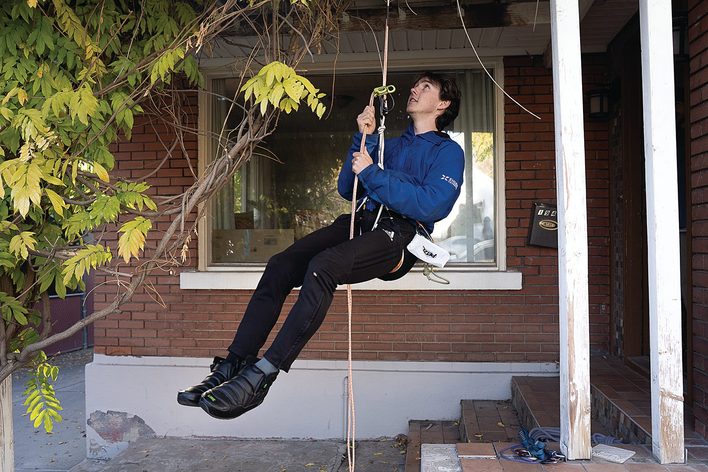
In the weeks leading up to my in-person ski mountaineering course, I fit crampons and rewatch online advice, fearing the mortal embarrassment of not knowing how to use shiny new equipment in front of strangers.
I figure knowing my gear is one of those living room skills that doesn’t really require a mentor. I skipped over the whole bootpacking part of the Mountain Sense course. It’s just walking, right? Apparently not.
Back in the couloir, Meyer informs me of the nuance I missed over video: smaller steps help partners behind and keeping my head up helps to stay on route, track changing snow conditions and watch for falling rocks.
In my case, the nuance is how to ascend a couloir, but similar intricacies are crucial in any snowy environment.
“If I just say to you, here’s these things called rollovers, terrain traps, all this stuff, and here’s a picture of them, you’re going to be tiptoeing, super scared in the mountains. You maybe saw a picture of a terrain trap, but now, you’re seeing powder and it’s distracting. Am I actually going to be able to identify these problems and hazards?” Meyer questions. There’s a missing link between skills and experience, one that in-person learning is adept at providing.
“Going out in the field, the guides can pull up midslope and seize on these really important learning opportunities where you’re getting real-world experience,” says Meyer.
The following day, we head to an adjacent basin. Instead of leftover powder, we’re in search of south-facing corn on an aesthetic line. After circumnavigating icy side hilling and our fair share of chunder, we switch to crampons and an ice axe and follow a serrated dorsal fin of rock to the ridgeline.
Along the way, I make observations that coalesce into questions. Meyer responds, we pause for the view, and the conversation resumes. The rhythm of questions, answers, follow-ups and adjustments would be impossible to replicate over a screen. Here, I can ask imperfect questions and still get useful answers.
There’s a missing link between skills and experience, one that in-person learning is adept at providing.
Afterwards, Meyer turns my questions back on me. “Online or in-person?”
He’s using my vocabulary, pitting one against the other, but I’ve realized it’s the wrong question. Online courses provide vocabulary and concepts, but it was the rhythm of kick turns and constant communication with partners where those concepts metamorphosed into experience.
Perhaps that’s the answer. “People should read books, watch Mountain Sense courses and take in-person courses,” says Smiley. “There’s no one-stop shop because it’s such a fluid environment, and we need to always be learning.” Online education opens the door, providing vocabulary and foundational skills to those who might never access them otherwise. But the mountains themselves remain the ultimate classroom—messy, inconvenient and irreplaceable. The question isn’t one or the other, but how we weave them together.
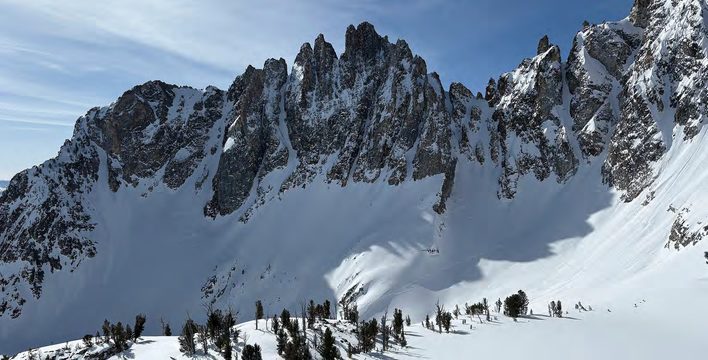
I have skis on my back again a month later, marching up a frozen Wasatch classic. A tongue of snow cuts through putrid rock, swinging from west to north. As we start to climb, the sun peaks over the summit. Its rays bounce off the western wall. A ragged shadow clefts the couloir in half.
I kick steps into firm snow, choosing to weave my way up instead of following the huge, frontpointing steps from a previous party. In the sun, my foot sinks into supportable corn. One step over the shadow line and my crampon just barely bites into icy, wind effected snow. Halfway up, my touring partner, Ben, and I pause to catch our breath in a protected pocket. Our timing is solid, but the couloir wall is absorbing heat fast. Pebbles intermittently tumble down, and chunks of rock litter the right-side fall line, evidence of previous days’ work.
“Let’s stay in the shade to the left even though it’s harder work,” I say. “I’m worried about rockfall.”
In the frozen snow, I have to kick two or three times to make a platform worth following, but for what feels like the first time ever, I’m leading the way and feel confident. As the sun reaches higher into the sky, the shadows retreat and we can use the double fall-line to our advantage—any possible rockfall will be forced right and we can stay in the sun on the slight ridge.
Right on queue, fist-sized shrapnel whizzes by a pole length away, cascading off the sun-touched western wall. I flinch instinctively. This time though, I’m aware of the danger, and my head’s been up the whole time.
This article was originally published in Issue 166, The Quiet Issue. To read, grab a copy, or subscribe to read our stories when they’re first published.
Related posts: