

Our test runs the spectrum from skinny skimo setups to purebred pow slayers. The result is a robust selection of touring boots that fill every niche: from your first touring ski to the perfect setup for that 50-mile traverse to the best combo for big-mountain sends.
Each boot is tested by roughly seven testers, each of whom takes the product out for at least three lift-access runs and/or a tour. An item that performs well in its intended category is a Gear Guide Select. A product that performs well beyond its intended category earns an Editors’ Choice (EC).
This selection features heavier, freeride-oriented touring boots. To see our full gear guide in its original, glossy print form, click here.
See our Editors’ Choice boots here, or find one by weight below. You can also search for a brand or boot.
Editors’ Choice
Editors’ Choice
Armada AR One AF 130
Can Tour, Will Rip
Weight: 4,200g | Sizes: 24-29.5 | Flex: 130 | ROM: 53° | Last: 100mm | Price: $1,050 | armadasnow.com
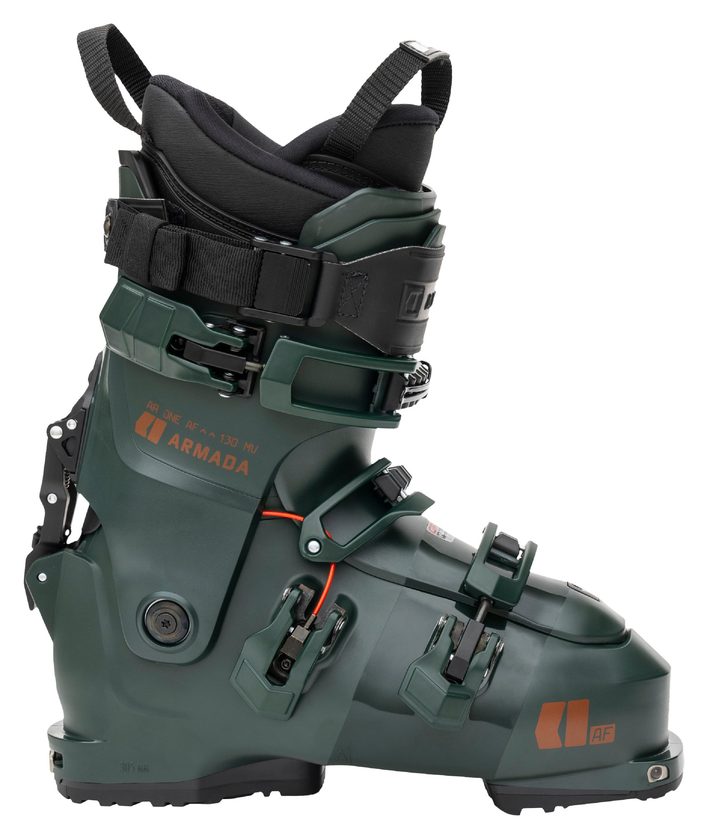
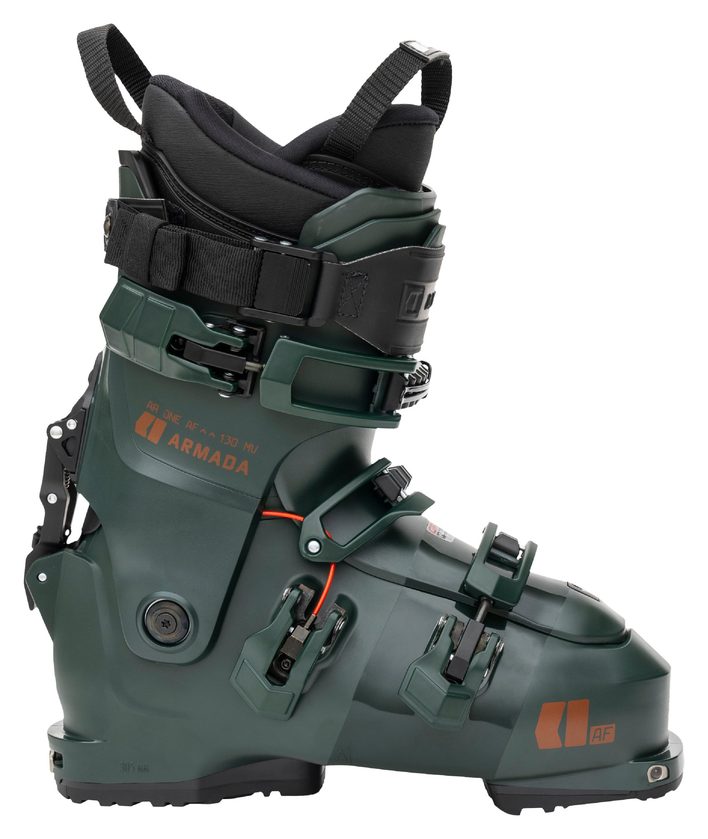
Unlike other Armada boots that sport only a pin toe, the new AR One AF 130 has a walk mode lever and pin inserts on the heel. The upgrade opens the boot up to new uphill possibilities, but the focus is still on the downhill. One tester who alternates between long skintracks and big drops said, “This is not the boot of choice for 6k days in the backcountry, but I felt more comfortable going for big airs with this boot than any other test boots this week.”
To create the AF model, Armada started with their tech-toe-only boot, the AR One 130 MV, and then added walkability. The liner is articulated around the ankle, and a frictionless cuff gives a claimed 53-degree ROM, though testers noted it felt restricted. Both models share the Slingshot Buckle, a tension cable system that attaches to the top foot buckle and wraps around the ankle for better heel hold in both walk and ski mode. “Well-placed buckles provide plenty of comfort and a snug fit,” said a tester who usually sports 140-flex race boots.
While the flex wasn’t as stiff as his normal kicks, he still stated, “This boot has a near-perfect progressive flex.” Armada calls this their Natty Flex, and attributes it to the three-piece Cabrio design paired with a wrap-style cuff which is held together by a 50-millimeter power strap and a single cuff buckle. When pushing through the front of the boot, the full polyurethane shell flexes smoothly through a true 130 flex. While small testers struggled to engage it, a skier who frequents Chamonix couloirs said, “This is a heavy, stable, three-buckle boot made to rip, huck and blast big terrain with big features.”
“When landing big airs, it felt like I had thick, stable oak tree trunks for legs.” —Mike Lewis
Where to buy
Armada AR One AF 130
Editors’ Choice
Dalbello Cabrio LV Free Pro
Transformer in Disguise
Weight: 3,570g | Sizes: 24.5-30.5 | Flex: 130+ | ROM: 65° | Last: 99mm | Price: $1,100 | dalbelloboots.com
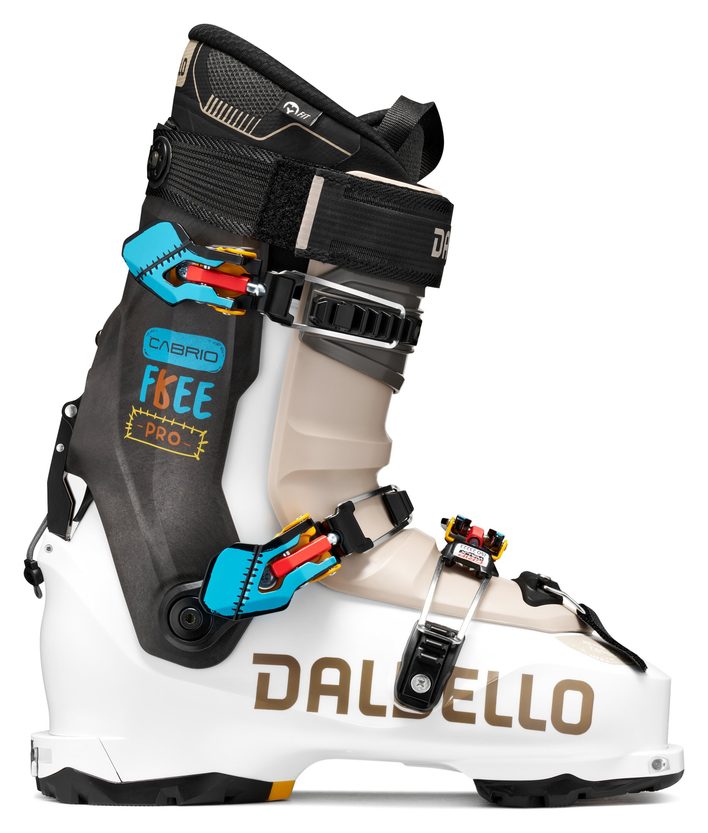
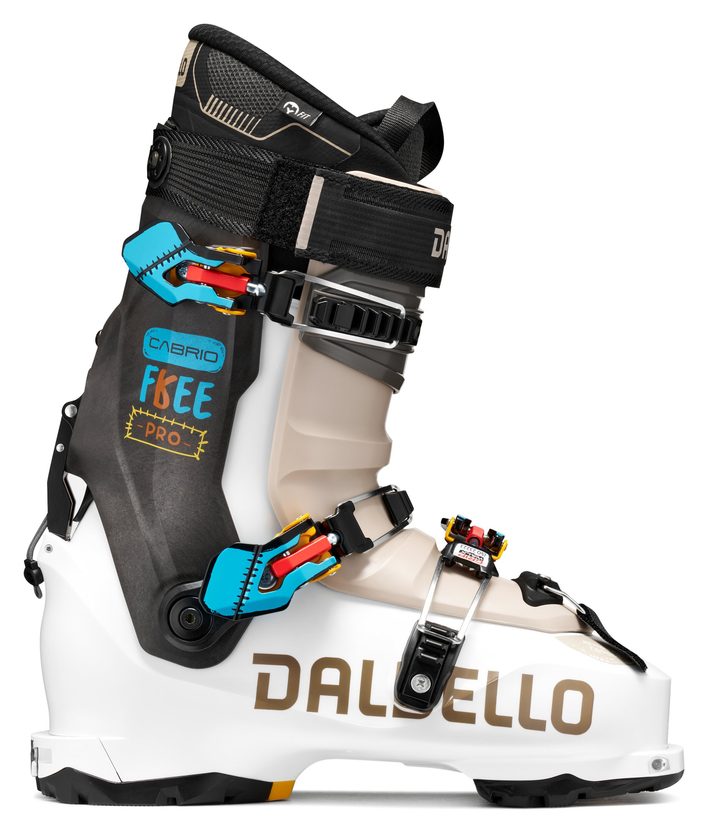
A tester who prefers his boots heavy called these “the enduro bike of boots,” adding they “ski amazing and walk good enough.” This is in line with how Dalbello designed the new Cabrio LV Free Pro, which they slot into their downhill-focused freetouring line.
On the descent, it’s unsurprising that this boot scored mainly 6s and 7s on stiffness and snow feel. To achieve a progressive flex and alpine performance, each of the three pieces of the Cabrio design are made from a different material: TPU in the lower shell, polyamide and carbon in the cuff and Pebax Rnew in the tongue. “Formidable flex,” said a tester who favors a 140 flex. “Out-of-the-box comfort is fantastic, and the instep buckle keeps you locked in.” That instep buckle was reworked from previous Dalbello models to be higher off the snow—keeping it from catching during bootpacks or deep turns—while still sitting at a 45-degree angle to lock the heel down without inhibiting the flex. Similarly, the toe buckle was flipped to be lower profile and sit on a plastic wing instead of directly on the toe for increased comfort.
This build doesn’t look like it should hike, but, when the tongue is removed, revealing a gaiter, the Cabrio LV Free Pro turns into a (heavy) skimo slipper with a claimed 65-degree ROM. While one tester called removing the tongue “onerous,” and the walk-mode lever “tricky to flip,” he thought the slow transitions were worth it. “Tongue-less and in walk mode, the boot exhibits an impressive range of fore/aft motion that makes booting and skinning a breeze,” he raved.
“Removable tongue truly gives you the best of both worlds. The fit and snow feel was phenomenal.” —Corey Spies
Where to buy
Dalbello Cabrio LV Free Pro
Editors’ Choice
Tecnica Zero G Decoy Pro GW
The Best of Both Boots
Weight: 3,430g | Sizes: 22.5-30.5 | Flex: 130 | ROM: 55° | Last: 99mm | Price: $1,000 | blizzard-tecnica.com
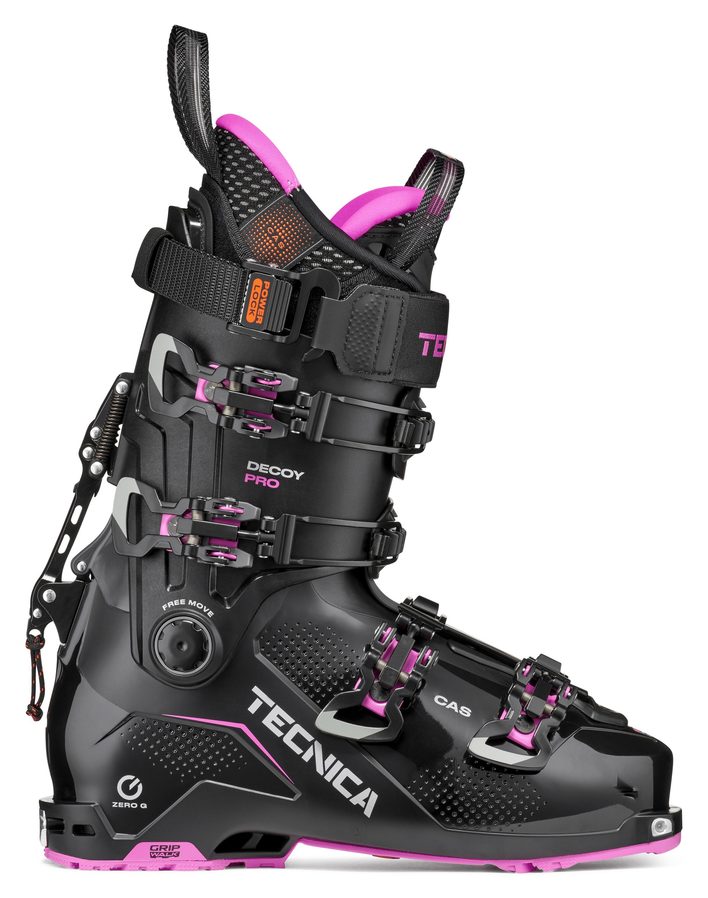
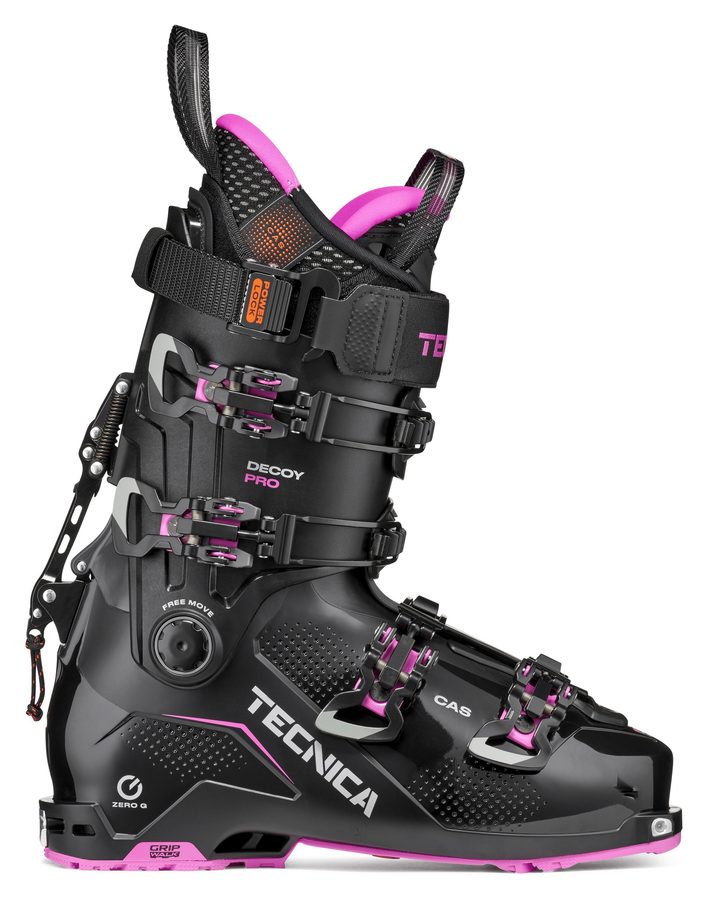
For years, Tecnica has offered a touring-oriented Zero G Pro Tour and downhill-focused Cochise. This year, the brand took a middle path to create the Zero G Decoy Pro GW, which one tester described as “a real 50/50 boot.”
To strike this balance, Tecnica started with the classic Zero G’s design. They kept the free-pivoting T-Hike walk-mode mechanism and lightweight Grilamid-injected cuff. “Impressive walk mode range that stands up to other more touring-centric Tecnica boots. The weight will keep you somewhat close to the road/resort,” observed a PNW vert lover. The Decoy retains the Zero G’s claimed 55-degree ROM, but it weighs more due to a polyurethane shell, traditional buckles, thick power strap and alpine-style liner, à la the Cochise.
While the Decoy’s lower shell uses the same shape and Power Frame—a co-injected frame linking the ankle’s pivot point above and below the walk mode—as the Zero G Pro Tour, the Decoy’s frame is thicker and uses progressively flexing PU. “Very nice, bouncy, progressive flex. It has nice power into the lower foot,” said a former freeride competitor. “The PU lower is notably damper than the Zero G Pro.” A hard-carving tester called them “a perfect in-between, great walkability and a stiff, skiable boot.”
Despite the same lower-cuff shape as the Zero G Pro Tour, a few testers noted a tighter fit in the Decoy thanks to a thicker liner. “Narrow/low-volume fit took some getting used to, but translated well into performance on groomers,” said a hard charger. Tecnica’s Custom Adaptive Shell (C.A.S.) is dimpled in commonly molded spots for an easier bootfitting experience.
“For the Cochise customer who is backcountry curious and can’t quite get the Zero G.” —Adam Howard
Where to buy
Tecnica Zero G Decoy Pro GW
Editors’ Choice
Atomic Hawx Ultra XTD 115 Boa W
Boogie Down Boots
Weight: 3,336g | Sizes: 22.5-27.5 | Flex: 115 | ROM: 55° | Last: 98mm | Price: $1,100 | atomic.com
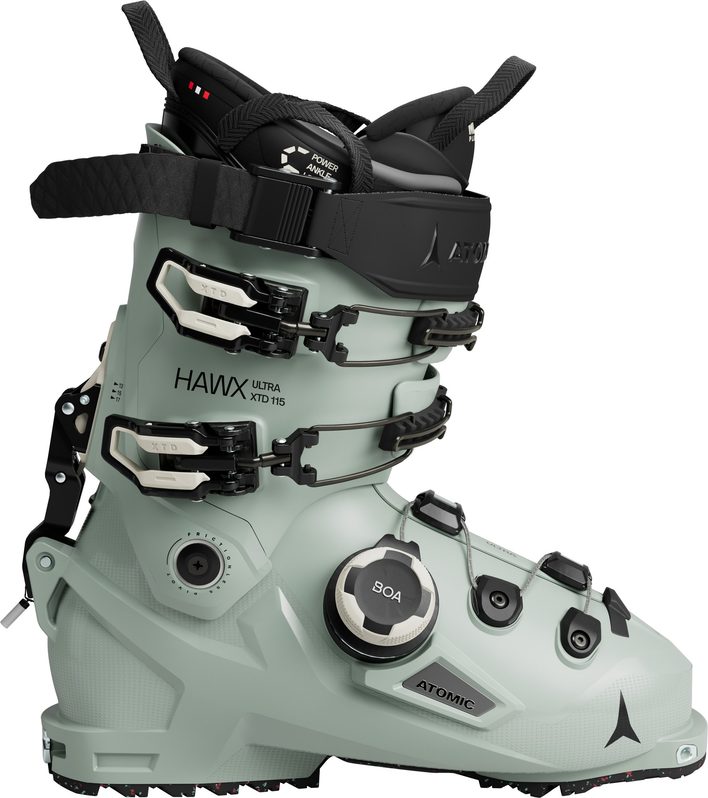
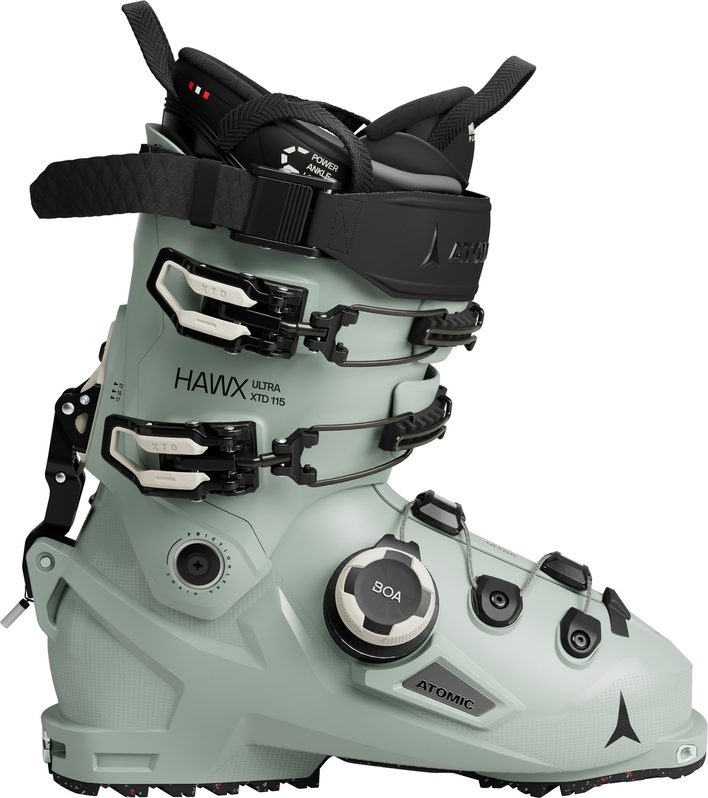
“A great boot that can replicate an alpine boot in the backcountry,” said a tester who grew up in the Tetons. “It’s snappy and responsive when pressured but also allows for function when touring.”
The Ultra XTD shell and cuff are PU, which adds some grams in the name of stiffness and a progressive flex. Two buckles and a cinch strap tighten the upper while a large Boa secures the boot. “I enjoyed how this boot skied and was quite reactive to forward pressure,” said the Wyoming native. These Ultras scored a 6/7 in fore/aft stiffness and a 5.5/7 laterally. “As close to a resort boot as you can get in a touring boot,” added a collegiate Nordic racer, though she noted, “The range of motion is practically nonexistent.”
To accommodate women’s calves better, these boots feature a shorter cuff than the men’s. While it was a nonissue for most testers, one racer with self-declared “average to longer lower legs” found it “ends too low for the stiffness of the boot.” While the Ultra features the narrowest last of the Hawx line, an editor familiar with the previous four-buckle iteration of the XTD 115 W said, “The Boa model of this boot doesn’t fit my narrow foot and heel quite as well.” The liner’s tongue also detaches—which is intended to add customization—but “makes it a pain to put [the boot] on,” said the Nordic racer. Still, she concluded, “This boot is great for a primarily resort skier who wants to leave the door open to touring.”
“This is a 75% frontcountry/25% sidecountry boot for someone who prioritizes downhill performance.” —Greta Close
Where to buy
Atomic Hawx Ultra XTD 115 Boa W
Select Boots
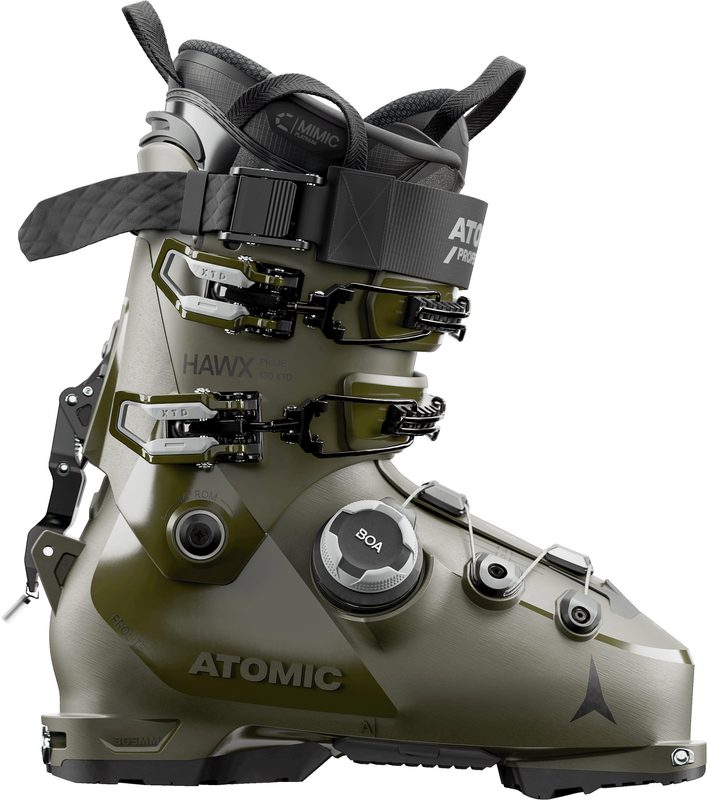
Atomic Hawx Prime XTD Boa 130
Weight: 4,008g | Sizes: 24-30.5 | Flex: 130 | ROM: 54° | Last: 100mm | Price: $1,200 | atomic.com
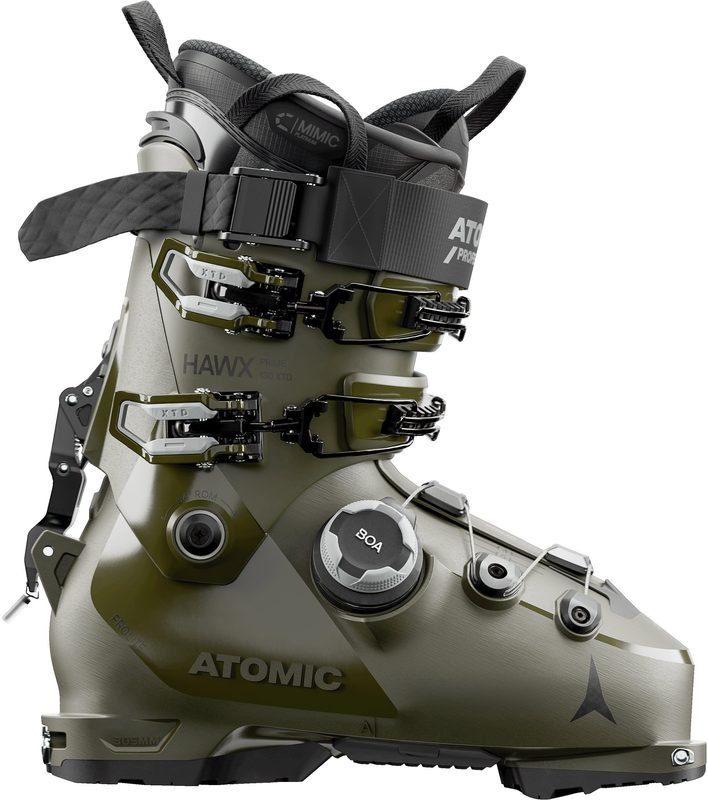
The stiffest of Atomic’s Prime XTD models, the Boa 130 features a PU shell and cuff, a power strap and two buckles up top, and an H+i1 Boa on the boot. “I would buy this as a one-boot quiver,” said a former racer who now tours in the PNW in a three-piece freeride boot. “Good, solid hybrid boots.” He scored the model 5/7 for fore/aft stiffness and 6/7 for lateral stiffness and snow feel, but a current collegiate racer felt like he could over flex them when really pushing through a turn. Both were happy with the walk-mode lever’s location and ease of use, though when in walk mode, the PNW skier said, “Some walk modes have better range.” The student athlete added, “This boot is built for the inbounds do-it-all rider who may do one to two short tours a month.” Despite the limited ROM, one tester still appreciated a walkable weight, saying, “A nice all-arounder for the skier who likes touring in light boots and being able to ski resort.”
TL;DR: That stiff, chunky boot you can trust on any descent but whose walk mode could prove limiting on the uptrack.
Where to buy
Atomic Hawx Prime XTD Boa 130
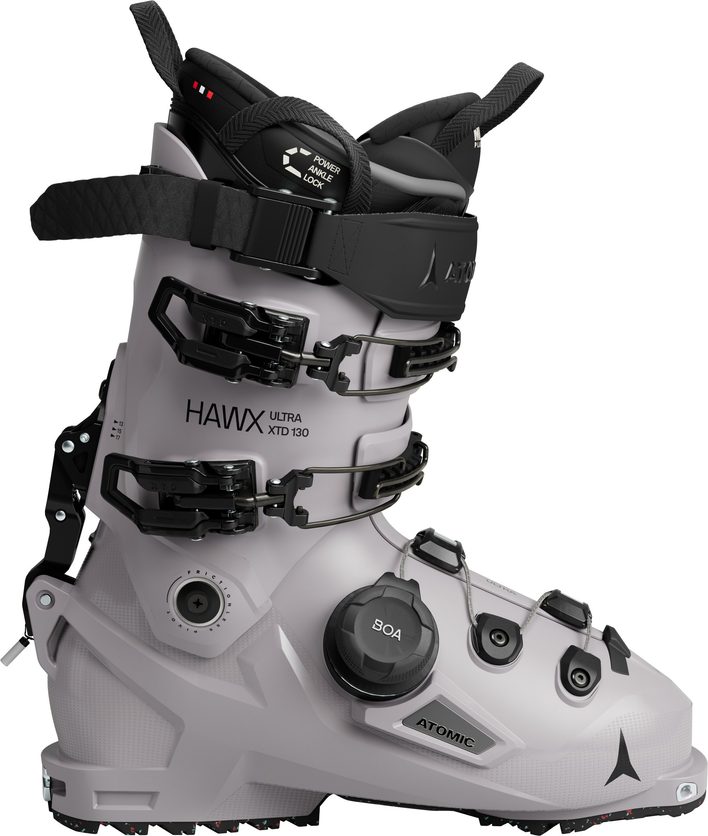
Atomic Hawx Ultra XTD 130 Boa
Weight: 3,722g | Sizes: 22-29.5 | Flex: 130 | ROM: 54° | Last: 98mm | Price: $1,200 | atomic.com
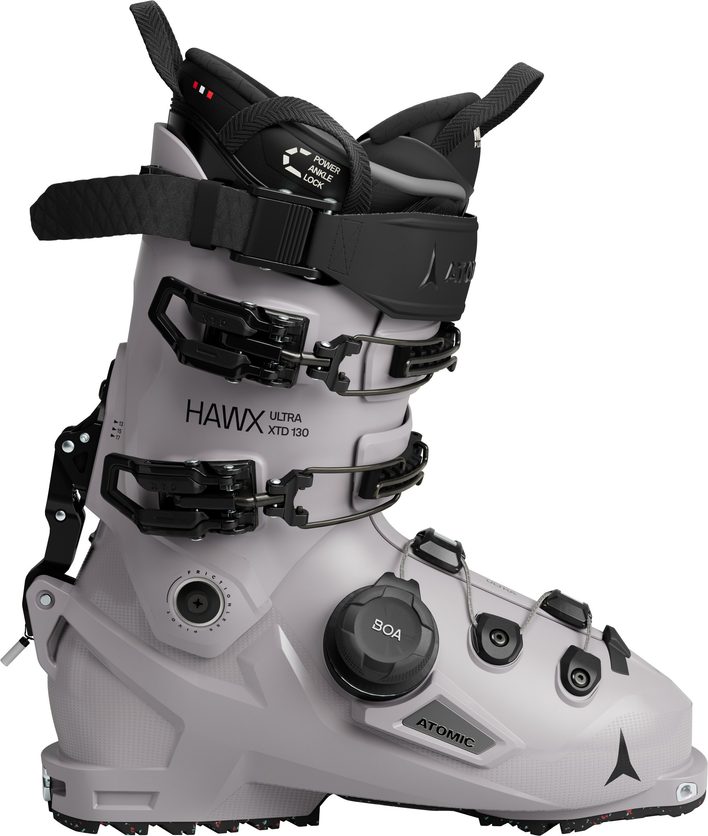
“Built for someone seeking alpine performance in a touring boot,” said an East Coaster and veteran tester. The progressive-flexing PU shell and cuff lent themselves to stiffness which scored a unanimous 5/7 for fore/aft and 6/7 laterally. “Nice, consistent progressive flex,” said the East Coaster. He also appreciated the comfort of the H+i1 Boa on the forefoot. Up top is standard fare: a pair of buckles and a power strap. Testers were impressed by the fully heat-moldable, plush-out-of-box Mimic Platinum Liner—which fits even better after a mold—scoring it a 6/7. Though, the veteran called the removable tongue “a bad idea” since it impeded his ability to pull the boot on. Still, testers scored these Ultras 5s and 6s on entry/exit and buckle design. Perhaps most surprising was the 5/7 score they earned for ROM. “An 80/20 resort/backcountry or performance-oriented backcountry boot,” said a 6’4” tester.
TL;DR: A boot so comfortable and skiable that you might just forget its limited ROM.
Where to buy
Atomic Hawx Ultra XTD 130 Boa
Salomon S/LAB Shift Alpha S Boa
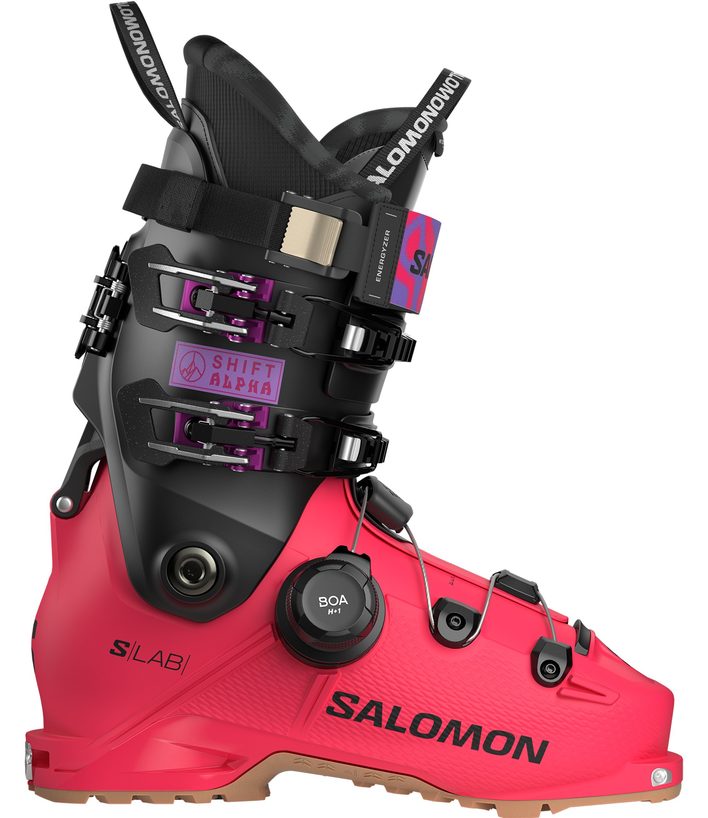
Weight: 3,685g | Sizes: 22-29.5 | Flex: 140 | ROM: 45° | Last: 98mm | Price: $1,250 | salomon.com
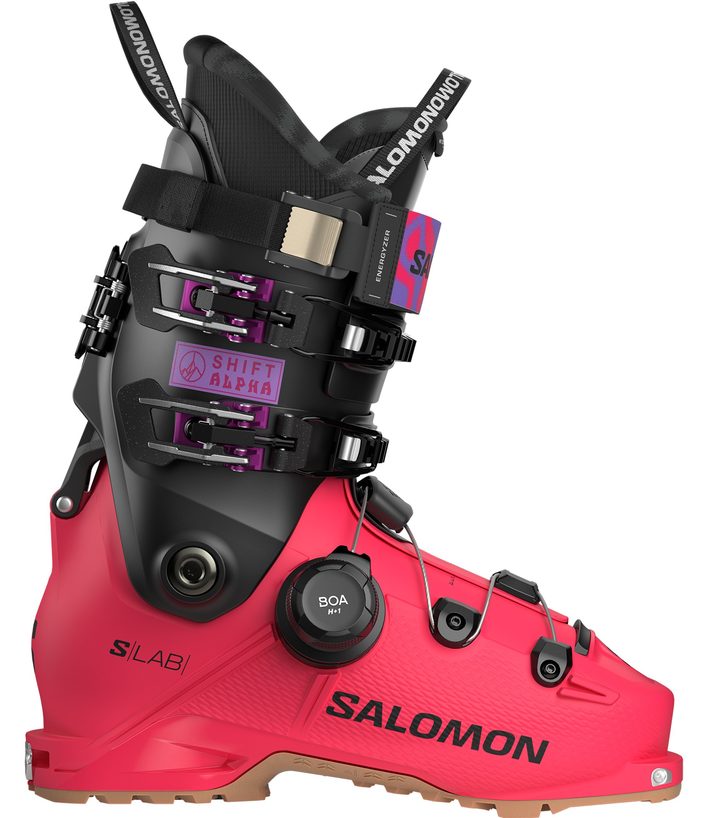
This stiffer version of the Shift Alpha Boa 130 gains extra flex points from a plastic bar in the internal walk mode that connects the PU lower and Pebax cuff via a horizontal plastic link. A freeride-oriented tester found it “helps transfer power into the lower,” while a 190-pound race coach called them “damp fore and aft.” He added, “Laterally and at the top of the turn, the Alpha is easy to engage, but in the belly of the turn, it bottoms out.” The weight relegates these to sidecountry terrain, but a boot expert said they had “plenty of walk mode for the category.” The high-quality liner, ease of entry and ergonomics scored an average of 6/7, and a Boa attached to a rubber belt over the ankle and foot keeps the heel locked. “Simple and easy to accommodate a range of foot volumes,” said a tester. However, almost every tester noted the canting. “Super interior. Requires anyone with a neutral stance to get boot work,” explained our boot expert.
TL;DR: This sidecountry boot walked surprisingly well and has a high-quality finish, but the canting is awkward.
Where to buy
Salomon S/LAB Shift Alpha S Boa
Atomic Hawx Prime XTD Boa 115 W
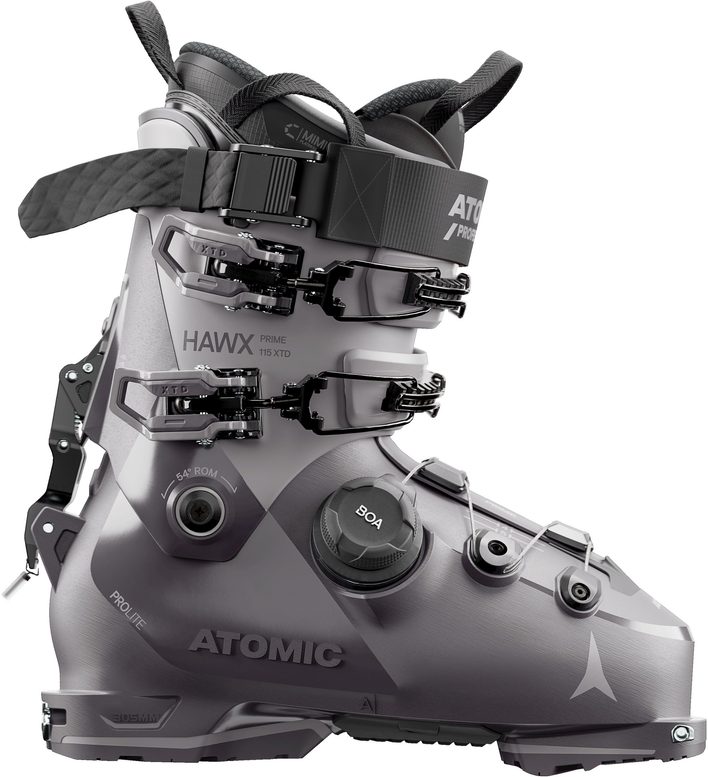
Weight: 3,652g | Sizes: 22-27.5 | Flex: 115 | ROM: 54° | Last: 100mm | Price: $1,100 | atomic.com
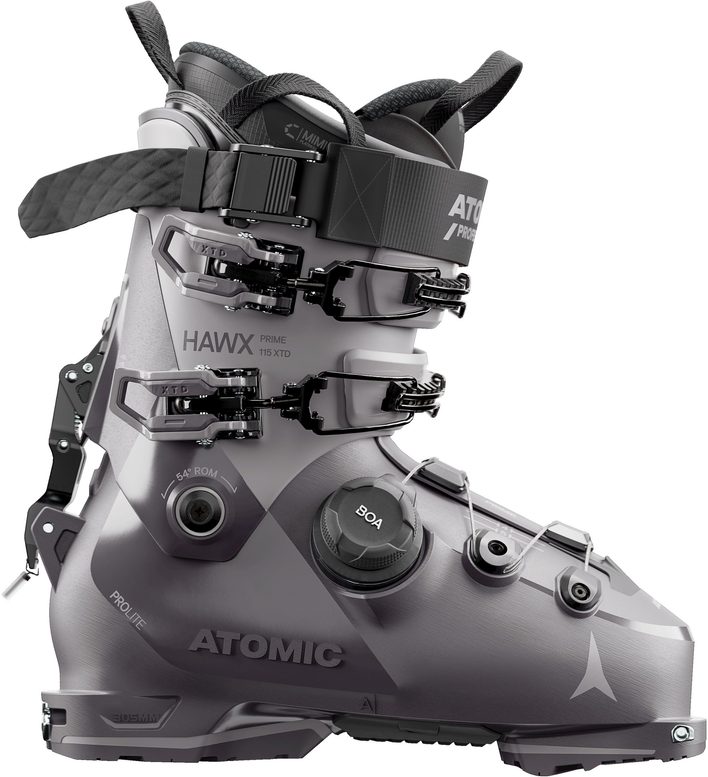
One young Vermonter said it best: “This boot is built for alpine skiing and ripping all over the mountain but occasionally going for a skin up.” The Prime XTD Boa 115 W sports a beefy Boa on the boot and two buckles and a power strap on the upper, all of which lock down a stiff PU shell and cuff. Said construction, along with reinforcement at the rear intersection of cuff and boot, earned a 6/7 for fore/aft and lateral stiffness. “The forward flex felt softer than 115 but stiff enough to power heavier, bigger boards,” said a lifelong skier from Colorado. She scored the Mimic Platinum Liner’s foot-contouring foam a 6/7 and recommended them for “the resort skier whose feet run cold.” Atomic’s spring-loaded walk-mode lever earned average scores, but testers were unimpressed with the 54-degree ROM. “If you want the option to tour but spend most of your time inbounds, this might be the boot for you,” said a Wasatch-based tester. “Skis like a dream.”
TL;DR: Comfy, shreddy and confidence inducing, they just don’t want to walk very far.
Where to buy
Atomic Hawx Prime XTD Boa 115 W
Salomon Shift Alpha Boa 115 W
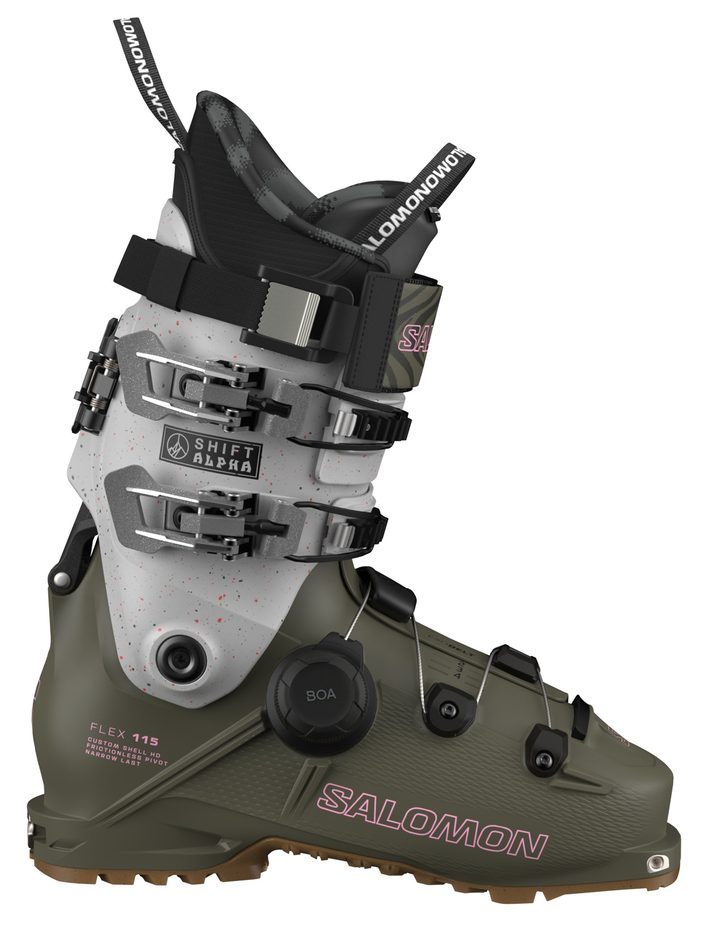
Weight: 3,340g | Sizes: 22-27.5 | Flex: 115 | ROM: 55° | Last: 98mm | Price: $1,050 | salomon.com
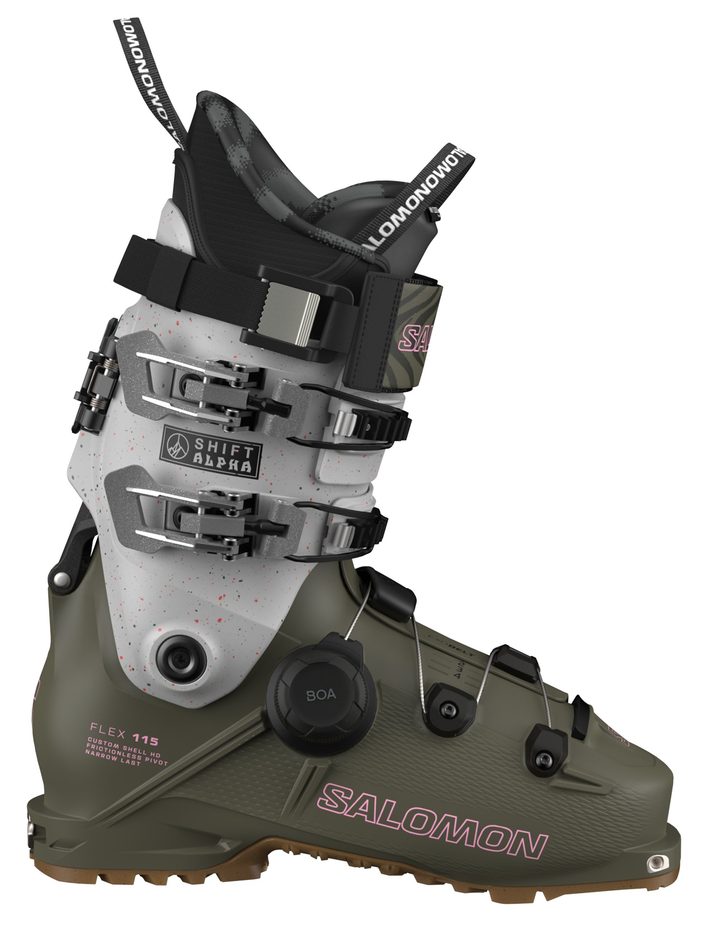
“This boot is built for sidecountry laps, for aggressive skiers who know how to command the boot to make it do what you want,” said a tester who prefers her AT boots to ski like they don’t have a walk mode. To balance stiffness with weight, the lower is traditional PU, and the cuff is a high-tech blend of polyolefin and recycled polyethylene. The two parts are then linked via a horizontal locking mechanism. Per Salomon, this allows the boot to flex like a true alpine boot. Testers backed the claim, including one who usually wears a 130-flex race boot: “They feel stiff but need to be told what to do.” Another added, “Forward lean angle and taller cuff height were wins.” She specified this was for “cold resort and sidecountry,” thanks to the thick liner. When it was time to walk, she said the walk mode was “easy to operate,” but noted that the ROM was meant for short skins.
TL;DR: This boot is great for Raynaud’s sufferers who still want to rip resort, hit the occasional skintrack and look good while doing it.
Where to buy
Salomon Shift Alpha Boa 115 W
Scarpa 4-Quattro Pro
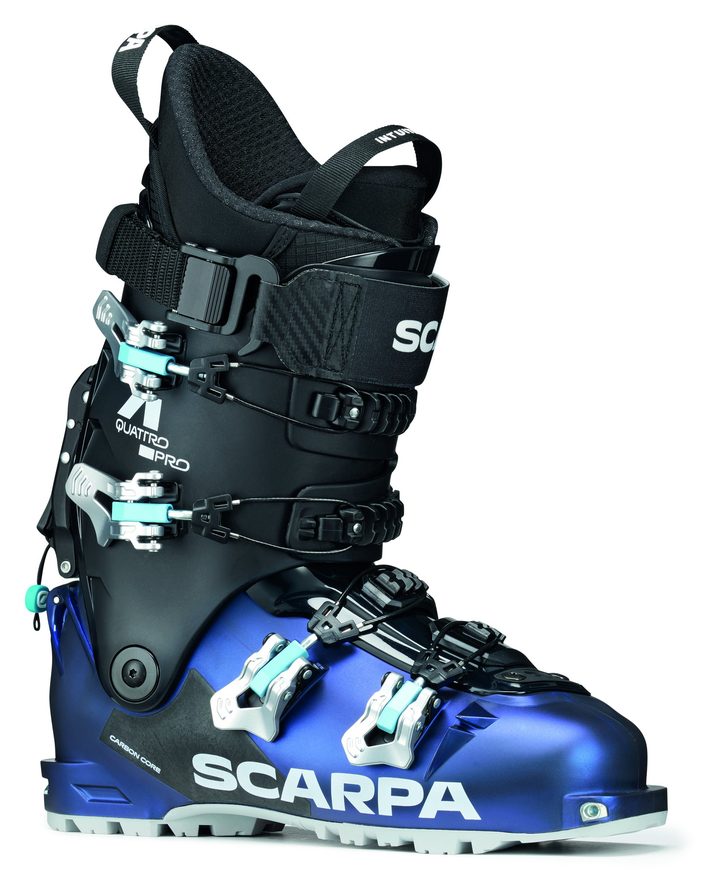
Weight: 3,100g | Sizes: 24.5-33 | Flex: 130+ | ROM: 60° | Last: 100mm | Price: $899 | scarpa.com
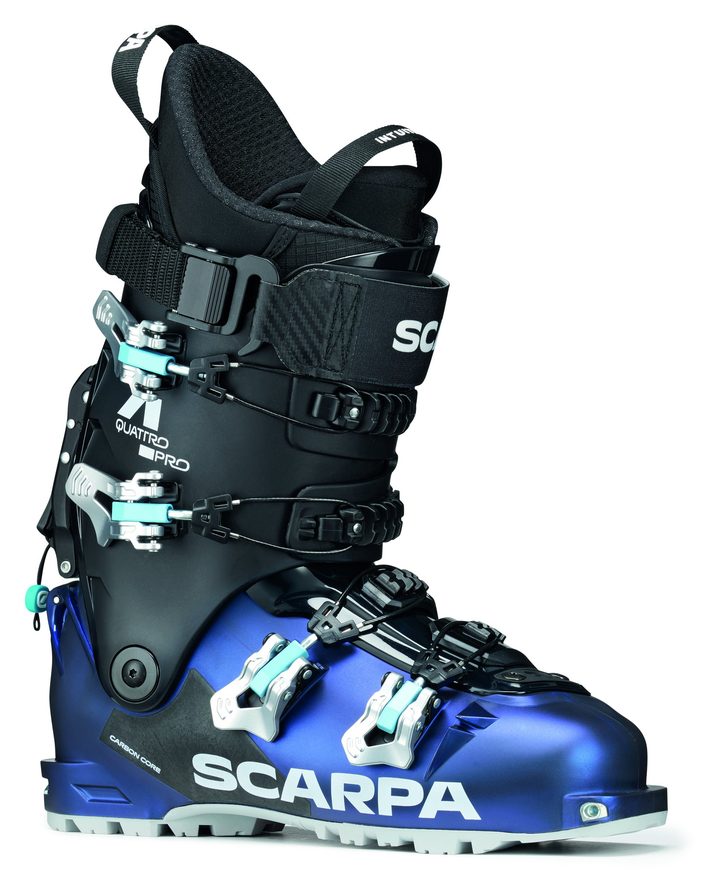
“The ultimate freeride touring boot,” said a Vermonter. The 4-Quattro Pro earns freeride chops from a Pebax Rnew shell and cuff and a U-shaped carbon core which delivers torsional and longitudinal stiffness. A Pebax tongue pivots freely on the way up and locks down on the descent. “Excellent ROM and toe friction pivot, and the semi-Cabrio tongue offers some nice flex feel,” said the Vermonter. “An elegant walk mode mechanism makes transitions fast and seamless,” agreed a PNW charger. And, while the 4-Quattro’s GripWalk sole doesn’t handle scrambling or dry exits as well as most touring-specific boots, it does offer resort versatility. “For tourists that want to ski resort skis hard,” explained a veteran boot tester. “Very similar to the Maestrale RS, but it has a GripWalk sole for wider utility.” And, as with all Scarpa boots, volume leans more toward a performance fit, although the 4-Quattro Pro wasn’t as punishing as Scarpa’s lightest boots.
TL;DR: A stiff, resort-leaning boot with a GripWalk sole that still offers plenty of range of motion for long walks if wanted.
Where to buy
Scarpa 4-Quattro Pro
Tecnica Zero G Decoy 115 W GW
Weight: 3,020g | Sizes: 22.5-27.5 | Flex: 115 | ROM: 55° | Last: 99mm | Price: $950 | blizzard-tecnica.com
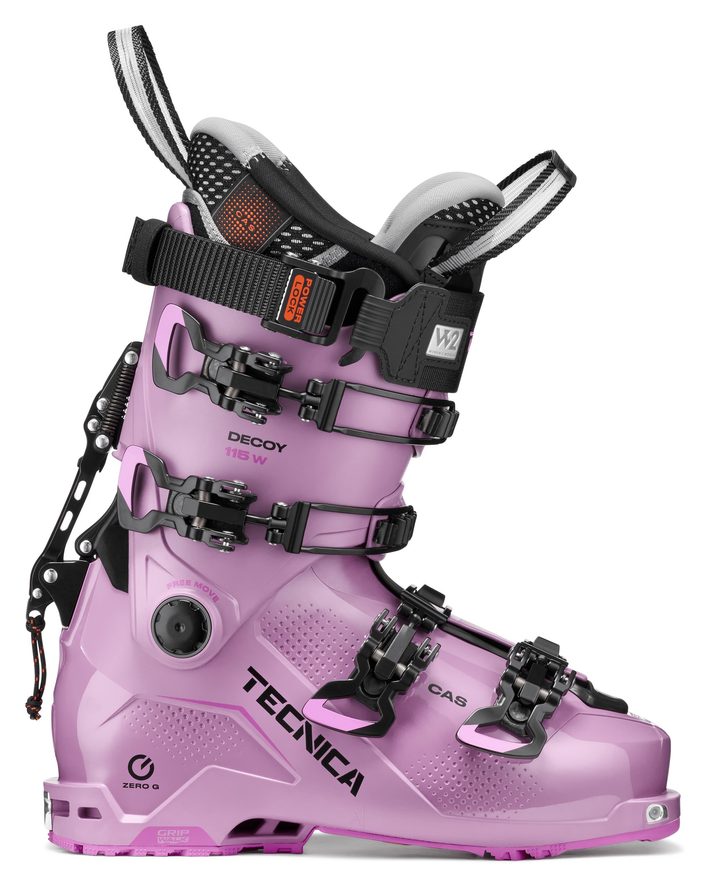
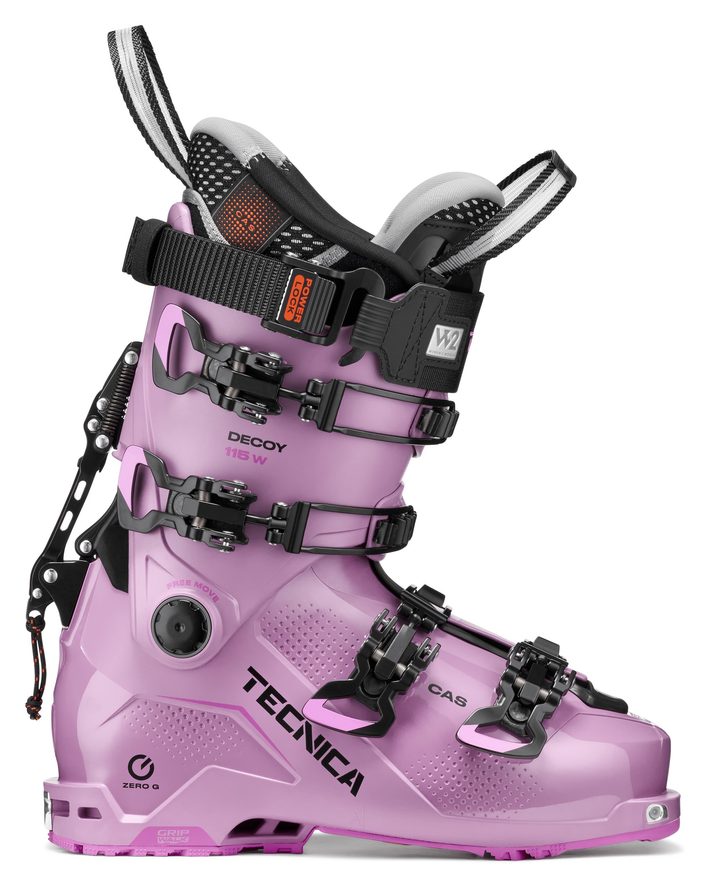
This version of the new Decoy is almost identical to the EC-winning unisex model, with the exception of a lower cuff height designed for women’s calves. The shorter fit gives the lower stiffness rating, but women—and a few small-footed men—didn’t mind the softer flex. “This is a Zero G for people who want to ski it on a resort. More of a true 50/50 boot,” said a guy who wears a 24.5 and drops cliffs. The flex comes from a polyurethane-injected frame that connects the ankle pivot point to above and below the walk mode attachment. For a more alpine feel, the Decoy W has traditional metal buckles, a wide power strap and a thick liner. But, thanks to the Grilamid cuff and frictionless T-Hike walk mode, it still maintains its stride. “Walk-mode lever functions with ease, offering a surprising degree of pivot,” said an OG tester. “With the perfect forward lean, comfortable cuff height and moderately cushy liner, the Decoys win top scores.”
TL;DR: They might be lavender, but that doesn’t mean these boots are soft. This resized offering is hard charging while still maintaining the famous Zero G ROM.
Where to buy


Related posts: