

Our test runs the spectrum from skinny skimo skis to purebred pow slayers. The result is a robust selection of touring skis, boots and bindings that fill every niche: from your first touring ski to the perfect setup for that 50-mile traverse to the best combo for big-mountain sends. This selection of skis features only skis 100-105 millimeters underfoot. Click here for 106-109 underfoot skis, and here for 110-millimeter-plus ski reviews. To see our full gear guide in its original, glossy print form, click here.
Each ski, split, boot and binding is tested by roughly seven testers, each of whom takes the product out for at least three lift-access runs and/or a tour. An item that performs well in its intended category is a Gear Guide Select. A product that performs well beyond its intended category earns an Editors’ Choice (EC).
Editors’ Choice
J Skis The Escalator
Stairway to Heaven
Weight: 3,440g (176) | Dimensions: 132/102/123 | Lengths: 162, 169, 176, 182, 188 | Price: $879 | jskis.com

When J Skis developed their Explore Collection during Covid, the goal was to make a lighter ski that didn’t sacrifice the brand’s fun-loving identity. According to a work hard, rip harder tester, The Escalator hits that sweet spot: “This ski is SUPER fun and playful and had me pushing side hits far more than I expected because of how poppy and fun it was.”
In The Escalator (and the rest of the Explore line), J Skis swapped out their traditional maple core for the slightly less damp but lighter-weight aspen and used a 30% lighter base, while maintaining full-height sidewalls. Quasitropic (running in four directions) fiberglass sandwiches the core, which, paired with pre-cured and stretched carbon stringers and a 3.5-millimeter camber pocket, provides the energy that earned this ski a 6.25/7 for playfulness. “The behavior of this ski in all conditions inspired confidence and playfulness in every turn,” said a collegiate racer who found them best for short- to medium-radius turns. Fellow testers backed up his claim with 5s and 6s for crud and pow performance.
The Escalator also earned a 6/7 for versatility and a 5.5/7 for dampness and responsiveness. “This ski was extremely responsive to applied pressure,” said a gal who grew up skiing the Tetons. “I could really lay into these,” added a Washingtonian. Though our testers recommended the Escalator for intermediate to advanced skiers, said PNW skier did find them less stable at speed. “Throw a lightweight touring binding on this ski and take it anywhere, resort or backcountry, any condition,” concluded a veteran tester from New England.
“Quick edge to edge, playful when you pressed on the tips or tails and charged through the chop surprisingly well.” —Mike Vakula
Where to buy

J Skis The Escalator
Editors’ Choice
Atomic Backland 102
The Trusty Steed
Weight: 2,860g (179) | Dimensions: 130.5/102/121 | Lengths: 164, 172, 179, 186 | Price: $970 | atomic.com

A magistrate and longtime judge of skis called the Backland 102 “a true quiver killer with wide versatility inbounds and out.” His ruling consisted of 6s and 7s for everything from backcountry utility to dampness to crud and pow performance. “Consistent, intuitive flex,” he added. “Very reliable edge to edge.”
With no updates for this season, this gavel-banging performance in the eyes of our law official is thanks to a poplar and karuba core sandwiched by stiffening fiberglass. Add in vertical sidewalls, a rockered tip with HRZN 3D tech (lightweight, perforated material in the beveled nose), camber underfoot and gentle tail rocker, and the result is “a low-weight, high-energy ski,” per a crafty Montanan.
Testers agreed the Backland excelled in medium- to long-radius turns, and five out of six scored the 102s a 6 or higher for responsiveness. A sendy skier from the PNW who took them into variable terrain called them “brittle, chattery and highly unresponsive.” Still, they averaged a 5/7 for dampness and hard-snow performance while scoring slightly higher in pow. “Occasionally sporadic, especially on variable snow,” pointed out our Montanan.
“Team the Backland 102 with a medium-weight touring binding and you’ll be ready for anything life throws at you,” said a Vermonter. He recommended the skis to anyone from an uphill novice to an advanced backcountry skier. “For anyone who is looking for a light ski that is good for uphill, but also a reliable downhill ski that can hold up,” echoed a younger East Coaster.
“Super stable ski even though it’s light. It is a ski that is ready to do whatever you throw at it.” —Wyatt McAdoo
Where to buy

Atomic Backland 102
Editors’ Choice
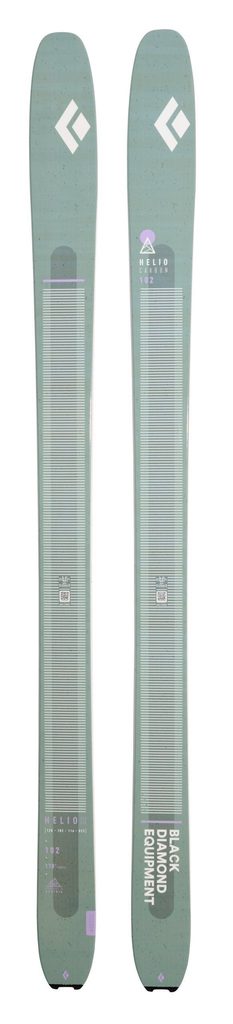
Black Diamond Equipment Helio Carbon 102
Make Turning Fun Again
Weight: 2,990g (178) | Dimensions: 128/102/116 | Lengths: 164, 171, 178, 185 | Price: $1,200 | blackdiamondequipment.com
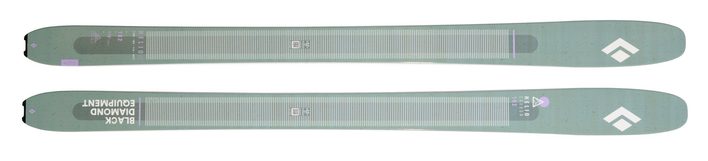
Winning back-to-back Editors’ Choice awards is no easy feat. But the revamped Helio Carbon 102 forced the issue, scoring an overall 6/7 and converting longtime critics. “I never liked the 104. This new 102 seems totally different. Softer throughout; think and it obeys,” said one tester.
In the 102 and wider models, Black Diamond swapped paulownia for a slightly heavier, more playful poplar core. Two strips of woven carbon and fiberglass sandwich either side, a titanal mounting plate increases binding retention, and there’s a damping, rubber-like elastomeric material in the tips and tails. The changes earned the Helio Carbon 102 a 5/7 in both playfulness and damping. The poplar core also makes the 102 tele-compatible. “Equally capable of a long tour or ripping resort laps,” explained a dad-turning tester. “Made for someone looking for a responsive, lively ski that can do it all.”
Versatility is driven by moderate camber, early rise tip and tapered tail rocker while full ABS sidewalls add bite on edge or in crud. Despite its driveability, testers rated the Helio Carbon 102 more at home in short- to medium-radius turns. “The 102 bites eagerly into the turn yet has an easy tail release,” said a Steamboat-based tester who likes long walks. An ex-racer two generations his junior agreed with the assessment: “This ski is built to be light for uphill and to float on the downhill through airy pow, but also handles crud.” Few negatives arose, but one tester cautioned skiers to size down, and another questioned durability if resort charging.
“For long touring days where weight matters and you expect to encounter a variety of snow conditions along the way. Great all-around touring ski that errs on the light and fast side.” —Greta Close
Where to buy
Black Diamond Equipment Helio Carbon 102
RMU Apostle 105 Wood
Weight: 3,900g (184) | Dimensions: 137/105/126 | Lengths: 168, 176, 184, 192 | Price: $899 | rmumtnculture.com

“I enjoyed this ski and felt its structural design allows it to be an any-type-of-run ski,” said a former racer who can still lay a trench. The redesigned Apostle 105 uses midweight poplar reinforced by a stiff, damp beech mounting plate. “Solid and heavy enough to perform well in most situations but lacking enough uniqueness to do one thing particularly well,” a current collegiate racer noted, echoing a common sentiment. Thick ABS sidewalls and torsionally stiff pre-preg fiberglass earned the Apostle a 5/7 on hard snow, and a forgiving, low-rise tip and tail aided in a 5/7 crud score. “Built for all terrain and going anywhere on the mountain,” said an East Coaster turned Teton skier. The Apostle 105 was favored by aggressive and tall skiers, especially in medium- to long-radius turns. Meanwhile, a short tester struggled to keep control through a carve, explaining, “The tips would come around slower than underfoot.”
TL;DR: The Apostle 105 offers a balanced ride in all conditions, at least for heavy skiers who can press into the flex. Its weight makes it a crossover resort-to-sidecountry option for most.
Where to buy

RMU Apostle 105 Wood
Fischer Transalp 105 CTI
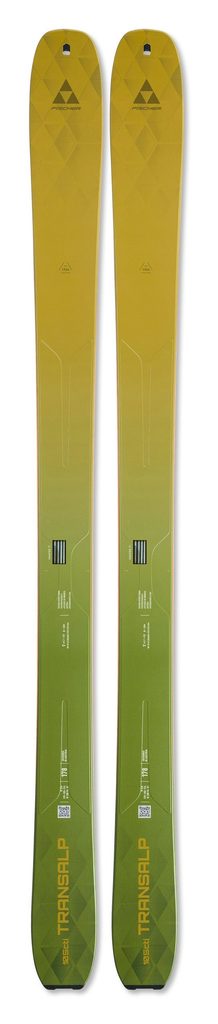
Weight: 3,080g (178) | Dimensions: 139/105/124 | Lengths: 164, 171, 178, 185 | Price: $850 | fischersports.com
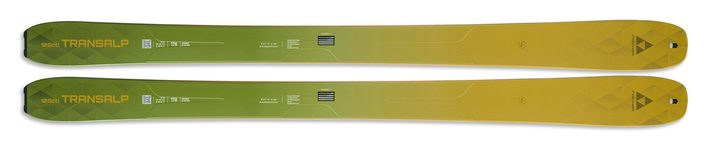
This three-time EC winner came back with a new topsheet, but otherwise unchanged, including its use of AirTech, a special milling pattern in the paulownia core that cuts weight by 25%. Despite the lost grams, a hard-charging Wasatch skier said, “Yes, they are light, but honestly, I found myself forgetting that.” He alternated between snappy, short-radius turns and long, deep carves. Stiffening carbon stringers are set on top of the wood core and a thin, hourglass-shaped piece of titanal sits underfoot. “Sandwich sidewall construction was noticeably grippy on firm snow. Wood core and carbon stringers gave it a light, stiff feel,” said a tall tester. His 180-plus-pound comrades were able to drive the low-rise shovel tip through crud, but a smaller tester found they “deflected heavily in chop and crud.” Still, he sided with his heavier counterparts on turn initiation, saying, “Really light and maneuverable.”
TL;DR: Quick edge-to-edge performance, long carves and 4,000-foot days in the skintrack are all on the menu for this ski that serves a low gram count and high downhill performance.
Where to buy
Fischer Transalp 105 CTI
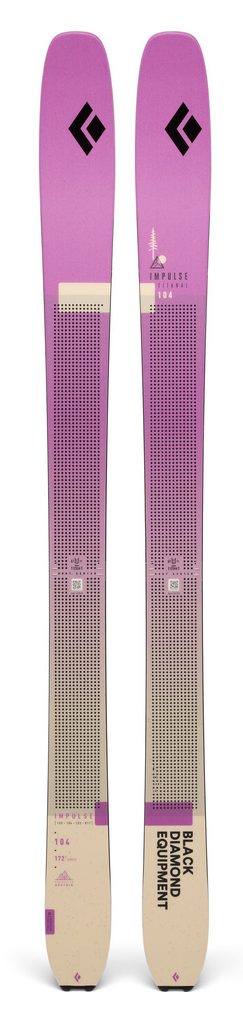
Black Diamond Equipment Impulse Ti 104
Weight: 3,760g (179) | Dimensions: 136/104/123 | Lengths: 158, 165, 172, 179, 186 | Price: $1,100 | blackdiamondequipment.com
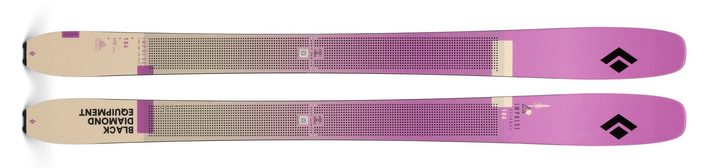
“It’s got the muscle of a freight train and the energy of a squirrel on crack,” surmised a Tahoe tester of the Impulse 104. “It truly lives for chunder, the tight trees and the questionable pow stashes your buddy keeps talking about.” That muscle and energy come from a playful poplar core inset with stiff beech stringers and overlaid with fiberglass and an H-shaped strip of titanal. Elsewhere, full ABS sidewalls provide stability, and early rise tips add float. “Square-ish, early rise spatula tip simply works, deflecting crud in the chop while flexing to the ski’s full edge on snow,” said a Coloradan used to variable conditions. “Ample tip rocker to rise up in pow, but enough camber and effective edge to rip GS turns on hardpack,” added a Wasatch patroller. Testers rated the Impulse 104 as best in controlled, medium-radius turns but adept at wiggling through trees or at speed. On the downside, the heavier construction adds weight on the ascent.
TL;DR: A crossover ski heavy enough for inbounds but with enough pop and float for backcountry utility. Mount ’em with a hybrid binding and go searching for unicorns.
Where to buy
Black Diamond Equipment Impulse Ti 104
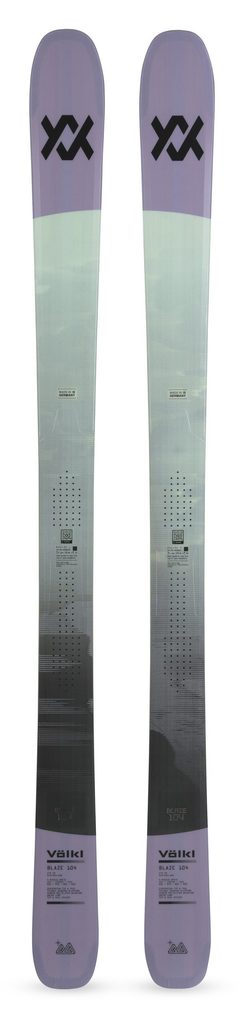
Völkl Blaze 104
Weight: 3,480g (172) | Dimensions: 143/104/128 | Lengths: 158, 165, 172, 179, 186 | Price: $975 | volkl.com
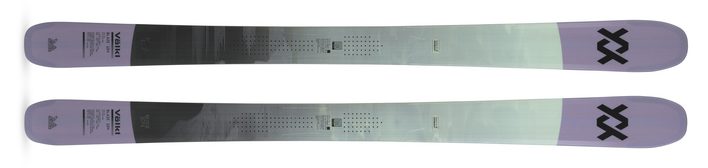
The Blaze 104 scored a 6/7 in versatility thanks to Völkl’s 4 Radius Drive. The radius is largest in front of the toe, tightest underfoot and moderate in the tip and tail, providing quick turns and stability at speed and through variable conditions. Extra suspension in the rockered tip and low-rise tail come from elastic TPU inserts along the edges. A titanal binding mount, vertical sidewalls and extra glass fibers around the foam and wood core bring a race-ski-like hardpack performance. “This ski can serve as a single-ski quiver for someone planning to spend time on and off piste,” said a Coloradan. “They handle high speeds, powder, crusts and groomers well.” Both big and small testers praised the responsiveness, finding them best for medium- to long-radius turns. But, due to the stiff nature underfoot, a D1 racer advised, “A stronger skier should use this ski. It’s a stiffer and heavier composition and requires a high skillset.”
TL;DR: Just light enough for touring, heavy enough for resort riding and will slay in any conditions on any terrain.
Where to buy
Völkl Blaze 104
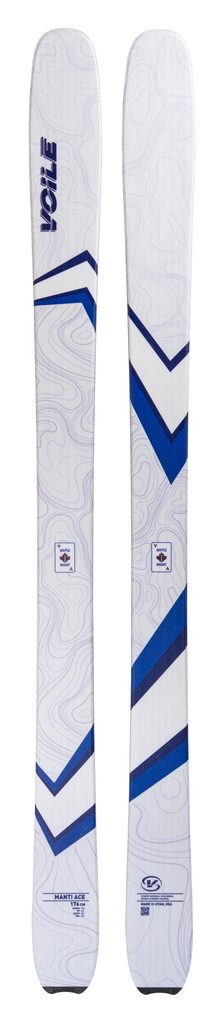
Voilé Manti Ace
Weight: 3,146g (181) | Dimensions: 138/104/124 | Lengths: 158, 165, 171, 176, 181, 186 | Price: $995 | voile.com
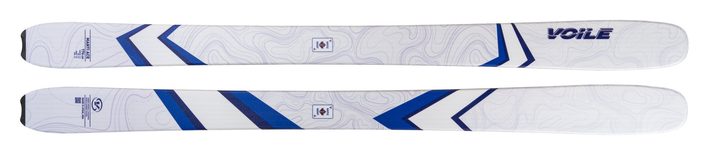
Voilé’s Ace line is named after the genus Acer, due to the maple binding insert which adds stiffness, screw retention and tele-compatibility to their paulownia cores. Triaxial fiberglass and carbon sandwich the wood, and a full urethane sidewall adds suspension and edge hold. “They excel in soft, reliable snow conditions,” a patroller said. Another tester added, “Long walks, sunshine and fresh snow are its bread and butter. Frozen crust will demolish it.” Unlike its Ace siblings, the Manti has a shorter camber pocket, an early rise tip and gradual tail rocker. Two Vermonters identified the Manti Ace as a tight-tree-wiggling specialist, while an older Coloradan called them sluggish. Regardless, testers agreed on their surfy style and slower turn initiation. “These are boyfriends you take to family Thanksgiving, not out on New Year’s Eve,” a third Vermonter-turned-Wasatch-charger said. “More laid back and surfy than exciting.”
TL;DR: A reliable, soft-flexing ski for smooth snow surfaces and laid-back skiing. Not the hardest-charging backcountry ski, but light enough for long ascents.
Where to buy
Voilé Manti Ace
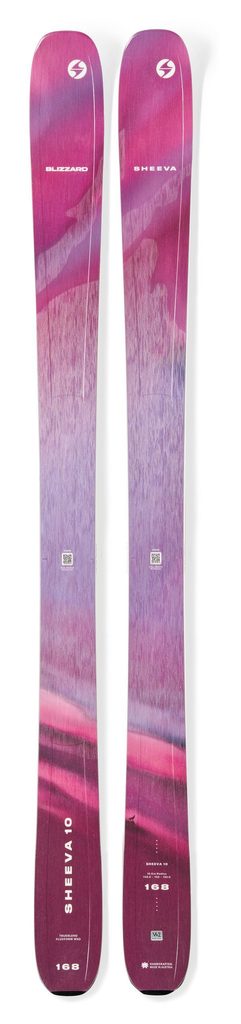
Blizzard Sheeva 10
Weight: 3,600g (174) | Dimensions: 133.5/102/122.5 | Lengths: 156, 162, 168, 174, 180 | Price: $850 | blizzard-tecnica.com
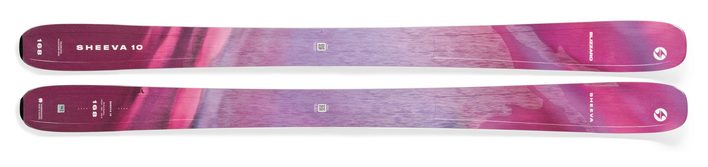
The Sheeva takes notes from Blizzard’s Austrian race roots. Aggressive camber underfoot, a titanal mounting plate and full sidewalls keep edges engaged through long-radius turns. When testers ventured into variable conditions, the Sheeva still scored a 5/7, and a Tahoe skier found “a satisfying amount of float” in powder. Fiberglass wraps a blend of beech, paulownia and poplar. The wood core is also overlaid with Blizzard’s Fluxform: metal running outside carbon stringers and tapering on either end of the ski. The result is stiffness underfoot and a softer rockered tip and tail. “Absorbing crud with a smooth, even consistency and offering a rebound with a slight personality and calm energy,” said a longtime tester. While these shone in longer-radius turns, a retired racer said, “Sheeva is a girl who likes a good time. She’s got great pop for ripping short turns down a bump line and can hunker down for high speeds on the groomers.”
TL;DR: This versatile girl’s girl is down for whatever: laid-back corn skiing, hard charging through steep lines, railing groomers and even the occasional big day on the skintrack.
Where to buy
Blizzard Sheeva 10
Atomic Backland 101 W
Weight: 2,520g (164) | Dimensions: 127/101/117 | Lengths: 156, 164, 172 | Price: $970 | atomic.com

“A solid all-arounder for the gal seeking that single 50/50 resort-to-backcountry, magical unicorn ski,” said a Front Range woman. Her Vermont counterpart added, “Turnable and responsive; lightweight and versatile.” These planks purr thanks to a poplar and karuba core paired with fiberglass layers to blend pop and stiffness. They’re the same materials as the unisex 102 but with a women’s-specific layup. “More energetic than damp, the Backland 101s strike that near-perfect balance of both smoothing the noise while actively responding with its smooth flex and subtle personality,” said our Coloradan. She found these planks favored medium- to long-radius arcs. Wide, rockered tips add float while minimal tail rocker, a camber pocket and full sidewalls earned a 5/7 for initiation and responsiveness. While the 101 W favored pow, it still earned 4/7 in crud and hardpack. Testers skewed these as best for beginner or mellow tourers.
TL;DR: Your favorite touring companion if you prefer smelling the fir trees, enjoying the views and seeking good conditions over sendy objectives.
Where to buy

Atomic Backland 101 W
Liberty Radian 100
Weight: 3,640g (179) | Dimensions: 135/100/123 | Lengths: 167, 173, 179, 185 | Price: $900 | libertyskis.com
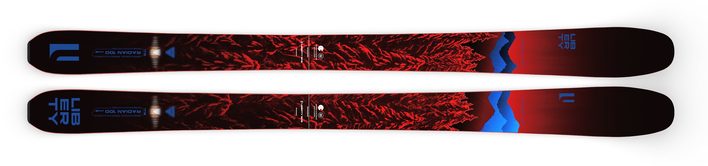
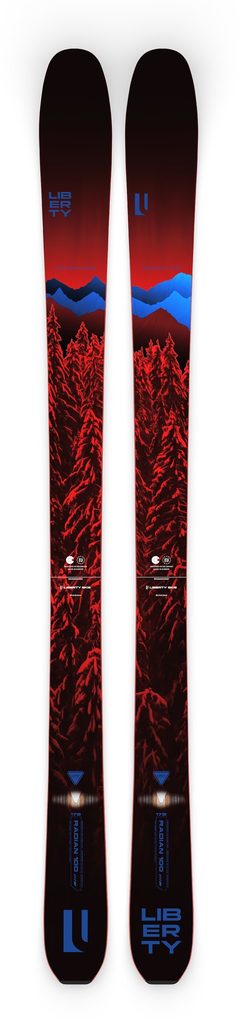
“I enjoyed everything from big airs in the park to off-piste features, an amazing series of fast GS turns and some wiggly short turns down a 30-to-40-degree choppy slope,” said a tester who scored these a 7/7 in versatility. “The Radian skis just about any condition well thanks to its easy-to-engage turn radius, large camber pocket and shovel that wants to bring you up to the surface,” added another tester. This model features an 18.5-meter radius, camber that runs 70% of the ski and extended tip rocker. The only condition that it didn’t shine in was chop. One tester noted that the half-capped, ABS sidewalls and carbon stringers made “the tips get a little chattery.” While carbon is set in the bamboo and poplar core, a tester said, “I consider this a backcountry touring all-mountain ski. It is in a backcountry weight class, but not super light.” A passionate freeskier didn’t mind the weight, saying, “Liberty is showing up for the underdog.”
TL;DR: Your trusty all-mountain touring ski for ripping turns, floating through pow or crushing a sketchy zone.
Where to buy
Liberty Radian 100
Blackcrows Vena Cor
Weight: 3,300g (174) | Dimensions: 134/100/125 | Lengths: 160, 167, 174, 181, 188 | Price: $999 | black-crows.com


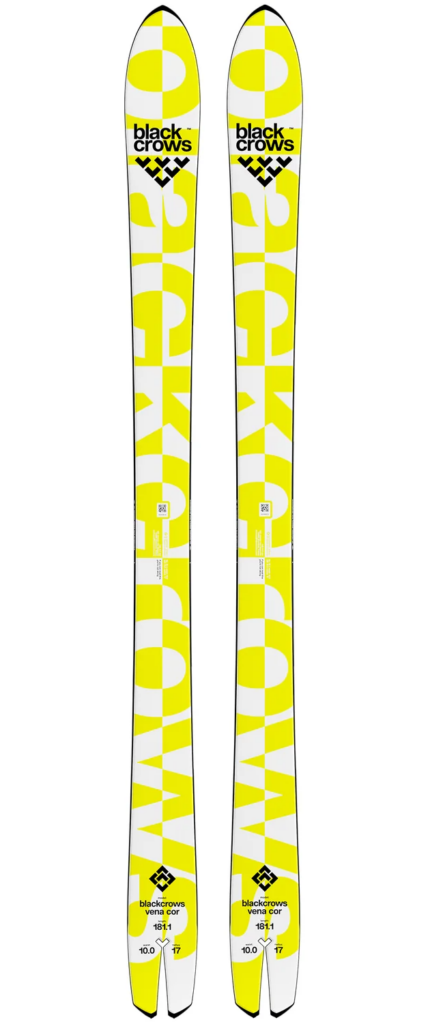
“This unique and stylish ski provides a slashy and surfy skiing style,” one tester noted. Fast, strong freeriders enjoyed the control from the double rocker and fish tail. “This ski, with its funky tail, finishes a turn like I’d never felt before,” said a freeskier. Despite the 17-meter turning radius, most testers said the Vena Cor prefers long-radius arcs. Current and former ski racers appreciated the ability to rail a turn, with one such racer recommending the Vena Cor to “a larger or stronger skier who can really push against the ski to generate speed.” Under the flashy topsheet, poplar is mixed with glass fibers and sandwiched by full-length carbon stringers for reinforcement. The construction led to a 5.5/7 score for dampness. “Wants to blast through bumps, but won’t betray you in pow,” explained a 200-pound tester. However, the heavy weight earned these planks a low backcountry utility score. As one tester put it, “This ski is for heli skiing.”
TL;DR: This funky ski features a playful rocker profile and unique tail shape, but it’s limited to the strongest skiers making bigger turns and willing to drag it up the skinner.
Where to buy
Blackcrows Vena Cor
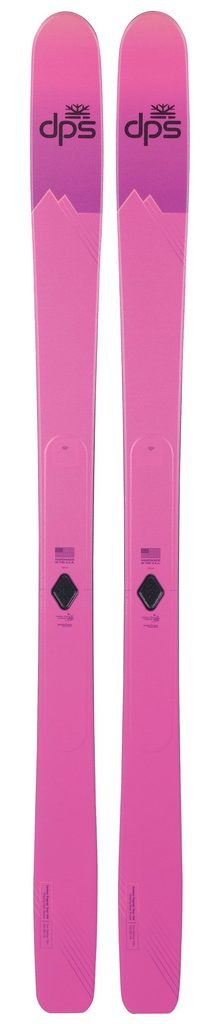
DPS Pagoda Tour CFL 100
Weight: 3,046g (171) | Dimensions: 131/100/116 | Lengths: 153, 163, 171, 179, 184 | Price: $1,695 | dpsskis.com
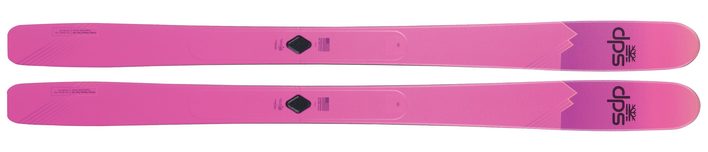
“The Sex Pistols of the DPS line,” said a punk-rock tester. “Turning machines—you think it, they do it.” In its third season, one thing has changed: Flax is out, and U.S.-produced organic cellulose fiber is in. The new material is woven at 45 degrees through two carbon layers sandwiching a lightweight paulownia core. Carbon delivers snap and rebound, while the cellulose fibers add a touch more damping than last year’s flax. “Surprised by its dampness and crud performance for something this light,” said a rookie tester. With 45% rocker and a big early rise shovel, the Pagoda Tour 100 averaged a 5.5/7 in playfulness. “Quick edge-to-edge release,” said an ex-racer. A longtime patroller added a caveat: “At slow speeds, they’re twitchy.” When skiers got them up to speed, the Pagodas provided a well-rounded platform. “Built for all skiers who love to crush backcountry laps,” summarized a Tahoe-based tester.
TL;DR: A maneuverable, versatile backcountry option with the classic DPS carbon pop. Easy to initiate turns and can be driven—to a point. Spoon tips add float but can chatter in chop.
Where to buy

Related posts: