

For decades, hardshells relied on ultra-durable chemicals to keep you dry in all conditions. Now, with new regulations phasing out these compounds, gear is entering a new era in which durability and maintenance might look a little different .

We’ve all heard someone say, “They don’t make things like they used to,” often complaining about products that break faster yet cost more than they once did. In many ways, they’re right. But thanks to perand polyfluoroalkyls (PFAS) in ski pants and coats of years’ past, the neon color-blocked ’90s jacket hanging in your closet may still be bombproof. That impenetrability, however, is their downfall.
PFAS, colloquially known as forever chemicals, have been the backbone of most durable water repellent (DWR) treatment for nearly half a century. The strong carbon-fluorine bonds of these substances create low surface tension that repels water and lasts forever. However, research has linked PFAS to increased cancer risk, developmental delays, immune suppression and hormone disruption. And if it’s not good for us, it’s not good for the ecosystems we recreate in either.
“PFAS don’t readily break down in the environment or the human body,” explains Sandy Flint, the Senior Materials Manager at Stio. “They’re invisible to the naked eye, can contaminate food and water, and some types can accumulate in our bodies over time.”
In the U.S., the regulatory hammer fell in January 2025 when California implemented strict PFAS regulations following the Environmental Protection Agency’s updated standards for PFAS in drinking water. While it’s a state-bystate patchwork approach to regulation, the reality is simple: Since brands sell across state lines, the bans are effectively nationwide and immediate. But the challenge for manufacturers wasn’t just meeting new regulations, it was replacing a unique capability that only PFAS possess.
“Fluorine can also repel oil,” says Jeff Strahan, Director of Research, Compliance and Sustainability at material science giant Milliken and Company. “Nothing else in the world that we know can repel oil on a textile.”
That’s the performance gap that matters, because oils infiltrate your jacket’s top layers, breaking down waterproofing over time and preventing retreatment products like NikWax from properly adhering.
“DWRs, I would argue, have been solved with non-PFAS chemistries,” explains Strahan. He points to Bluesign, an international company focused on making clothing more environmentally friendly. Bluesign lists an inventory of over 500 PFAS-free certified water repellents that all hold up to the rigorous standards of previous PFAS-included DWRs.
While the chemistry may be solved from a performance standpoint, the reality for consumers is more complex. “As an industry, we keep talking about ‘Oh, they’re just as good as PFASbased DWR, but now it’s PFAS-free,” says Flint. “And again, with water, that’s absolutely true, but with oil, it’s not. And so, you have to take care of your garments in a different way.”
“When water stops beading up on the outside, it means the DWR is no longer functioning properly,” Flint explains. “While the membrane may still be waterproof, performance is compromised—so it’s really important to maintain the DWR, especially with non-PFAS versions.”
For the consumer, that may mean a little more work in order to maintain top performance. Flint recommends washing and re-treating your gear every couple of weeks during active use, instead of just at the end of the season. “People are afraid to wash their ski jackets,” he says. “But they’re way more durable than a t-shirt, right? We’re building these to a much higher standard. So absolutely they can go through the washing machine. It’s just you do have to reapply that DWR back on after.”
Strahan is even less worried about a lapse in durability. “We have not changed a single specification,” he says, referring to Milliken’s non-PFAS waterproofing. “So we can match performance. Whatever they had before, we can do the exact same thing. And now there’s no PFAS on here.”
In the end, the most sustainable product is the one that lasts the longest. Based on internal science and lab tests, proper care of PFAS-free gear achieves the same performance without the environmental cost. Years on the skintrack, however, will be the real test. Regardless, a little extra care falls in line with an earn your turns/ leave no trace ethos. Washing your next jacket a few extra times seems a worthwhile tradeoff to keeping ourselves and our mountain ecosystems healthier.
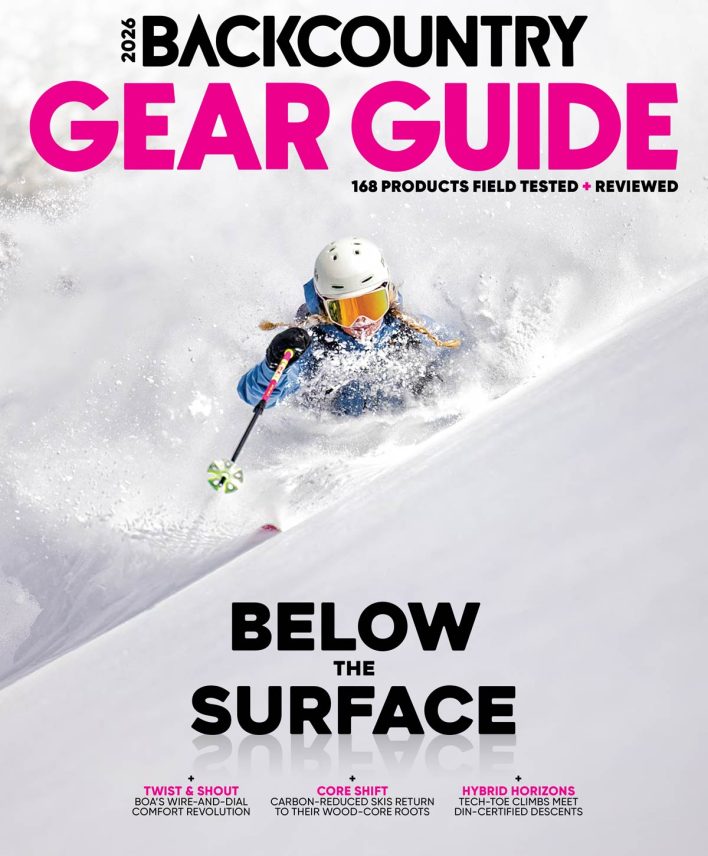
Get the 2026 Gear Guide
After months of testing—including our weeklong Powder Mountain test and tours across North America—our editors narrowed down hundreds of products into the best skis, splits, boots, bindings and outerwear.
Get your copy today👇 | Learn more »





Related posts: