

Our test runs the spectrum from skinny skimo skis to purebred pow slayers. The result is a robust selection of touring skis, boots and bindings that fill every niche: from your first touring ski to the perfect setup for that 50-mile traverse to the best combo for big-mountain sends.
Each binding is tested by roughly seven testers, each of whom takes the product out for at least three lift-access runs and a tour. An item that performs well in its intended category is a Gear Guide Select. A product that performs well beyond its intended category earns an Editors’ Choice (EC).
See our Editors’ Choice bindings here, or jump to the rest of our picks below. You can also search for a brand or binding.
Editors’ Choice
Editors’ Choice
Salomon S/LAB Shift 2 MN 16
Heavy Metal
Weight: 2,420g | DIN: 7-16 | Brakes: 90, 100, 110, 120 | Crampons: 100, 110, 120 | Price: $950 | salomon.com
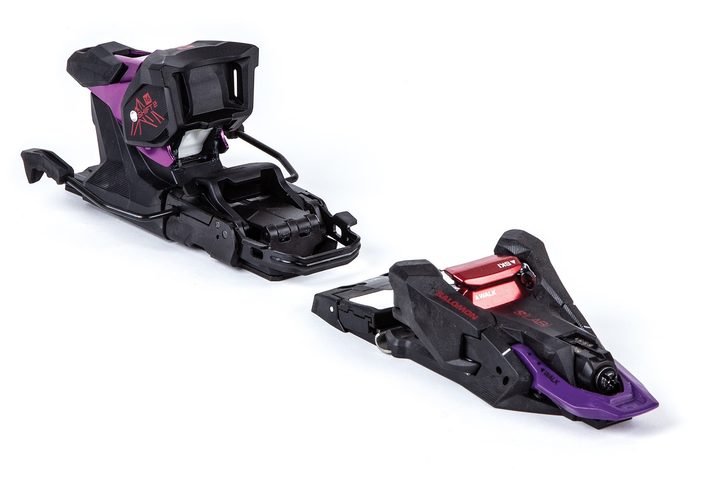
“The Shift has always had great downhill and sufficient uphill performance, but it was missing strength and reliability,” said a patroller and freerider of past Shift models. “The upgraded toe and heel piece of the 16 solve that problem with the added metal reinforcements.”
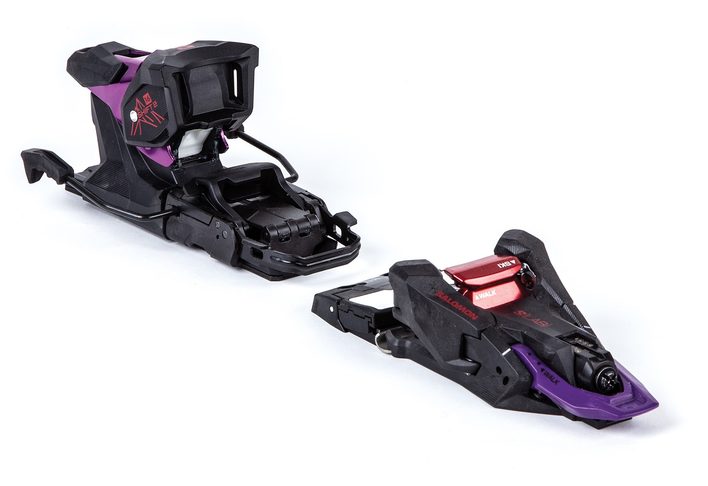
Like our tester recognized, the Shift 2 MN 16’s three-part heel now features a metal heel block reminiscent of the brand’s alpine bindings. This provides 16 millimeters of elastic travel to absorb ski and boot flex in varied terrain, and a heavy-duty spring provides a max DIN of 16. In the toe, the small block that flips up/down for ski/walk mode is now metal as well.
On the descent, the updates paid off, earning the Shift a 6/7 for power transfer and stability and 5.5/7 for lateral control. “Giving you the confidence for big hits and bumps that pins might not,” said a PNW sender. “A wonderful skiing experience,” added a collegiate racer.
The price of an inspiring ride down comes in added grams and clunky ergonomics. The same plastic toe lever of models past opens and closes the pins, two heel risers offer aid on the skintrack, and the brakes lift when a plastic switch on the heel is flipped back and stepped on. “It’s heavy, transitions are a bit cumbersome, and I still can’t rip skins without taking my foot out,” said the PNW tester. “Once the binding has transformed into its uphill/downhill mode, it performs well,” added another.
“This binding is for the skier buying a new downhill setup but is backcountry curious.” —Eva Yguico
Where to buy
Salomon S/LAB Shift 2 MN 16
Editors’ Choice
Dynafit Ridge
Renaissance Binding
Weight: 820g | RV: 4-12 | Brakes: 88, 98, 110, 120 | Crampons: 88, 98, 110, 120 | Price: $600 | dynafit.com
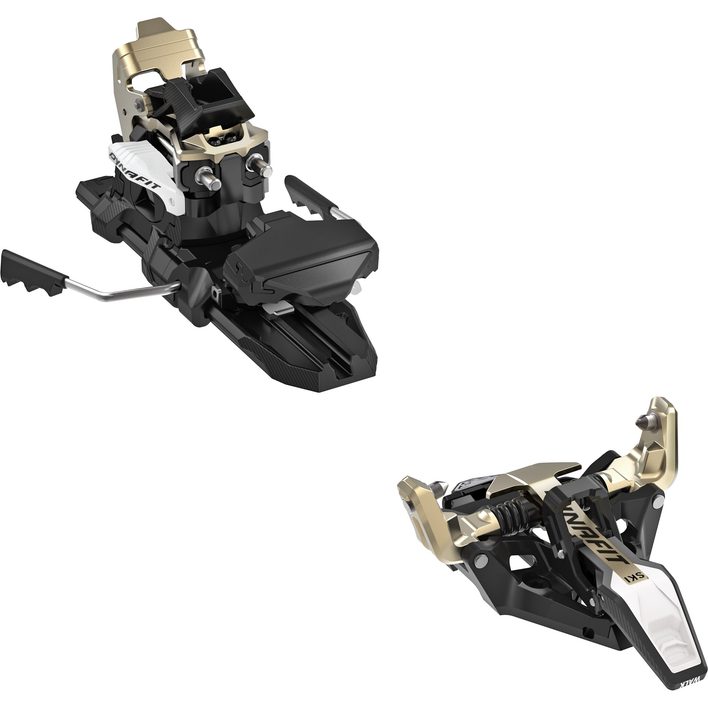
Ready for climbs, descents and every ridge in between, this is a binding of dualities. It averaged a 6/7 for walkability and downhill stability. “These felt extremely sturdy for a lightweight binding,” said a young Vermonter. And Dynafit managed to provide a release value of 12 on a petite pin setup.
This rig features a blend of aluminum, stainless steel and a synthetic composite plastic. Add in 7 millimeters of forward pressure, and overall, the Ridge earned a 5 or higher for power transfer and lateral control. After mounting these on his 116 pow boards, an avalanche instructor observed, “They can drive skis well above their weight class and even performed well on the occasional resort groomer.”
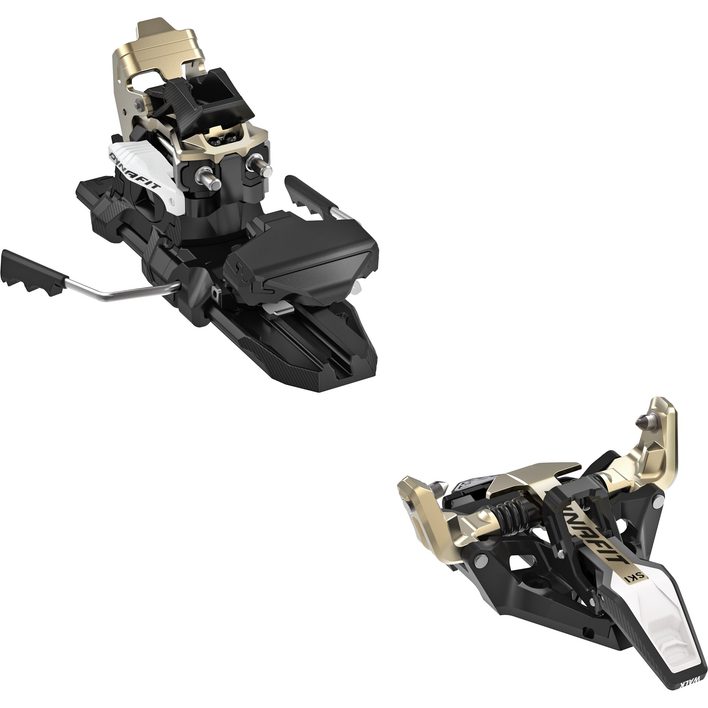
Since half the battle of touring bindings is in the transitions, Dynafit incorporated a toe bumper to prevent boots from overshooting the pins. “Extremely easy to get on,” said the Vermonter. Plus, the toe lever has an attachment which clears snow out every time it’s lifted, and, in the back, a pair of wings lock/unlock the heel piece, enabling it to swivel between walk and ski mode. Though a Tetons ripper found the wings “clunky” and the avalanche instructor battled snow buildup, a Montanan who favors the fall line said anyone could rotate the heel.
Once the Ridge is transitioned into walk mode, stepping down pulls up the brakes, and two heel risers add comfort on the climb. The result is an average score of 5/7 for skinning stride. And, for those with a quiver of boots, the Ridge has 25 millimeters of adjustment in the heel.
“I would 100% trust these in the steeps. These are for hardcore, backcountry skiing.” —Koiya Adii
Where to buy
Dynafit Ridge
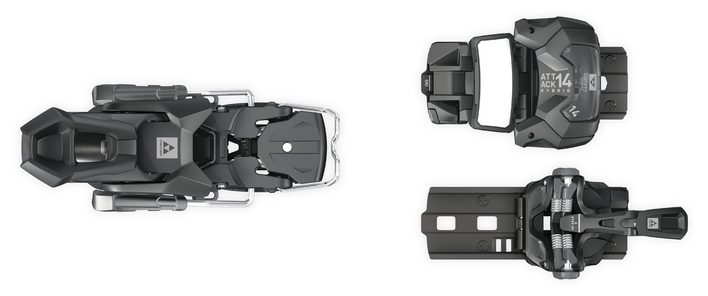
Fischer Attack Hybrid 14 MN/PT
Weight: 1,766g (uphill), 2,270g (downhill) | DIN: 4-14 | Brakes: 95, 110, 130 | Crampons: 90, 105, 120 | Price: $625 | fischersports.com
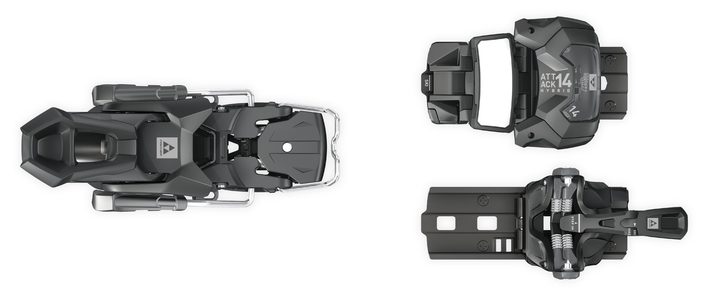
Last year’s EC-winning Attack Hybrid returns unchanged this year. For the descent, it resembles the Attack Alpine binding—produced by Tyrolia and rebranded and sold by Fischer. In ski mode, the Attack earned a perfect score for downhill performance. For skinning, the bulky toe piece slides off a track and is replaced by a tech toe. While the stride was unrestricted and risers were easy to use, the weight of the heel piece was dinged. “A pin binding feel on the uphill, with strong downhill performance,” said a freeride coach after a tour. “It is really easy to operate and understand.” And don’t worry, if you forget the alpine toe at home, the binding can be skied with the pin toe on the emergency setting.
TL;DR: A quick toe swap brings the Attack Hybrid from downhill charger to uphill capable, and, for the forgetful skier, there’s a backup.
Where to buy
Fischer Attack Hybrid 14 MN/PT
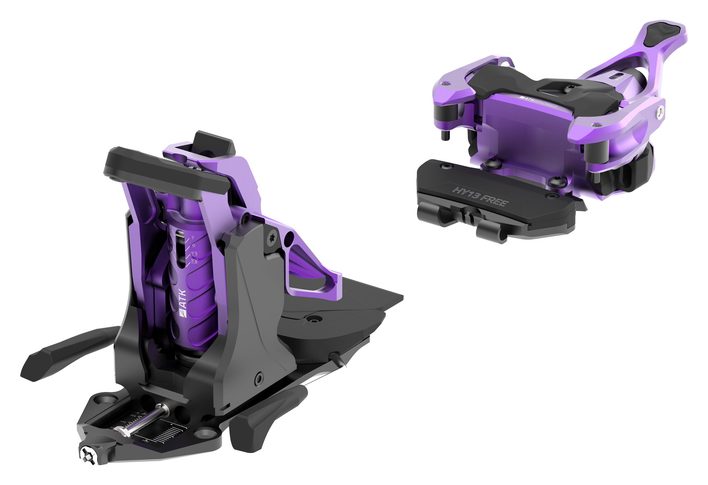
ATK Hy 13 Free
Weight: 1,350g | RV: 6-13 | Brakes: 97, 108, 120, 135 | Crampons: 70, 75, 86, 91, 97, 102, 108, 120, 135 | Price: $950 | atkbindings.com
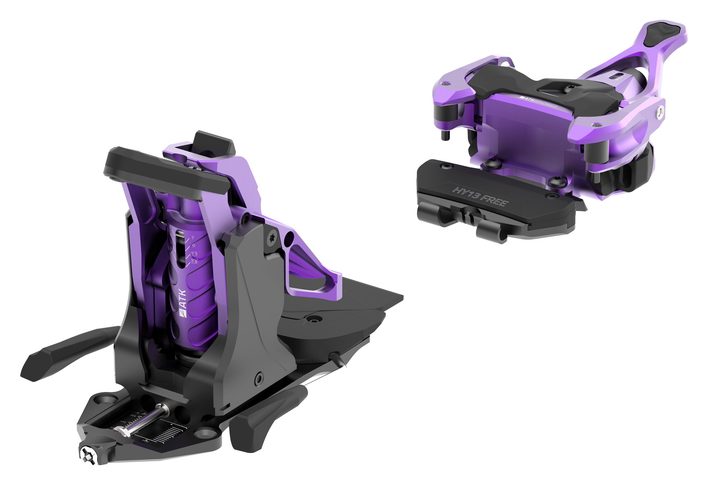
“Downhill performance inspired confidence, able to drive as you would a full alpine binding, but the weight of the Hy renders its touring utility as subpar,” said a longtime tester. The Hy scored a 6/7 for power transfer, lateral control and stability thanks to its alpine-style toe and heel and adjustable AFD plate. It was ascending that split opinions. On the skintrack, toe arms rotate 90 degrees upwards to click into pins. “Toe sits above heel while skinning and your stand height while touring is Jenga-esque,” critiqued a Montanan couloir skier. An international guide also knocked points for having to remove skis to transition. That didn’t dissuade freeriders, with one saying, “The all-metal design, low stack height and ease of transitions make me want this as a daily driver.” And, the Hy offers seven new colors this year, for an extra $50.
TL;DR: As long as the Hy’s quirks work for you, freeride, downhill performance matches any other hybrid binding at an exceptionally low weight.
Where to buy
ATK Hy 13 Free
Marker Cruise 12
Weight: 950g | RV: 6-12 | Brakes: 90, 105 | Crampons: 80, 90, 105, 120 | Price: $805 | markerbindings.com

Marker’s Cruise 12 is exactly that, a cruise. A rubber stop pad, lower-force spring and wide insert platform earned an average 6/7 on ease of entry and, per a Montanan, is “hangover-proof.” On the up, the heel post rotates 180 degrees, and two risers made from recycled plastics offer 8 and 12 degrees of lift. Independently adjustable horizontal and vertical releases in the heel offer 6-12 release value. The rest of the load-bearing components are mostly made from castor-bean-derived plastics, which reduce the carbon footprint and, per Marker, offer a damper ride. All in all, a ripping Coloradan summarized, “Simple, intuitive ski to walk, friendly toe entry and stable enough to rip anything you could reasonably want to.”
TL;DR: An easy-to-use pin binding that’s ideal for new tourers or those who prioritize ergonomics.
Where to buy

Marker Cruise 12
Atomic Backland Summit 12 BR
Weight: 830g | RV: 6-12 | Brakes: 90, 100, 110 | Crampons: 80, 90, 100, 110 | Price: $725 | atomic.com
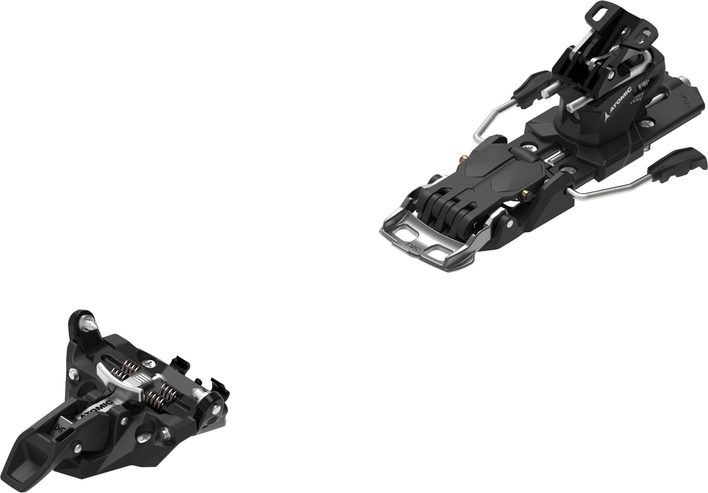
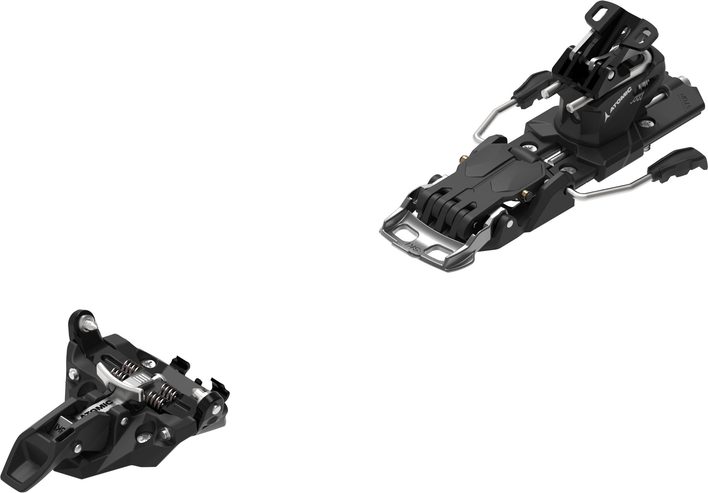
The Backland Summit 12 BR has been on the Editors’ Choice podium a few times thanks to its weight-to-performance ratio. “My go-to for trips with a variety of needs and my first recomendation to friends,” said an editor who scored the Summit 12 BR a 6/7 across the board. A blend of fiberglass, plastic and metal make up both the toe and heel. Features include a toe bumper to guide boots into pins, 17 millimeters of lateral elastic travel and three heel heights for climbing. A simple flip and step down on the lever lifts the brakes for walk mode. “Best of all,” said the editor, “the heel requires nothing but a firm push to swivel between walk/ski mode.”
TL;DR: A generalist, not a specialist, the Summit will give you confidence across terrain, conditions and setups.
Where to buy
Atomic Backland Summit 12 BR
Salomon MTN Pure
Weight: 780g | RV: M-W-EXP | Brakes: 80, 90, 100, 110, 120 | Crampons: 80, 90, 100, 110 | Price: $850 | salomon.com
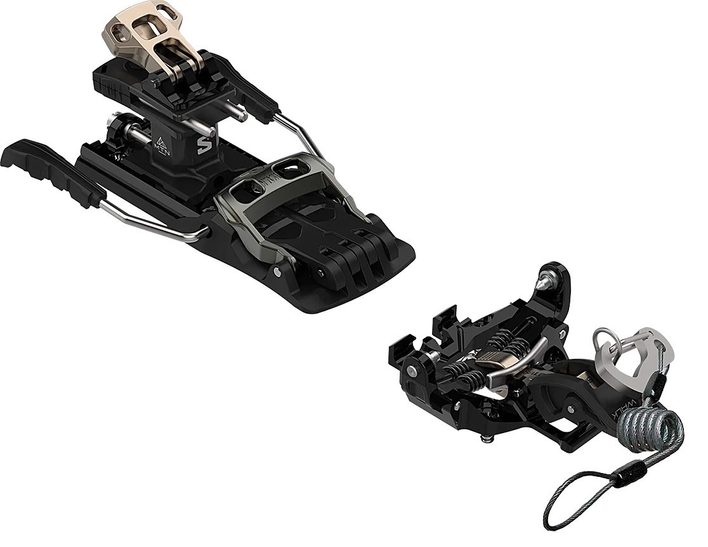
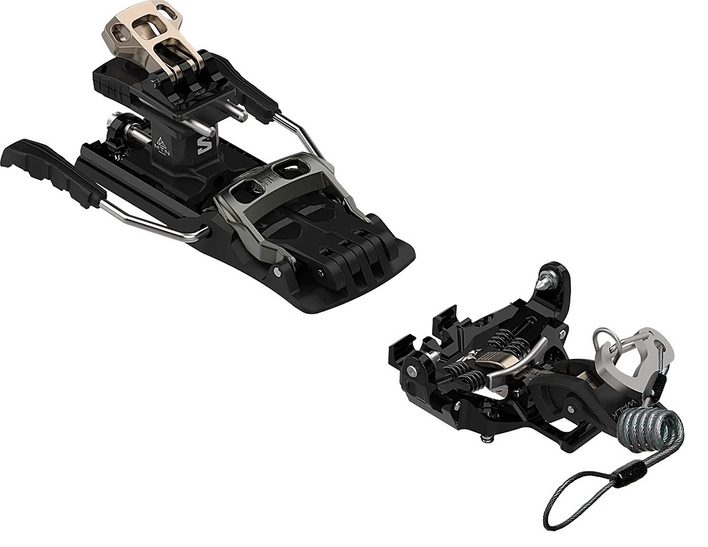
“Doesn’t look super supportive, but it is,” said a Vermont ripper of the aluminum-based Pure binding. “Felt good power transfer from boot to ski.” Per Salomon, a wide mounting pattern increases binding retention and improves turn initiation, despite these being the most pared down of the MTN binding lineup. “Incredible snow feel. Takes a beating while not prereleasing,” said an ex-racer who tours four days a week. A ski tech found the Pures to be “incredibly simple and robust,” adding, “All heel risers are great. Easy step-in guide and lock-out lever is simple and straightforward.” The biggest complaint was about the fixed release value that can only be adjusted by swapping the U pins out. “I’d like to adjust my RVs, please,” said our ski tech.
TL;DR: Thanks to a strong aluminum design, this little binding with a big heart is ready to accompany you on any adventure—no matter how far the walk or rugged the descent.
Where to buy
Salomon MTN Pure
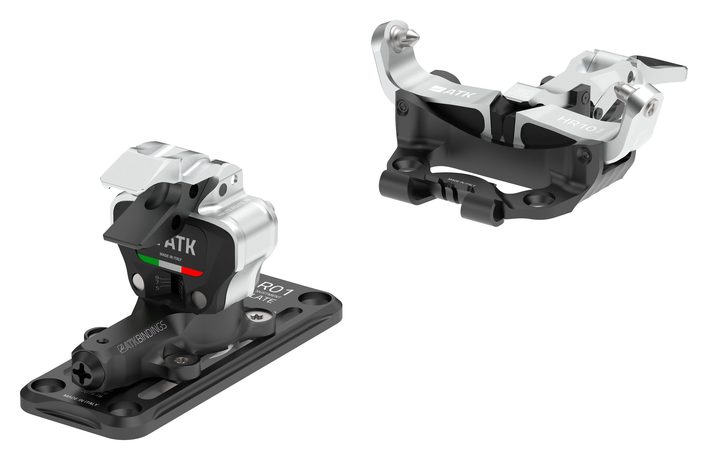
ATK Haute Route 10 Plus
Weight: 440g | RV: 4-10 | Brakes: N/A | Crampons: 70, 75, 86, 91, 97, 102, 108, 120, 135 | Price: $650 | atkbindings.com
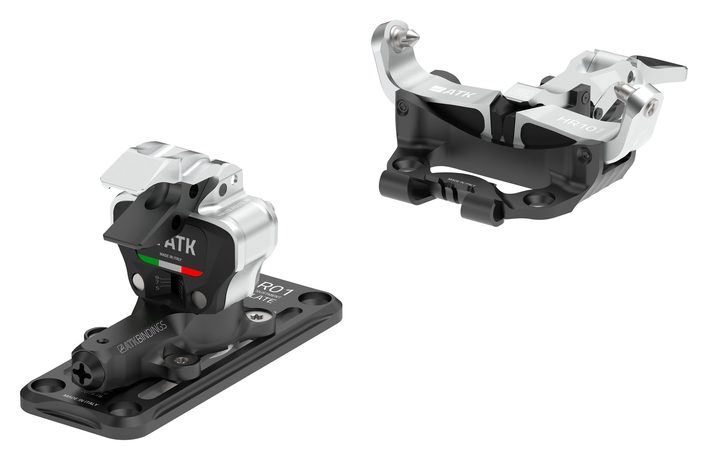
To traverse from Chamonix to Zermatt, an intuitive binding is a must. “The no-frills design makes them super easy to transition and use,” said a tester after a season in the Tetons. Unrestricted stride length and easy-to-flick, magnetic heel risers earned the Haute Route top marks on the skintrack. The binding’s aluminum and stainless-steel design is just as trustworthy on the descent. A surprised Teton guide said, “They should not have skied that well,” after a day of corn, crust, ice and avy debris. Another tester keyed in on the tensioned cam which pressures the heel pins for increased power transfer. “The Cam Release System maintains power transfer phenomenally, given the weight,” he explained. Still, both testers thought the lightweight binding was best reserved for smooth snow.
TL;DR: A simple-yet-reliable binding for the biggest of days. Trustworthy and stout for their weight, but not ideal for freeride applications.
Where to buy

Related posts: