

Our test runs the spectrum from skinny skimo setups to purebred pow slayers. The result is a robust selection of touring skis, boots and bindings that fill every niche: from your first touring ski to the perfect setup for that 50-mile traverse to the best combo for big-mountain sends.
Each boot and binding is tested by roughly seven testers, each of whom takes the product out for at least three lift-access runs and/or a tour. An item that performs well in its intended category is a Gear Guide Select. A product that performs well beyond its intended category earns an Editors’ Choice (EC).
This page includes backcountry ski boots lighter than ~3,100 grams per pair, meant for long days on the skintrack. To check out more freeride-oriented boots, click here. Or to see our full gear guide in print, click here.
See our Editors’ Choice boots here, or search for a brand, weight or boot below.
Editors’ Choice
Editors’ Choice
Scarpa Maestrale RS
Ol’ Reliable, Upgraded
Weight: 3,140g | Sizes: 24.5-32 | Flex: 130 | ROM: 61° | Last: 101mm | Price: $899 | scarpa.com
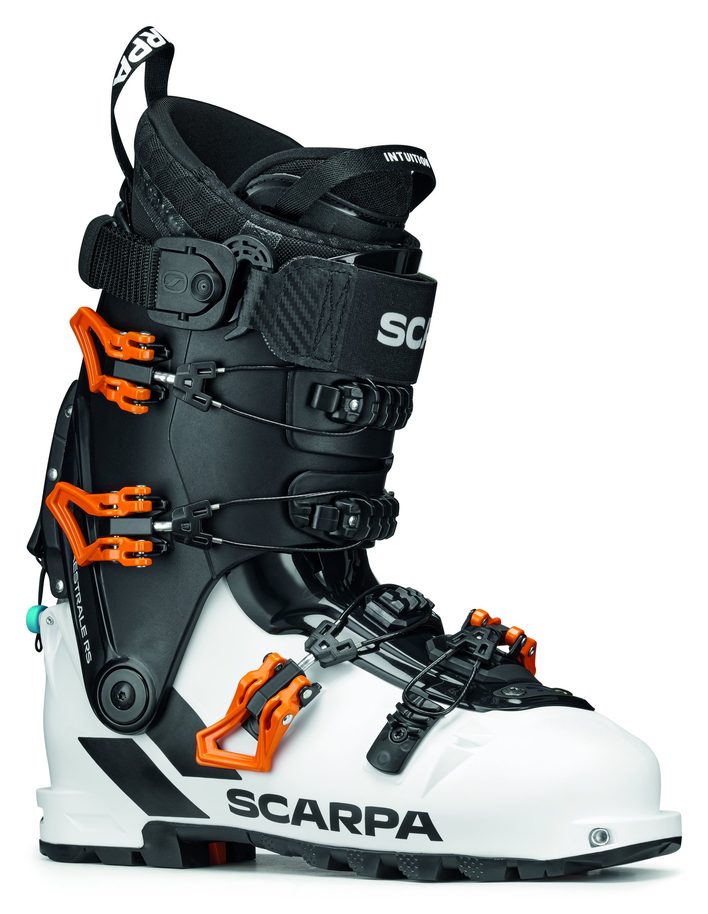
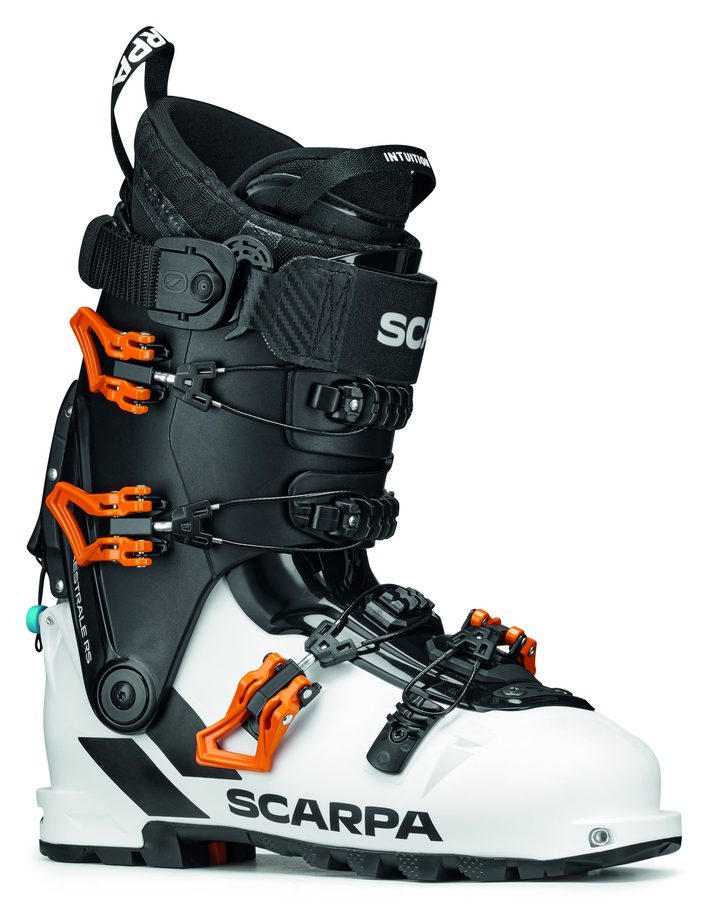
The Maestrale RS looks like last year’s boot but is a substantially different build underneath. “The four-buckle replacement, while not a gain in performance fit, is less fussy. Easier in and out,” noted a tester who skis the old Maestrale RS as his everyday boot.
The new RS is stiffer thanks to standard Grilamid in the lower shell and a stiffer, taller Pebax Rnew cuff. The combo flexes more progressively and makes shell molding easier. The Intuition liner also adds an RS-exclusive tongue stiffener that works in concert with the cuff and Cabrio design to earn an average 5/7 score in fore/aft stiffness and lateral stiffness. “Still stiff, but a little more supple, and the plastic seems more consistent flex-wise through a wider temperature range,” said a tester familiar with Scarpa boots. “More walkable than the Quattro and more stiff than the Maestrale,” added another who’s spent time in all three.
On the up, “Walk mode and transitions are super easy,” said an endurance athlete. “Walk mode is improved; very easy to use,” added a second uphill fiend. Multiple testers also noted the rockered sole as a differentiator in touring chops when compared to Scarpa’s more resort-oriented Quattro line. Fit remains the boot’s sharpest edge. “Suited to those with narrow and low-volume feet who want to prioritize touring, and who prefer an aggressive angle of forward lean,” said a picky tester. Even with low-volume feet, he said he’d have to punch out pressure points to enjoy a full day in the RS.
“There isn’t a better, more reliable day-in, day-out touring boot that can pretty much match up with any ski.” —Adam Howard
Where to buy
Scarpa Maestrale RS
Editors’ Choice
Dynafit Seven Summits
Classic Comfort
Weight: 2,990g | Sizes: 25-31.5 | Flex: 110+ | ROM: 60°+ | Last: 103.5mm | Price: $700 | dynafit.com
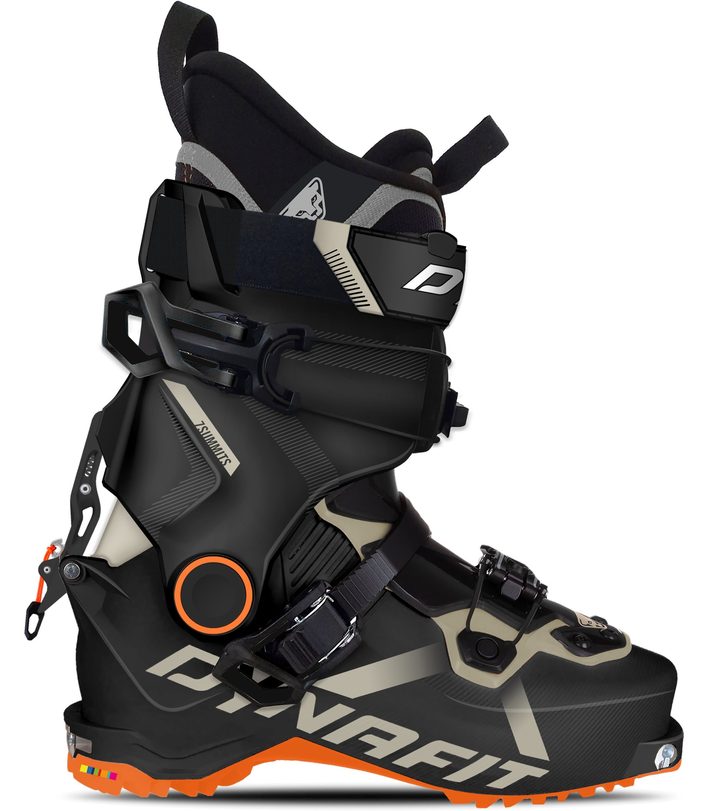
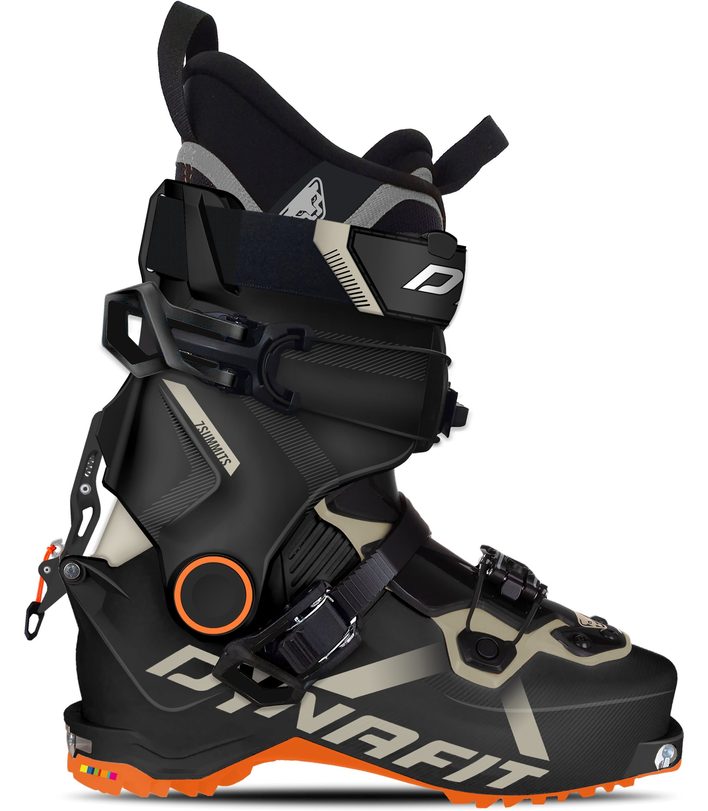
Dynafit’s primary goal with their new Seven Summits boot was user accessibility. After a longtime tester called the model “an excellent entry-level boot,” it would seem Dynafit hit their mark.
The Seven Summits is similar to the Radical Pro, but this model uses heavier-but-heat-moldable PU in the lower, and the Hoji lock is replaced with a new-to-Dynafit bar, hook and lever walk-mode mechanism, which earned a 6/7 from testers. “Great ROM from such a supportive boot,” said a big-mountain backcountry skier. The inner side of the liner is softer, too, which helps with out-of-box comfort. Like the Radical, the Seven Summits is locked down with a Velcro power strap and cable buckle on the cuff, a plastic ratchet buckle across the ankle and another cable-attached buckle across the forefoot.
Per a longtime guide, this is “the most comfortable ski boot I have ever worn.” Testers also scored the Seven Summits an average 5/7 for ease of entry/exit and noted the high volume worked for many foot shapes. But these weren’t just a plush slide-on slipper. “I had no difficulty skiing aggressively on 30-plus-degree slopes going fast,” said the guide. According to a Nordic coach and freerider, “It has a softer fore/aft flex, so it is easy to ski and stay on top of, but the lateral stiffness is good enough to drive a ski.” The primary critique of this new model came from a former racer who found the liners mushy and the walk-mode lever fragile. “This boot would be ideal for a summer mission up Rainier, just not the straightline down,” he concluded.
“This is a great long-walk boot. Not too stiff but walkable, light and skiable.” —Zander Lingelbach-Pierce
Where to buy
Dynafit Seven Summits
Editors’ Choice
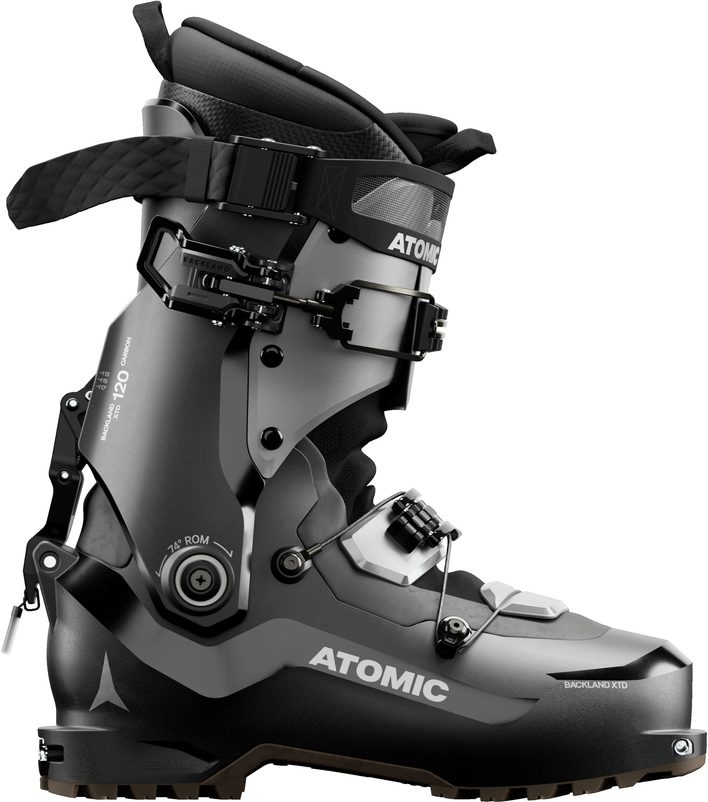
Atomic Backland XTD Carbon 120
Sendy Skimo Slipper
Weight: 2,760g | Sizes: 24-30.5 | Flex: 120 | ROM: 74° | Last: 100mm | Price: $1,150 | atomic.com
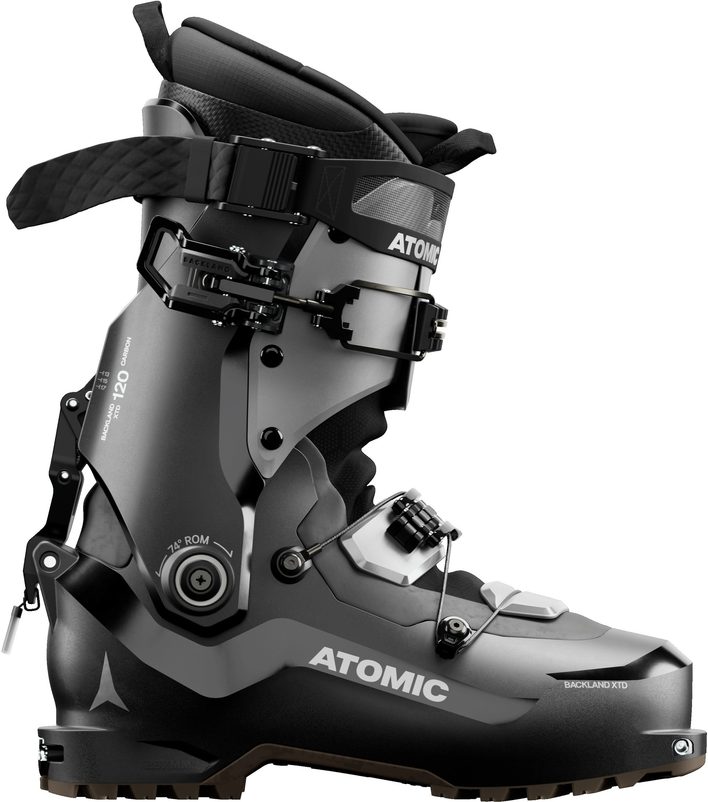
If Goldilocks were a mulleted Montanan, the Backland might be just right. “The right amount of low weight, stiffness, buckles and range of motion,” said our Bozeman-based tester of Atomic’s signature backcountry boot.
The path to “just right” starts with a stiff, carbon-loaded polyamide shell. “Easy flex on the top of the pattern but has a nice stopping point to drive from. Stiff enough laterally to handle variable snow and terrain,” said one tester. Add in the open throat design at the ankle and semi-overlap in the upper, and skiability balances with a 74-degree ROM. A sprinkle of frictionless pivot points thanks to self-lubricating bushings makes walking that much easier. “This boot is built for long backcountry and hiking days,” said a Vermonter. While the walk-mode lever earned a 5/7 for ease of use, a longtime guide found the pull tab “difficult to grab with gloves.”
When it came to fit, testers rated this a mid-volume boot. The Backland also averaged a 5/7 for ease of entry/exit and for liner quality. A z-cable on the forefoot and a traditional buckle and power strap up top secure the Backlands for the descent. “So comfy around the foot,” said the Vermonter. He was less enamored with downhill performance, saying, “What the boot had in comfort, it lacked in support.” An East Coaster who took the Backlands to the bumps did note, “I pushed through the front a couple times.” On the whole, a freerider summed it up well: “A pretty good all-around touring boot.”
“This boot is built for big days where a well-skiing, dependable boot is needed.” —Ethan Jeanette
Where to buy
Atomic Backland XTD Carbon 120
Editors’ Choice
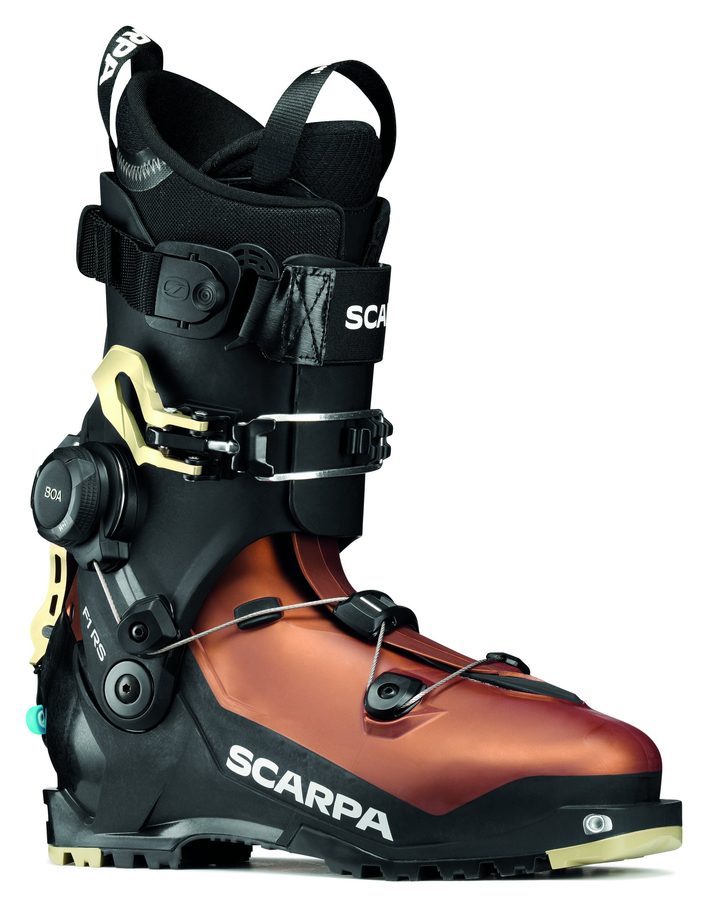
Scarpa F1 RS
I Could Walk 500 Miles
Weight: 2,680g | Sizes: 24.5-31 | Flex: 115 | ROM: 60° | Last: 101mm | Price: $849 | scarpa.com
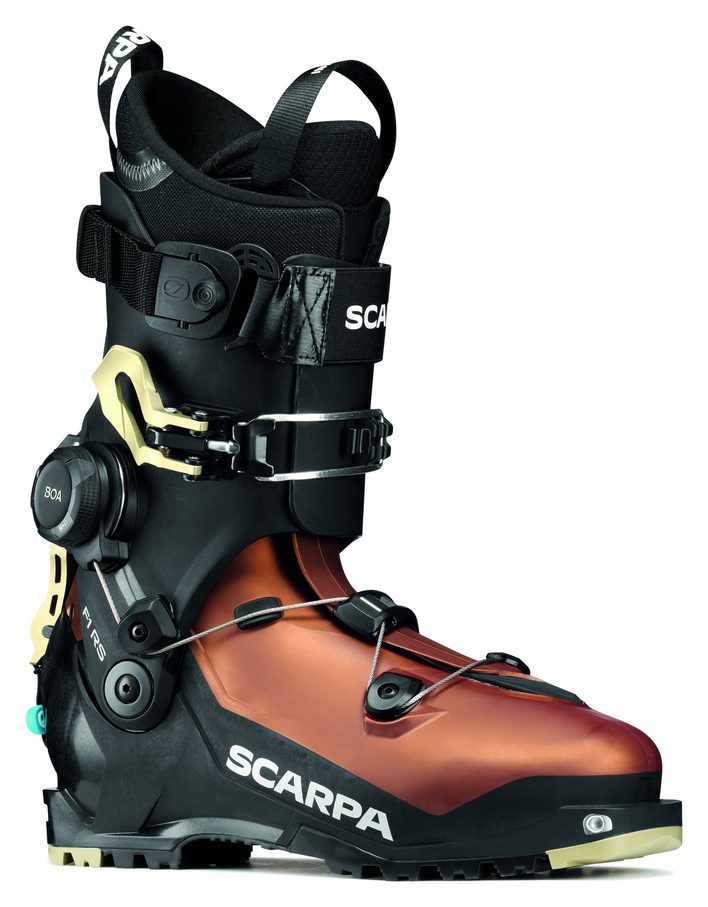
New for this season, the F1 RS slots in above the F1 XT as slightly heavier, slightly stiffer and, in theory, more powerful. “Everything about this boot simply works,” one of our longest-time boot testers concluded, “from the Boa and ankle buckle, to the effective and easy walk-mode function.”
In the lower shell, stiff Grilamid and fiberglass wrap the foot’s perimeter for torsional power. Softer Pebax is co-molded into the shell above the foot and along the shin, allowing for easier entry, progressive flex and malleability. The result is a boot that is “predictably soft and fun, skiable from a centered stance, with progressive flex—at least until you push too hard,” according to an aggressive skier.
On the ascent, the F1 RS’s 60-degree ROM wowed testers, as did the ease of transitions. “Boa fastens the lower boot to a good-feeling tightness with much more variety and speed than any alternatives,” said a high-spirited hard charger of the H+i1 Boa, which is mounted higher on the ankle for one-handed transitions and tightens the lower via z-shaped cables over the forefoot. “Power strap is easy to release with push button and hook-and-loop system,” an uphill fanatic said. Combined with a smooth, unimpeded pivot point, the F1 RS’s walk mode scored a 6/7.
High-arched and wide-footed testers unanimously complained of pins and needles, and the RS was rated the narrowest fit of the test. However, for those with the right foot shape, this new Scarpa model provided smooth skiing ability and plenty of uphill grace.
“An impressively lightweight and hikeable boot that adds downhill burliness and stiffness.” —Will Patton
Where to buy
Scarpa F1 RS
Editors’ Choice
Dalbello Quantum Free W
Cognitive Dissonance
Weight: 2,400g | Sizes: 22.5-27.5 | Flex: 105 | ROM: 65° | Last: 100mm | Price: $970 | dalbelloboots.com
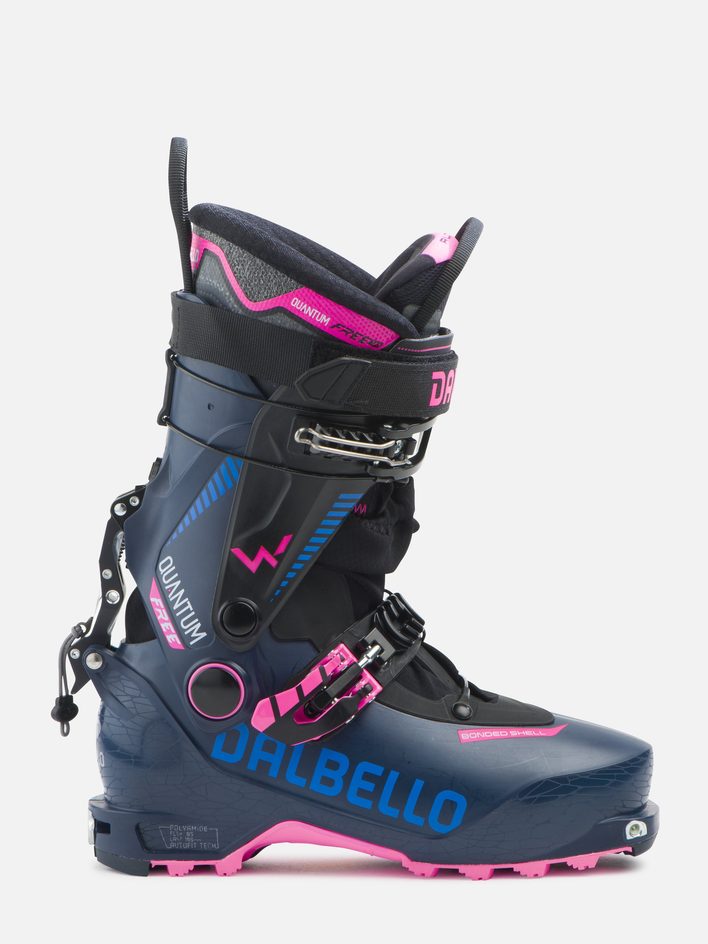
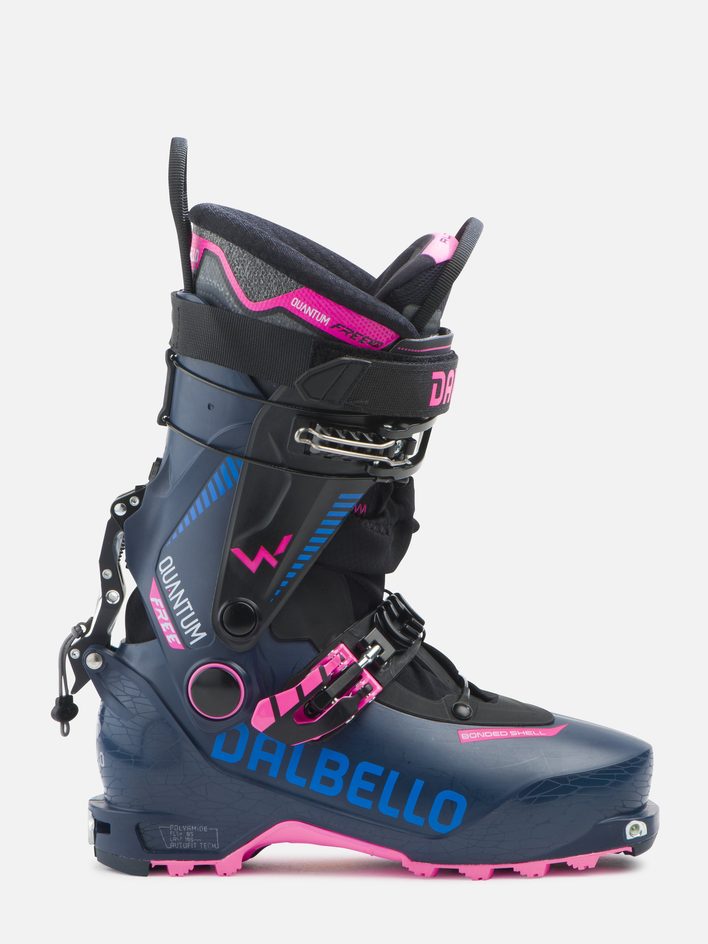
“The trick with this boot was to not look at it,” said a tester. Why? Because they couldn’t wrap their mind around a 6/7 lateral and fore/aft stiffness score in a boot with a massive cutout down the front.
The key to both the ROM and stiffness is a two-piece cuff that rotates freely for walking and closes up via the top buckle and power strap for the descent. When hiking, one tester called them “a trail-running walk mode,” while the rest of our testers gave a perfect skinning score of 7/7. A massive, gaiter-covered cutout along the front of the ankle serves both to keep the stride unrestricted and shed weight—though the polyamide and carbon cuff weren’t that heavy to begin with. “I’d hike an additional 15 miles because of their comfort and full range of motion,” said a veteran tester.
Transitions offered minimal fiddling, though testers noted the walk-mode lever needed to be coerced into place. When the cuff is buckled, the liner’s thick tongue warded off shin bang and earned an average quality score of 5.5/7. Testers agreed these boots are stiff, perhaps more so than their claimed 105 flex, though one tester said, “Flex isn’t progressive.” Dalbello makes up for this with an aggressive forward lean. A tester who prefers an upright stance called them “tiring to ski,” but another who drives the front of her boots said, “The Quantum’s tall cuff and forward lean angle power the ski’s edge with minimal play or loss of energy.”
“Don’t let the pink and slightness-of-boot appearance fool you. These low-cal dancing shoes can rip!” —Marla Bailey
Where to buy
Dalbello Quantum Free W
Editors’ Choice
Tecnica Zero G Tour Pro W
Ladies First
Weight: 2,360g | Sizes: 22.5-27.5 | Flex: 125 | ROM: 55° | Last: 99mm | Price: $1,000 | blizzard-tecnica.com
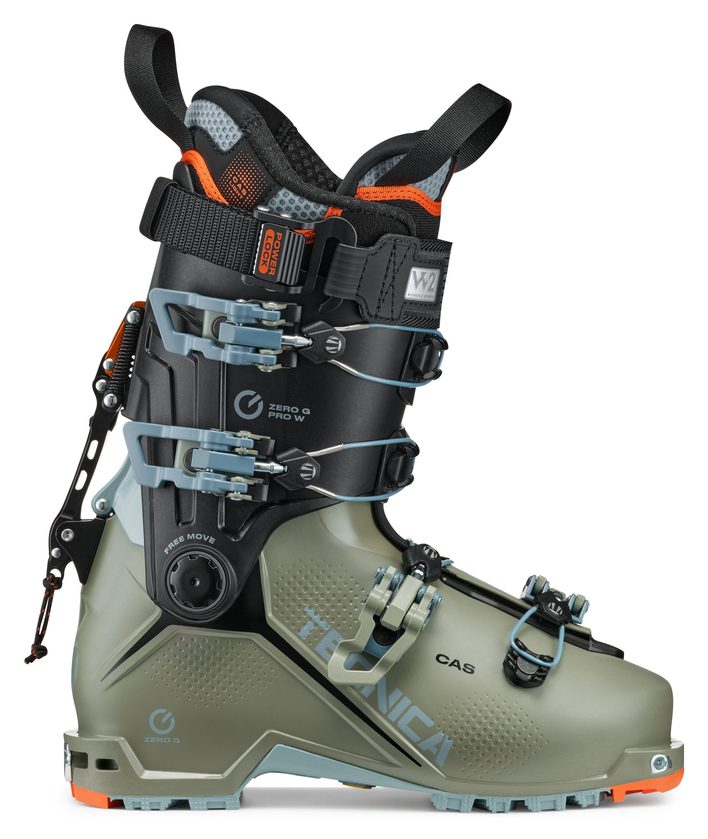
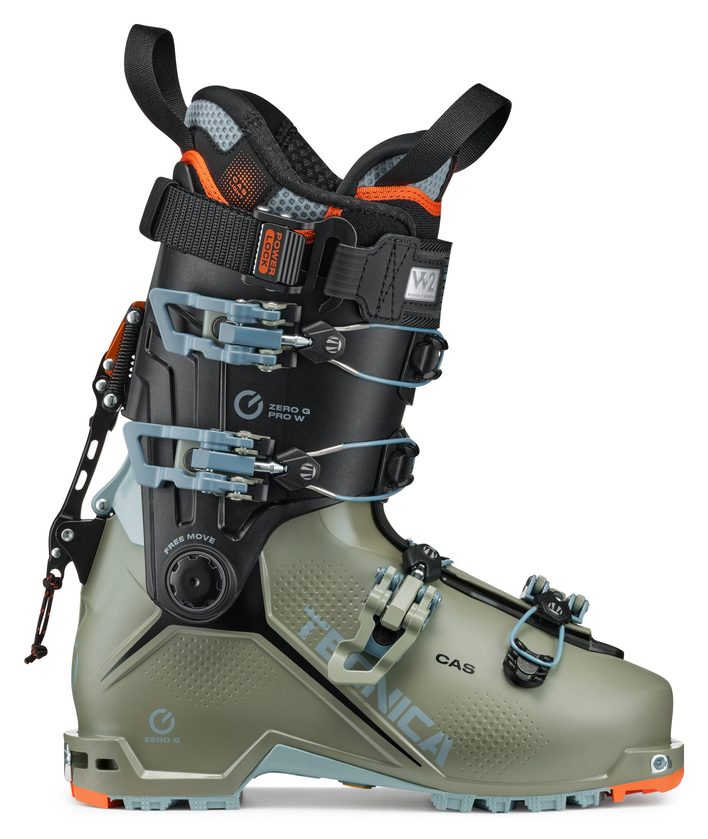
The multiyear-EC Zero G Tour Pro and Tour Pro W are nearly identical, but the women’s model has a shorter cuff and liner that are articulated for a women’s calf. Like her brother, the Zero G Tour Pro W garnered praise for her weight-to-performance ratio. “Built for anything. Hall-of-fame boot. The boot I would recommend to my best friend,” said a skier who has been boot testing since she could walk.
The Zero G Tour Pro W uses Tecnica’s Power Frame: co-injected bands of carbon and Grilamid connecting the pivot point to the ankle and sole. Along the spine, the anchor points line up with where the walk-mode lever locks externally on the heel and internally just below the top of the boot, making for a downhill performance that earned a 6/7 from testers in lateral and fore/aft stiffness. “Good progressive flex,” said a tester who has skied these boots on three different continents.
When the T-Hike lever is flipped into walk mode, these boots offer “the gold standard for backcountry,” per a competitive Nordic skier. A Grilamid shell and four magnesium buckles keep the gram count low, and a higher cut above the ankle in the front of the cuff allows for an unrestricted forward stride. “Walks like a skimo boot,” said one tester. A former racer agreed, but added, “The cuff shape makes a small dead spot when you’re really flexing them in variable terrain.” Still, she felt the sacrifice was worth it, saying, “The Zero G hype is well earned. Best touring boot out there.”
“A do-it-all boot built for long tours where you want to trust your boot on the way down.” —Greta Close
Where to buy
Tecnica Zero G Tour Pro W
Select AT Boots
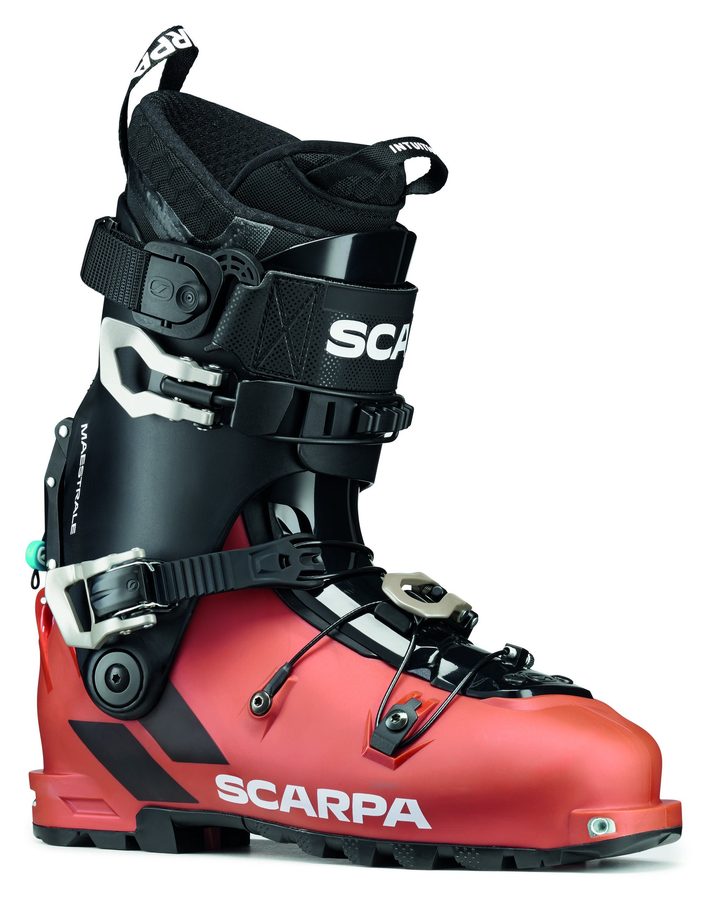
Scarpa Maestrale
Weight: 2,920g | Sizes: 24.5-32 | Flex: 115 | ROM: 61° | Last: 102mm | Price: $799 | scarpa.com
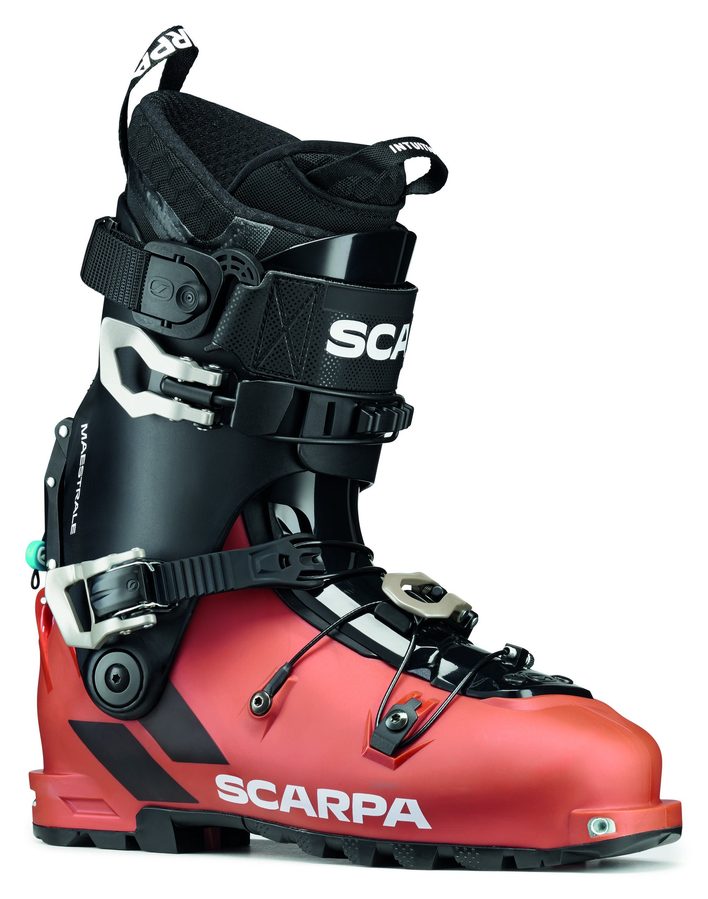
“You can take it on the resort, in the backcountry and slap crampons on the bottom to boot up the final pitch of a volcano,” said a PNW skier. A polyurethane shell and cuff pair with a Pebax tongue and Scarpa’s Wave Closure system—a z-cable that cinches the lower boot—to balance performance up and down. “The ankle buckle helps lock in the heel with minimal fit work,” reported one tester, while another who’s put plenty of days on the Maestrale called the buckle “annoying.” A 6’4” tester found the flex stiff enough, saying, “Softer than the Quattros, but very progressive and almost springy, which made it ski as well as higher-flex boots.” On the ascent, the Maestrale’s unimpeded 61-degree ROM made walking easy. “An all-around boot that is easy to get on, walks well and skis well,” reported a freeride tester. His hometown neighbor agreed, simply saying, “Skis great, tours better.”
TL;DR: An easy-to-ski, easy-to-use boot. The Maestrale is neither the most aggressive option on the market nor the best walking, but it is reliable and awfully versatile.
Where to buy
Scarpa Maestrale
Scarpa Gea RS
Weight: 2,810g | Sizes: 22.5-27 | Flex: 125 | ROM: 61° | Last: 101mm | Price: $899 | scarpa.com
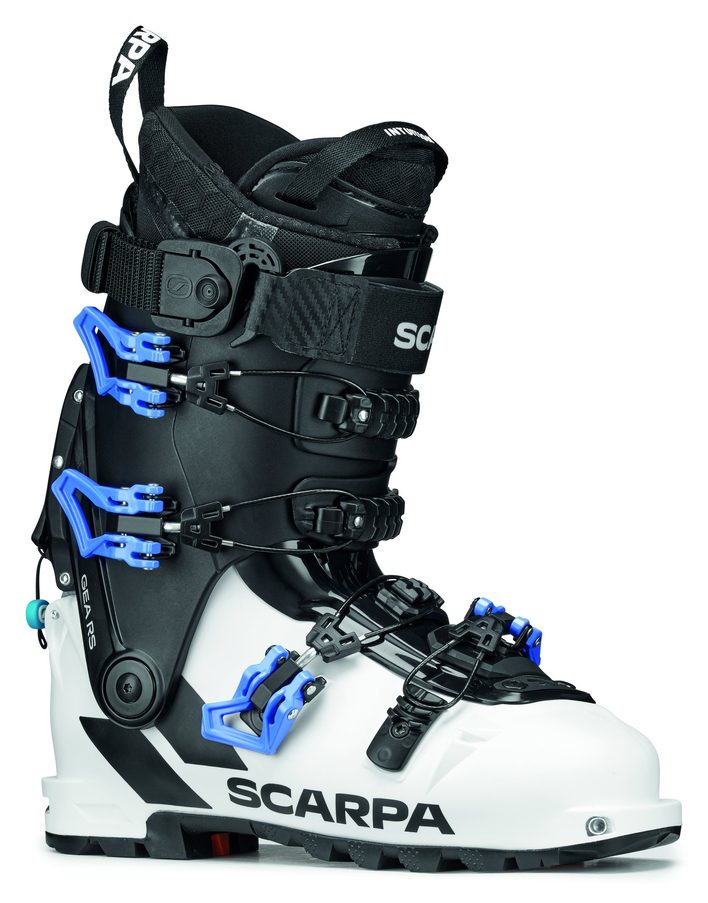
“One of the top contenders in the aggressive-but-can-walk category,” said a small-footed guy. The updates mirror the EC-winning Maestrale RS, with a new, four-buckle design and a reworked, moldable Intuition liner. The Gea RS swaps polyurethane for stiffer Pebax Rnew plastic, adding power and a more precise feel. “With a four-buckle loop system plus power strap, the Gea RS is designed to optimize downhill performance, which it absolutely achieves but with a softer forward-flex than an alpine boot equivalent,” reported a Steamboat skier. The Gea RS still scored 6/7 for ROM, and per another Coloradan lady, “The walk-mode function is easy to engage: pull up/down on string (with glove on) to release lever.” The RS features a narrow volume, which again polarized testers. Said a narrow-footed tester, “You have to be looking for performance, and a performance fit, to truly appreciate the RS.”
TL;DR: A hard-charging, women’s-specific boot that provides the rare combo of four-buckle, resort-like performance and actual walkability. Just note the fit is narrow.
Where to buy
Scarpa Gea RS
Dynafit Radical Pro
Weight: 2,800g | Sizes: 25-31.5 | Flex: 120 | ROM: 60° | Last: 103.5mm | Price: $800 | dynafit.com
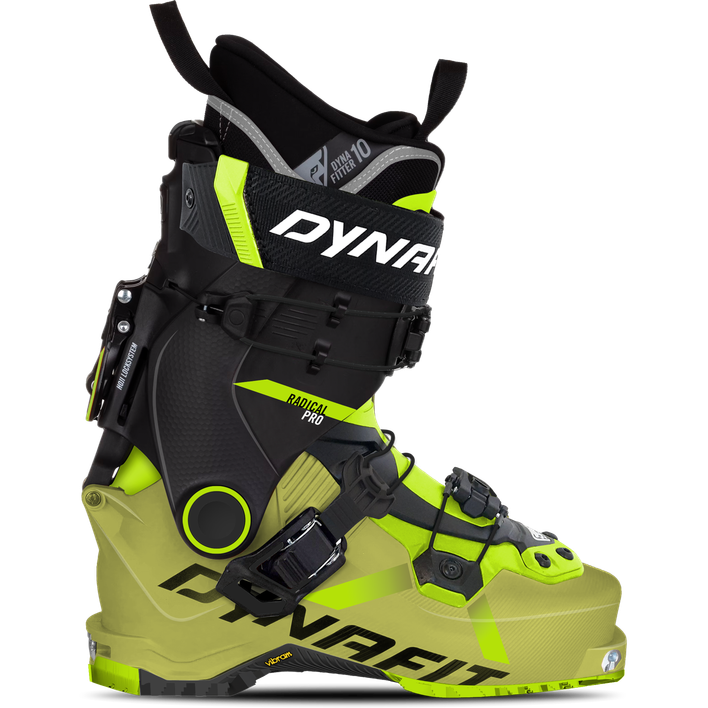
“This one-boot quiver delivers a package full of power and snow feel while also maintaining a fantastic range of motion,” said a racer. This year, the Radical Pro was updated with a lighter, dual-injected tongue and a new Vibram sole. The rest of the construction remains the same: a PU upper is locked in by a Velcro power strap and buckle, a ratchet tightens the ankle, and the Grilamid lower is secured by a second buckle. “The instep buckle is great and provides good heel lock,” said a 6’4” tester, though he noted the tongue “digs into the liner.” He and other testers found the boot’s mid to high volume comfortable. Of the Hoji lock system, our racer said, “Ease of use is notable.” In walk mode, the boot averaged a 5.5/7 for ROM. When the lever flipped the other way, the boot scored a 5.5/7 for fore/aft stiffness and lateral stiffness. “This boot is a good-skiing walker built for the downhill-focused skier,” summarized a tester who chooses boots for their skiability.
TL;DR: A comfortable, well-skiing boot that you can trust for long days and committing descents. Just make sure the tongue suits your stride.
Where to buy
Dynafit Radical Pro
Scarpa Gea
Weight: 2,680g | Sizes: 22.5-27 | Flex: 100 | ROM: 61° | Last: 102mm | Price: $799 | scarpa.com
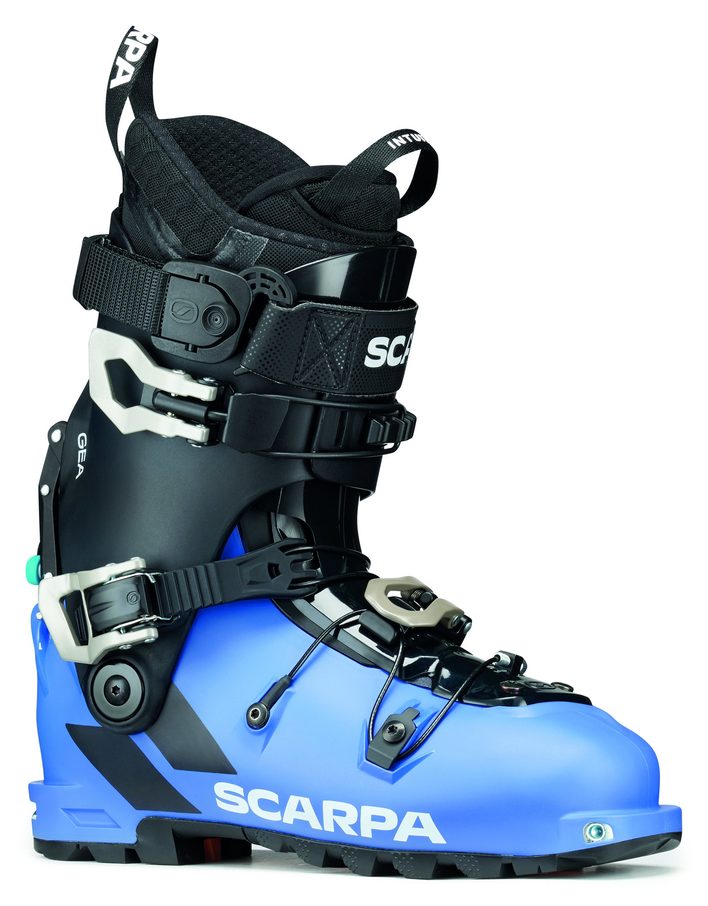
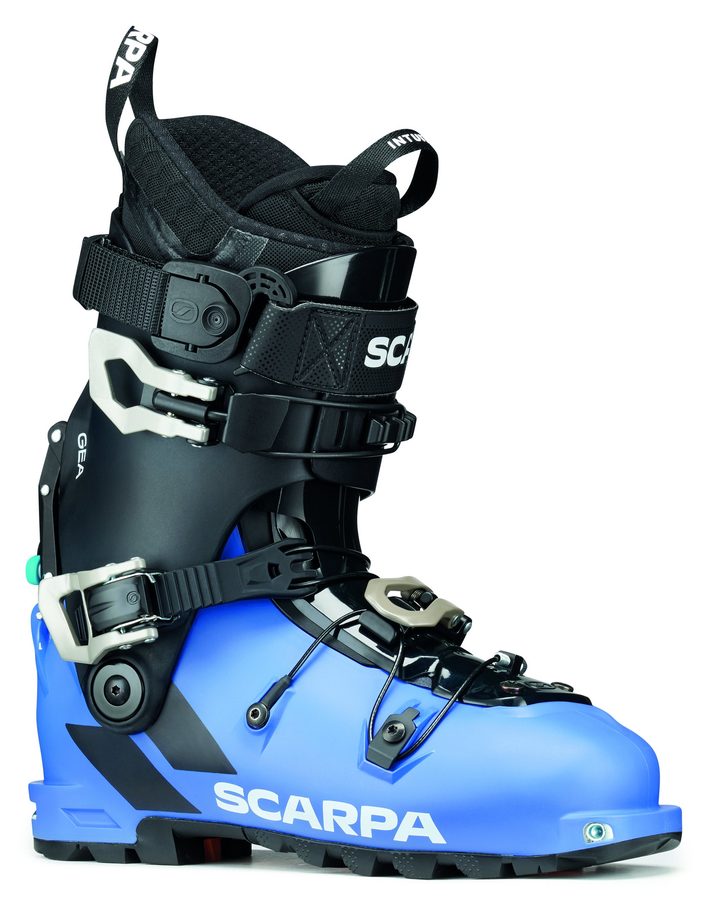
“Capable of powering bigger boards beyond their pairing category,” said a woman who has tested every version of the Gea. “Touring-wise, walk mode offers a wide range of motion—I’d walk up Everest and ski down in these.” A reverse three-buckle-and-latch system and simple walk-mode lever scored a 5 and 6 out of 7 respectively. Testers also praised the progressive flex of the polyurethane, Cabrio-overlap construction, and the claimed 60-degree ROM held up to testing. “Flex is progressive,” stated a PNW-based tester who added, “Walk mode worked smoothly, and ROM forward and back was great.” With that said, Scarpa’s fit is still foot specific. “The low, wide foot feels both crushing and sloppy,” said a tester who otherwise rated the performance highly. For skiers who fit the Scarpa mold, the payoff is worth it. “It has a fantastic walk mode but still stiffens as you need going down,” said a collegiate racer. “It is the jack of all trades.”
TL;DR: A unicorn option for those looking to put power through their skis and still walk for miles. Just make sure to try them on before buying.
Where to buy
Scarpa Gea
Atomic Backland XTD Carbon 115 W
Weight: 2,580g | Sizes: 22-27.5 | Flex: 115 | ROM: 74° | Last: 100mm | Price: $1,150 | atomic.com
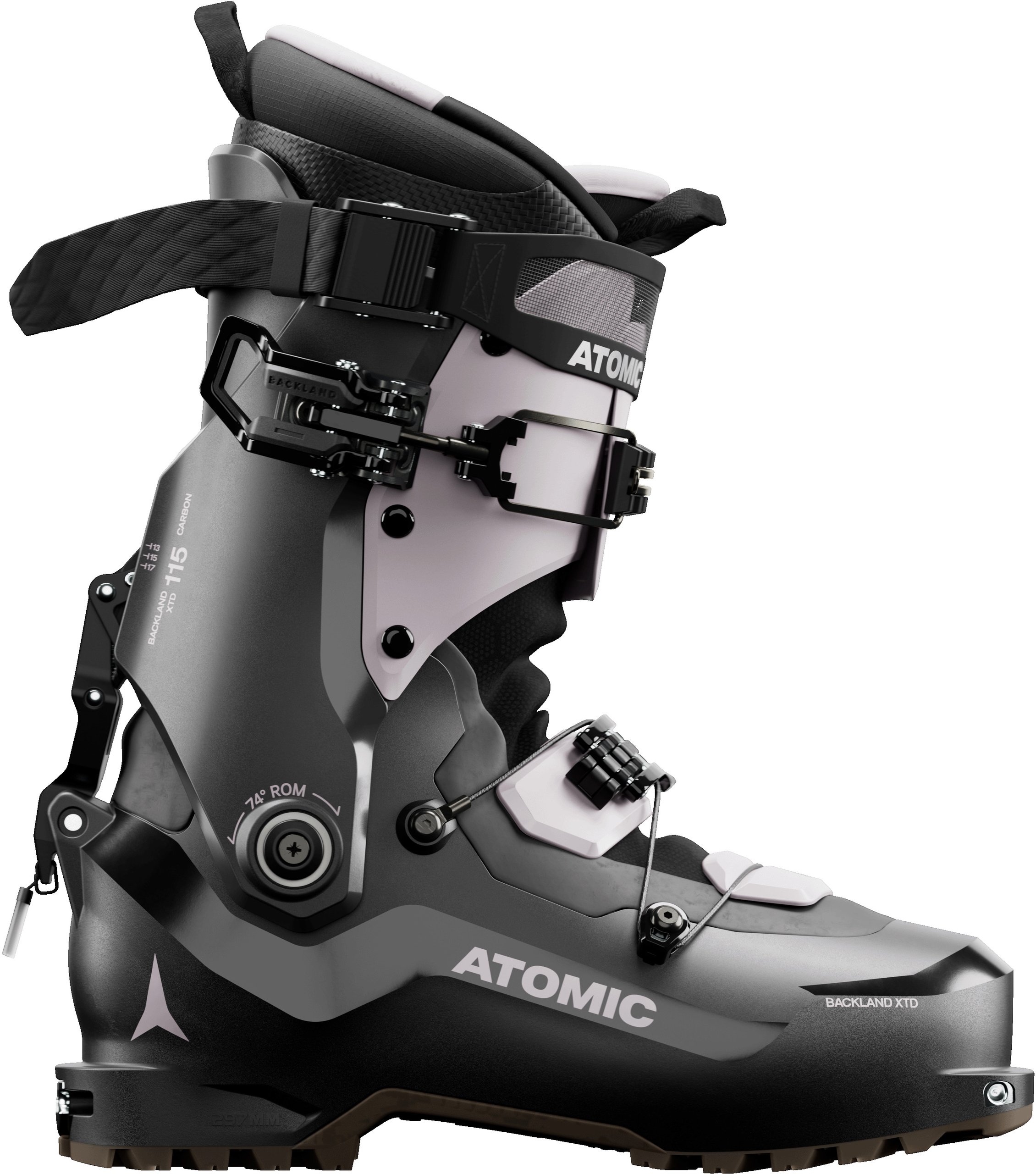
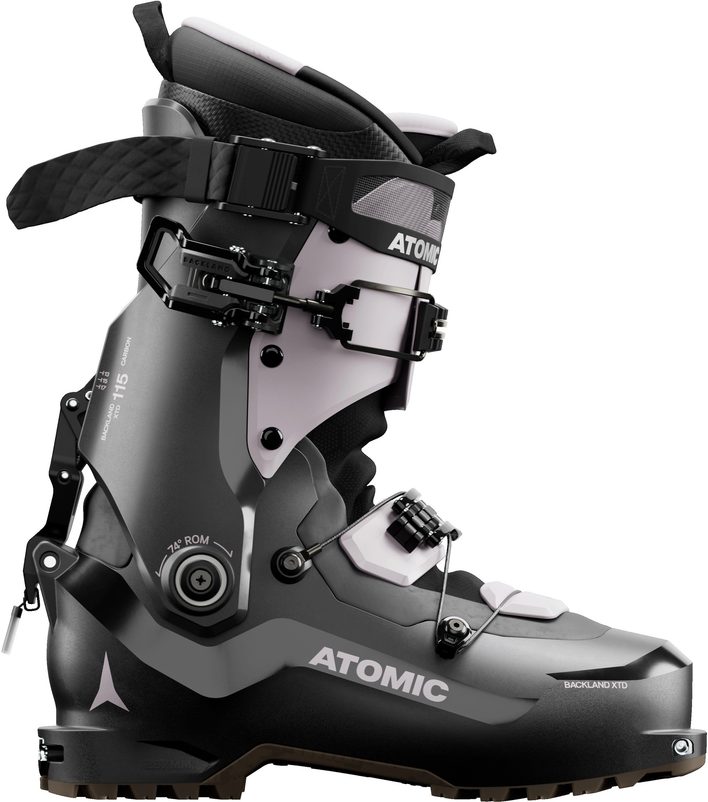
According to one tester, “This boot is built for long-ass walks.” The rest of the gals agreed, giving the 74-degree ROM a 6.25/7. “Luxe-feeling liner,” added an arc-farming PhD student. But comfort on the up had its drawbacks on the descent. “The toe box felt wide, which was awesome on the uphill but felt a bit sloppy on the way back down,” said a Wasatch skier who also found the forward lean upright. This women’s model shares the carbon-loaded polyamide shell, forefoot z-cable, open throat and semi-overlap design of its EC-winning brother, the Backland XTD Carbon 120. A couple testers had qualms with the reduced cuff height—designed to fit women’s calves—for being too low and found the forefoot buckle dug in. The PhD student, however, had no such problems. “The strong strap and top buckle hold you tight like a best friend after a breakup,” she said. “Ideal for aggressive downhill skiers who want to prioritize style on the down.”
TL;DR: How much comfort is too much comfort? These svelte loafers will make even the most mangled feet happy, but they’re less suited to hairy descents.
Where to buy
Atomic Backland XTD Carbon 115 W
Tecnica Zero G Tour Pro
Weight: 2,570g | Sizes: 24.5-30.5 | Flex: 130 | ROM: 55° | Last: 99mm | Price: $1,000 | blizzard-tecnica.com
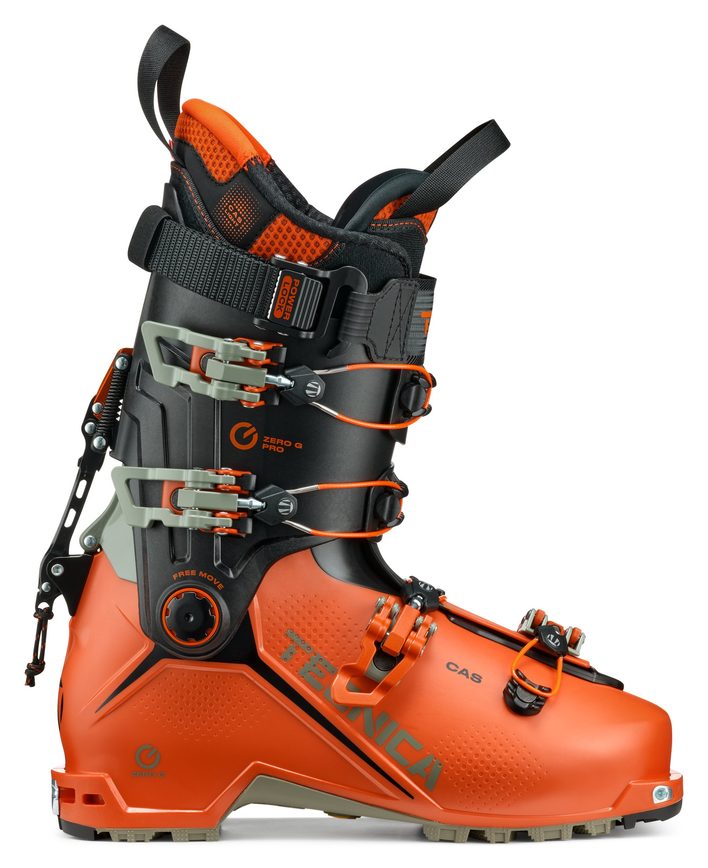
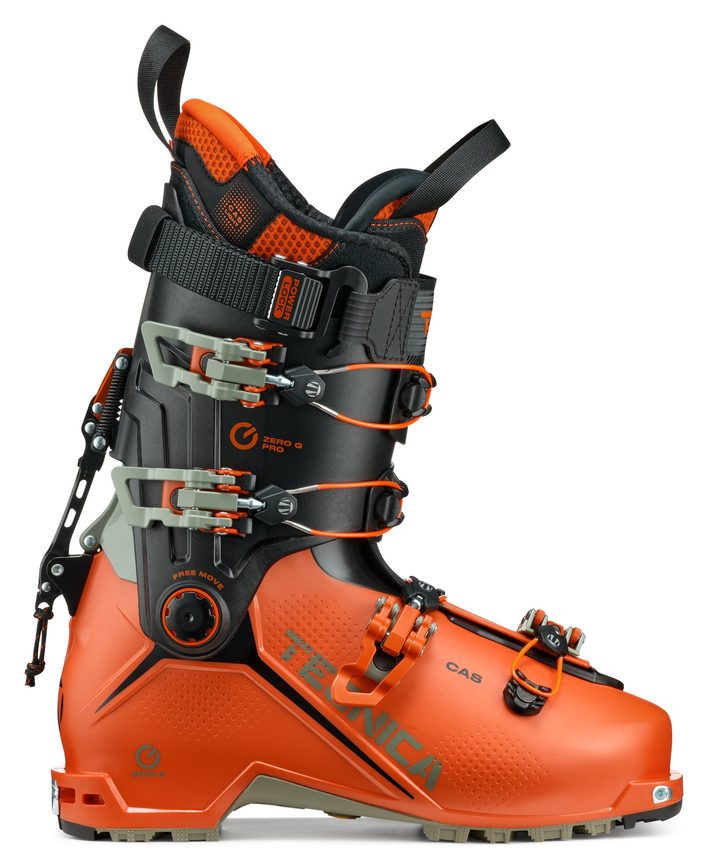
According to a 20-year boot tester, this perennial tester favorite is a “super-intuitive, four-buckle design. Nothing fancy. Doesn’t need to be.” Despite the simplicity, the Zero G Tour Pro racked up an overall score of 6/7. On the ascent, a lightweight, Grilamid shell kept legs fresh while an arch-shaped cut above the front of the ankle allowed for a long stride. When the walk-mode lever is flipped into ski mode, the same carbon and Grilamid-injected frame as the EC-winning women’s model anchors multiple points along the spine and underfoot to the ankle’s pivot point. “A deep ROM in walk mode and consistent flex,” said a Montanan who prefers his walks long. A Vermont race coach added, “Drives the biggest skis with ease, and can double as a medium-duty inbounds boot.” Wide-footed testers struggled with the narrow last, but the C.A.S. shell—found in the Zero G Tour and Decoy lines—is dimpled in commonly molded areas for an easier boot-punching experience.
TL;DR: This perennial favorite looks like a regular four-buckle boot, but thanks to some clever tech, it strikes an impressive balance between the ascent and descent.
Where to buy
Tecnica Zero G Tour Pro
Scarpa F1 RS W
Weight: 2,420g | Sizes: 23-27 | Flex: 100 | ROM: 60° | Last: 101mm | Price: $849 | scarpa.com
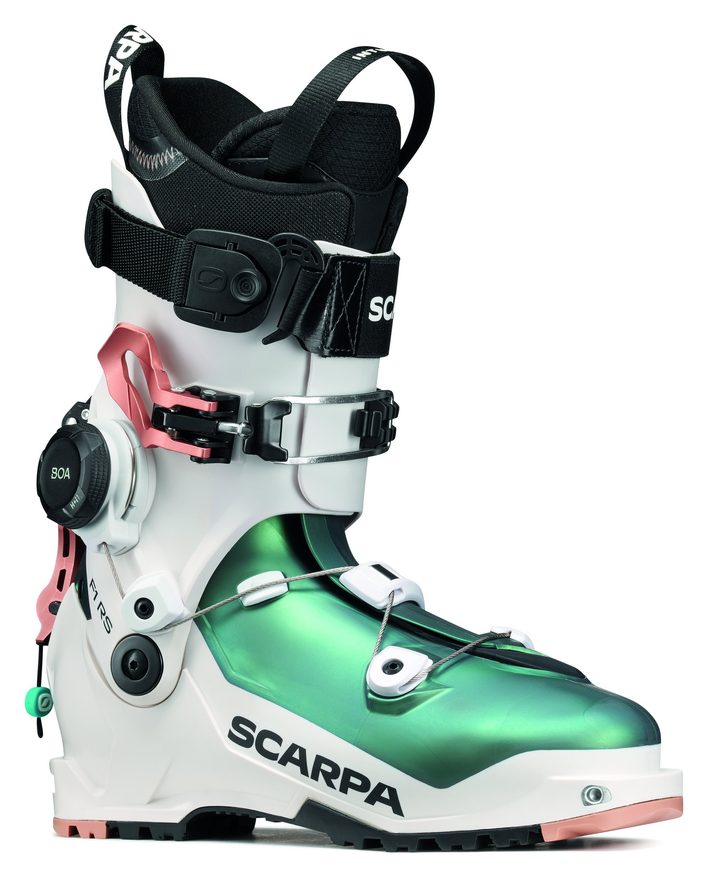
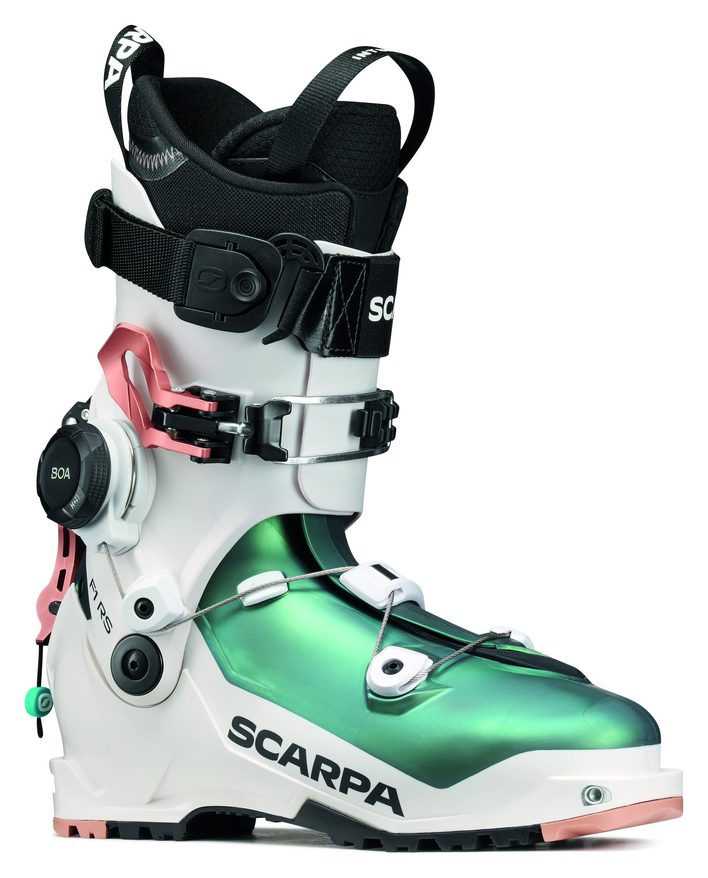
The women’s version of Scarpa’s new F1 RS inherits the co-molded Overlap Flow shell: stiff Grilamid and fiberglass wrapping the foot’s perimeter and soft Pebax over the forefoot and up the cuff. The only difference lies in a slightly softer plastic and a touch lower cuff height. “Stiff and efficient, the cuff design cinches effectively to minimize any loss of power,” said a Coloradan ripper. “Most unique feature is the power strap, which uses elastic across the front cuff to dial in your desired flex, from soft to porn-star stiff.” The H+i1 Boa is mounted high on the ankle for quick transitions and closes a z-shaped cable over the forefoot. A single cuff buckle helps lock down the upper and closes the claimed 60-degree ROM, which scored a 6/7 across testers. Fit is, as always, the deciding factor. “It’s uncomfortable to put on,” a usually positive tester said, “but once you’re in, ROM is crazy good, and you can really drive a ski.”
TL;DR: The same boot as the Editors’ Choice-winning F1 RS, but with a touch softer flex, smaller sizing and fewer grams.
Where to buy
Scarpa F1 RS W
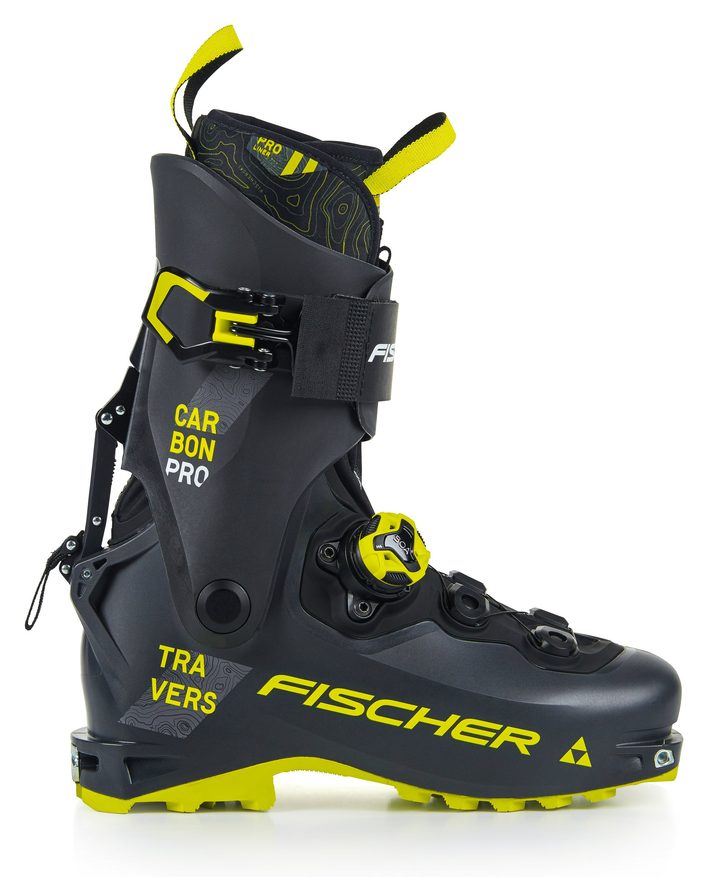
Fischer Travers Carbon Pro
Weight: 2,140g | Sizes: 23.5-30.5 | Flex: N/A | ROM: 80° | Last: 100mm | Price: $1,000 | fischersports.com
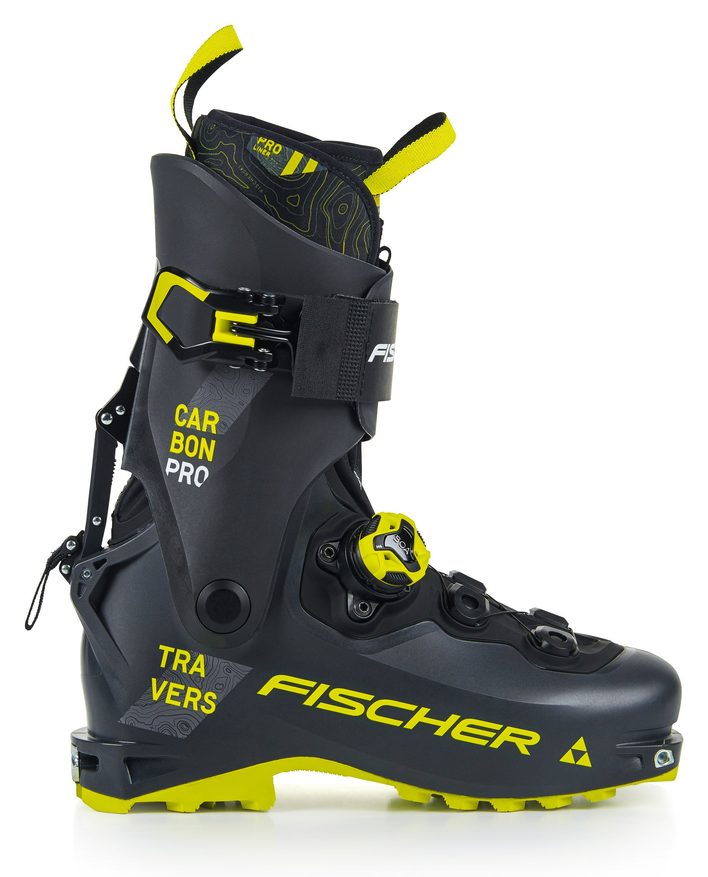
“A clear touring boot, built with a six-point Boa cable system and a single power strap, the Travers looks like an XC boot with pins,” said an uphill-focused tester. Thanks to a minimal, carbon-infused wrap cuff and a gaiter on the front of the ankle and just above the heel pocket, she noted, “Walk mode is as expected: dreamy, slipper-like sneaker walking with near-free range of motion.” Out of the box, one tester found the ultralight liner bunched up, while another complained, “Design is confusing to put on.” Once her foot was in, she said the walk-mode lever was well placed and easy to use. “It’s stiff enough forward but has very little support backward,” explained a Nordic coach of downhill performance. “Not very stiff laterally, so it isn’t very stiff in chunder,” he added. Another tester keyed in on the Travers’s intended use—long traverses—and said, “I’m impressed by this boot for what it is. I found it pretty comfortable, great ROM. I could walk a ways in these.”
TL;DR: These slippers masquerading as ski boots will keep your feet happy on your longest walks but require a gentle hand—or foot—on the descent.
Where to buy

Related posts: